


Security Company Organization Chart Home Security Systems Company Profile




Try Before you Buy Download Free Sample Product
 Impress Your
 Audience
 100%
100% Editable
 Save Hours
 of Time


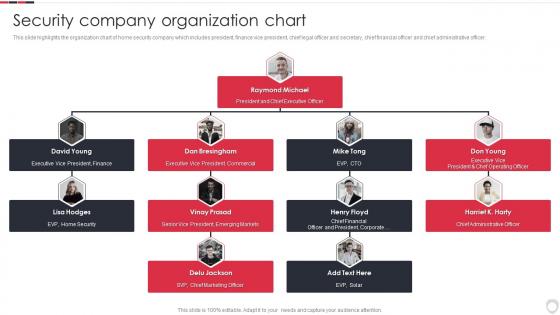
This slide highlights the organization chart of home security company which includes president, finance vice president, chief legal officer and secretary, chief financial officer and chief administrative officer.
People who downloaded this PowerPoint presentation also viewed the following :
Security Company Organization Chart Home Security Systems Company Profile with all 6 slides:
Use our Security Company Organization Chart Home Security Systems Company Profile to effectively help you save your valuable time. They are readymade to fit into any presentation structure.





FAQs for Security Company Organization Chart Home Security
So usually there's a CEO/President running the show, then operations managers handle the daily grind. Shift supervisors are next - they're managing the actual security guards out there doing rounds. HR is pretty much mandatory since people are constantly coming and going in this industry (seriously, the turnover is wild). Most places also need someone for client relations and finding new business. Bigger companies might throw in a training coordinator or compliance person for all the licensing stuff. Honestly though, smaller firms just have people doing like three different jobs at once. I'd peek at some company websites to see how they actually set things up.
Yeah so security companies are way more structured than regular businesses. Think military-style ranks - officers, supervisors, shift commanders, operations managers. Police departments work similarly actually. Marketing agencies? Roles can be all over the place. But security needs that rigid chain of command for liability stuff and when emergencies happen. Authority limits are super specific at each level. Oh and make sure your reporting lines are obvious on the org chart - trust me, during incidents you don't want confusion about who's calling the shots.
Dude, get that org chart done ASAP. Your security team probably wastes so much time figuring out who's in charge of what - I've watched companies spend literal hours on basic decisions because nobody knew the chain of command. It's ridiculous. When officers know exactly who to call for escalations, everything moves faster. Scheduling gets easier too since supervisors actually understand how many people they're managing. Oh, and accountability improves because everyone's clear on their role. Honestly, just sketch it out and share it with the team. You'll see things running way smoother within a few weeks.
Just keep it simple - field officers, supervisors, management. That's it. Don't get crazy with middle layers because honestly, I've watched companies turn this into a total mess and nothing gets done. Each team needs someone who can actually escalate stuff quickly, like a shift leader or whatever. Oh, and having someone from operations who can just call scheduling directly? Game changer. You'll want to map out who talks to who about what first, then actually try it out. Sometimes what looks good on paper doesn't work when people are running around dealing with actual problems.
Start with Operations - that's your field guards and patrol teams. You'll need HR for hiring and training, plus Finance for payroll and billing clients. Sales brings in new contracts, obviously. Administrative Support is huge too because honestly, the paperwork never stops in this business. Most states require ongoing certification, so set up a Training Department. Quality Assurance handles complaints and keeps standards up. If you're doing investigations or cybersecurity, those should be separate divisions. Build these basics first, then expand later.
So when security companies grow, they usually just add new departments or beef up existing ones. Adding cybersecurity? You'll need a whole tech division under ops. Physical stuff means more regional managers or specialized teams - executive protection, event security, that kind of thing. Here's what I've noticed though: the smart ones actually flatten their hierarchy instead of making it taller. Five approval layers for basic client stuff is insane. Keep communication short but accountability clear. I'd map what you have now first, spot the gaps, then figure out where new services actually fit. Way easier than restructuring blindly.
Command centers can coordinate everything remotely now, so companies don't need as many management layers anymore. Pretty crazy shift, honestly. You're getting flatter hierarchies where centralized dispatch runs guards across multiple sites through apps and monitoring systems. New specialized roles are showing up too - cybersecurity analysts, drone operators, people who analyze patrol data. Oh, and make sure your org chart has clear separation between traditional security ops and the tech-focused positions. That's been a real pain point for companies I've seen that tried to mix them together.
An org chart is honestly a lifesaver for onboarding new security guards. Show them who their direct supervisor is, which managers cover what shifts, and the whole chain of command for emergencies. Trust me, you don't want some new hire standing around confused during an incident because they can't figure out who to call. Walk through it with them on their first day - explain how patrol connects with monitoring, how investigations fits in, all that stuff. Also helps them see where they could potentially move up later. My old job didn't do this and it was chaos.
Dude, you really need clear reporting lines or your team will be a mess. I've watched security incidents where everyone just stood around because nobody knew who was actually calling the shots - it's painful to see. When people know exactly who they report to, decisions happen faster instead of getting stuck in some weird chain of confusion. Plus onboarding is so much easier when you can just draw out the hierarchy on a whiteboard. Your team actually gets stuff done when roles are crystal clear. Start by figuring out where your current structure has gaps - bet you'll find some overlap too.
Start with your CEO at the top, then add department heads like Operations and Admin managers below that. Break down Operations into shift supervisors, field supervisors, and your officers at the bottom. HR and training people fit in there too - honestly, those roles are super important but get overlooked sometimes. Make sure everyone's got clear reporting lines so when something goes sideways, officers know exactly who to call. Use boxes with connecting lines between them. Keep job titles specific since generic ones just confuse everyone when they're trying to figure out the chain of command quickly.
Check your contracts and company size first. Specialized clients like hospitals or banks? You'll probably need dedicated people for those. Multiple locations definitely mean regional managers. That whole "do we need another person" question is such a pain, right? But if you're always firefighting in one area or your team's drowning in specialized stuff, there's your answer. I'd start with whatever's causing you the biggest headaches operationally, then figure out roles to fix those specific issues. Geographic spread matters too - can't manage everything from one spot.
Color-coding is your best friend here - split departments like operations, investigations, and admin so people can scan it quickly. Icons work great too, especially for specialized teams like K-9 or cyber units. Different box sizes show the hierarchy without making people decode who reports to whom. Honestly, execs won't read text-heavy charts anyway, so visuals save everyone time. Oh, and keep your visual style consistent across all org materials - makes you look way more professional when you hand stuff to the board. Trust me, you'll be restructuring this thing again in six months anyway.
Look, your org chart basically shows what you actually care about. Companies that are all about customer service? They'll put those client success roles front and center. Security-focused places highlight their technical teams and who handles incidents when things go sideways. Flat structures work if you want collaboration - steep hierarchies are better for clear accountability. I've seen way too many companies just slap together meaningless charts though. The smart move is making sure your actual structure backs up whatever mission statement you're preaching.
So geography totally changes how security companies are set up. Scandinavian firms go super flat with their hierarchies, but Asian companies? Way more layers and formal chains of command. Matrix structures work great in some cultures while others need those direct reporting lines - it really depends on local communication styles. Regional offices basically copy whatever works locally instead of fighting it. Oh and definitely research management expectations before expanding anywhere. I've seen companies try to force that Silicon Valley flat approach in traditional markets like Germany... doesn't end well. Local business practices win every time.
Oh man, don't stack too many management layers - kills communication when shit hits the fan. Make sure everyone knows who they report to, sounds obvious but you'd be surprised. Plan for 24/7 coverage from day one because someone WILL call out sick during a midnight emergency. I learned that one the hard way. Keep supervisor roles simple at first, and honestly? Don't create positions you can't pay for yet. Your incident response chain needs to be stupid-clear. Build it simple, then add more as you actually grow.
-
I am really satisfied with their XYZ products. Used their slides for my business presentations and now I am taking their help for my son's high-school assignments. Super satisfied!!
-
Placing an order on SlideTeam is very simple and convenient, saves you a lot of your time.