


Security Services Business Profile Powerpoint Presentation Slides




Try Before you Buy Download Free Sample Product
 Impress Your
 Audience
 100%
100% Editable
 Save Hours
 of Time


A company profile describes all the relevant elements of a business, which helps the investors and stakeholders evaluate the businesss value and performance. Check out our professionally designed Security Services Business Profile PowerPoint presentation. Firstly, the profile covers the executive summary, corporate overview highlighting security guard services with quality and certifications, global presence, corporate, industrial, educational institute, hospital, commercial and residential building, retail, shopping complex, and additional security services. Additionally, it includes the team communication layout, weapon and logistics vehicle details, staff recruiting criteria and training center, employee and staff welfare policies, crisis management team, employees rules and regulations, company approach, and business model canvas. Moreover, it covers the timeline, organization chart, management team, government and private sector clients, client reviews, awards, and accolades. At last, this profile emphasizes the revenue and net profit, revenue by customer type, sales by region and services, EBITDA, competitive and SWOT analysis with CSR initiatives and case study. Get access to our powerful company profile templates now.
People who downloaded this PowerPoint presentation also viewed the following :
Content of this Powerpoint Presentation
Slide 1: This slide introduces Security Services Business Profile. State your company name and begin.
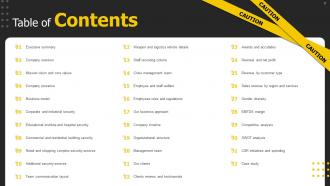
Slide 2: This slide presents Table of Content for the presentation.
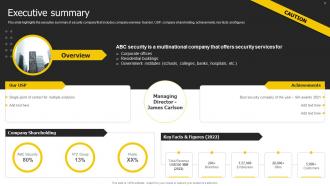
Slide 3: This slide displays executive summary of security company.
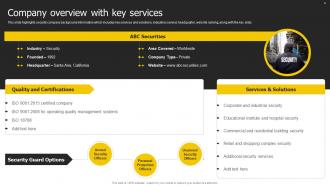
Slide 4: This slide represents security company background information.
Slide 5: This slide showcases security company long term and short term objectives.
Slide 6: This slide shows security guard and manpower services company.
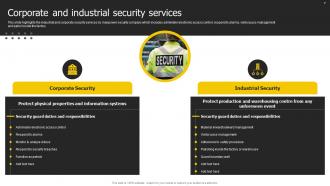
Slide 7: This slide presents industrial and corporate security services by manpower security company.
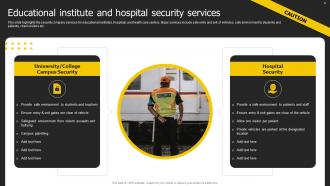
Slide 8: This slide displays Educational institute and hospital security services.
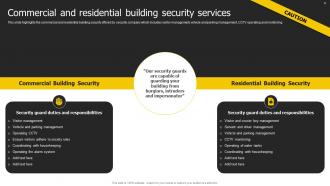
Slide 9: This slide represents Commercial and residential building security services.
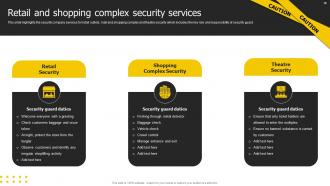
Slide 10: This slide showcases Retail and shopping complex security services.
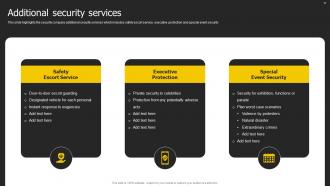
Slide 11: This slide shows security company additional security services.
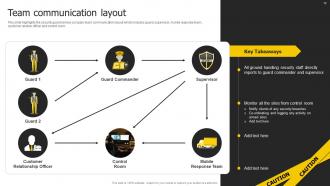
Slide 12: This slide presents security guard service company team communication layout.
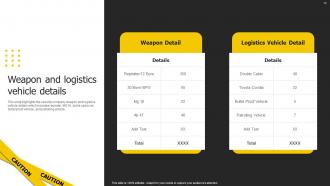
Slide 13: This slide displays Weapon and logistics vehicle details.
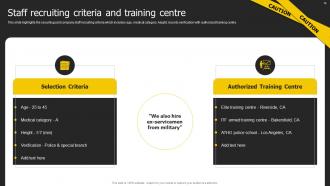
Slide 14: This slide represents security guard company staff recruiting criteria.
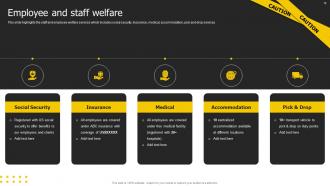
Slide 15: This slide showcases staff and employee welfare services.
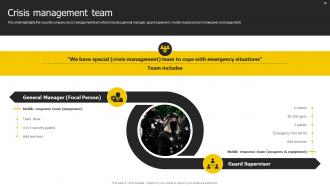
Slide 16: This slide shows security company crisis management team.
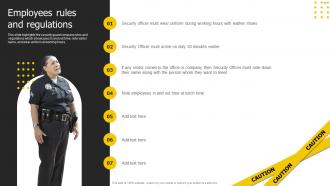
Slide 17: This slide presents security guard company rules and regulations.
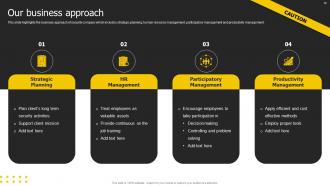
Slide 18: This slide displays business approach of security company.
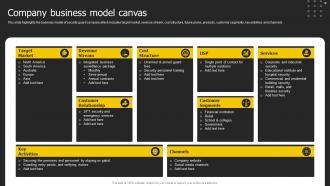
Slide 19: This slide represents business model of security guard company.
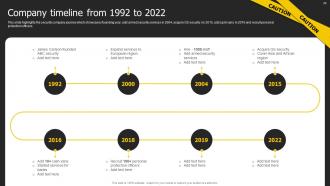
Slide 20: This slide showcases Company timeline from 1992 to 2022.
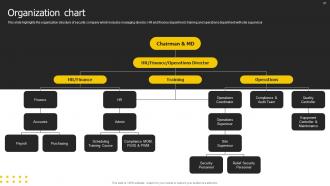
Slide 21: This slide shows organization structure of security company.
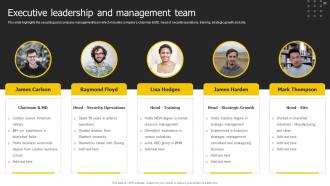
Slide 22: This slide presents Executive leadership and management team.
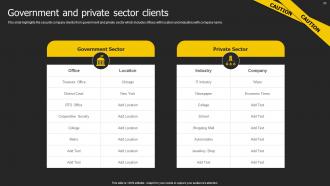
Slide 23: This slide displays Government and private sector clients.
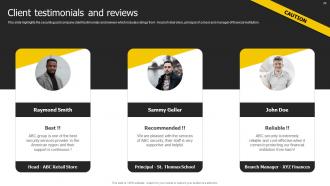
Slide 24: This slide highlights the security guard company client testimonials and reviews.
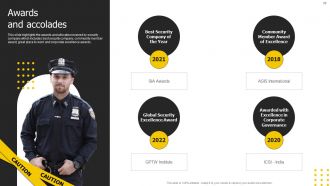
Slide 25: This slide represents awards and allocates received by security company.
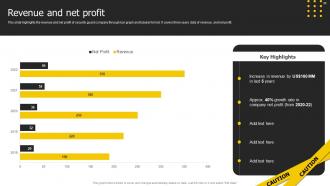
Slide 26: This slide showcases revenue and net profit of security guard company.
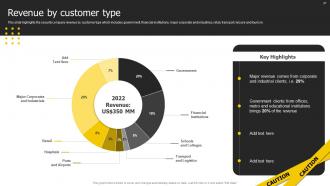
Slide 27: This slide shows security company revenue by customer type.
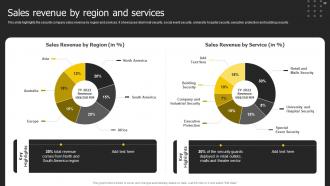
Slide 28: This slide presents Sales revenue by region and services.
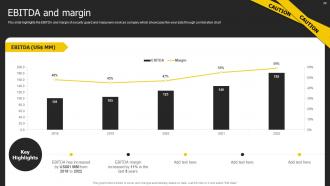
Slide 29: This slide displays EBITDA and margin of security guard and manpower services company.
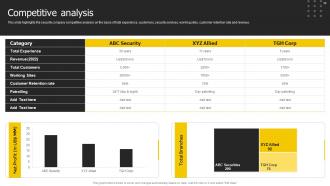
Slide 30: This slide represents security company competitive analysis.
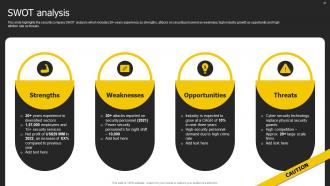
Slide 31: This slide showcases security company SWOT analysis.
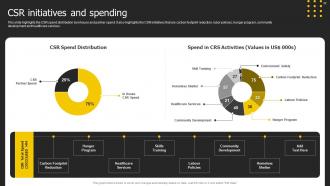
Slide 32: This slide shows CSR spend distribution by inhouse and partner spend.
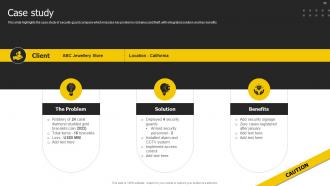
Slide 33: This slide presents case study of security guard company.
Slide 34: This slide contains all the icons used in this presentation.
Slide 35: This slide is titled as Additional Slides for moving forward.
Slide 36: This is About Us slide to show company specifications etc.
Slide 37: This is Our Mission slide with related imagery and text.
Slide 38: This is Our Team slide with names and designation.
Slide 39: This slide displays Mind Map with related imagery.
Slide 40: This slide provides 30 60 90 Days Plan with text boxes.
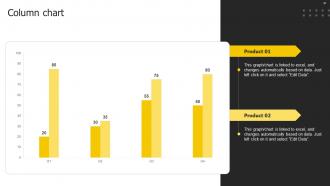
Slide 41: This slide displays Column chart with two products comparison.
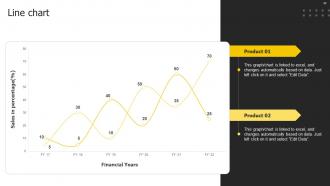
Slide 42: This slide describes Line chart with two products comparison.
Slide 43: This slide shows Post It Notes. Post your important notes here.
Slide 44: This slide contains Puzzle with related icons and text.
Slide 45: This is a Thank You slide with address, contact numbers and email address.
Security Services Business Profile Powerpoint Presentation Slides with all 50 slides:
Use our Security Services Business Profile Powerpoint Presentation Slides to effectively help you save your valuable time. They are readymade to fit into any presentation structure.





FAQs for Security Services Business Profile
Honestly, most people overthink this stuff. You need four main things: risk assessment, access controls, monitoring, and incident response. Figure out what you're actually protecting first - I know it sounds basic but tons of teams just skip straight to buying fancy tools. Strong authentication is obviously key. Regular audits too. Real-time threat detection helps catch problems early. Don't create policies that nobody follows - that's just wasted effort. Monitoring is huge because you can't fix what you can't see happening. Oh, and pick one area to focus on first instead of trying to fix everything at once. Way less overwhelming that way.
So basically, security teams get bombarded with alerts about new threats every single day - honestly sounds exhausting. They're constantly updating firewalls and patching vulnerabilities as they pop up. The smart ones use AI to catch weird patterns that normal systems miss. Staff training is huge too since hackers keep getting more creative with phishing. What you really want is adaptive security that updates itself automatically instead of waiting around. I'd definitely ask your provider how often they refresh their detection rules - that's where you'll see who's actually on top of things.
Oh man, technology has completely changed the security game. AI cameras can now spot weird behavior automatically, and there's apps for reporting incidents in real-time. GPS tracking, biometric locks, cloud platforms so teams can coordinate across different sites instantly - it's wild how advanced it's gotten. Even switching from those old paper clipboards to digital logs makes tracking way better. Honestly, if you're shopping around for security companies, ask about their tech setup first. Any company still using outdated systems? You'll probably regret it later. The difference between modern vs old-school security tech is night and day.
First thing - figure out what you're actually protecting. Physical stuff, data, people, your reputation. Most companies think they're fine until they get hit, which honestly happens way more than you'd expect. Do a real risk assessment based on your industry and location. Then look at your team - can they handle cybersecurity monitoring and compliance stuff, or should you outsource it? Physical security too. Write down what you need vs. what you have right now. That gap? That's where you start fixing things.
So physical security is basically the old-school stuff - guards, cameras, alarms, controlling who gets in your building. Digital security handles all your data and networks with firewalls, antivirus, that whole cyber side of things. But here's the thing - everything's connected now. Your smart locks, security cameras, even the damn coffee machine probably has WiFi. A hacker could literally break into your network through a poorly secured thermostat (I've seen it happen). You really can't do one without the other anymore. I'd start by figuring out your weakest spots first, then tackle those.
So security companies basically build frameworks around whatever regs you need - SOC 2, HIPAA, PCI DSS, all that fun stuff. They'll run audits constantly and keep mountains of documentation (seriously, the paperwork is insane). Most use automated tools to monitor everything in real-time too. You'll usually get a dashboard showing where you stand compliance-wise and what needs fixing. The good providers have teams who actually understand both the tech side and regulatory weirdness for your specific industry. Oh, and definitely ask upfront what certifications they have - saves headaches later when you're scrambling to meet deadlines.
Honestly, skip the boring classroom lectures and go straight for hands-on scenario training - that's what actually works. Your team needs regular de-escalation practice, solid communication skills, and they gotta stay updated on all the legal stuff. I can't stress this enough: don't skimp on the soft skills training. Reading people and cooling down tense situations? That's literally half the battle right there. Oh, and schedule refreshers every few months because this stuff gets rusty quick. Start by figuring out where your current gaps are, then create a rotation that keeps everyone sharp without burning them out.
Track both the hard numbers and the softer stuff to really understand what's happening. Response times, threats caught vs ones that slipped through, uptime stats, compliance results - the usual suspects. But honestly? User satisfaction surveys tell you SO much. If everyone's annoyed with your security processes, you're doing it wrong. Cost per incident matters too, plus benchmarking against industry standards. Set your baselines first, then watch how things improve month by month. Pick maybe 3-5 metrics that actually matter to your business goals and review them regularly.
Honestly, the big stuff right now is AI threat detection and zero-trust architecture - that's where everyone's putting their money. Cloud security is massive too since half our infrastructure is basically floating around everywhere now. What's wild is how picky cyber insurance companies have gotten... they actually audit your security setup before agreeing to cover you. Remote work protection is still a thing, lots of endpoint security investments. My take? Look into zero-trust solutions sooner rather than later. The old "castle wall" approach to security is pretty much dead at this point.
Think of security services as the actual doing part of risk management. Your framework spots the threats and weak points, then services like monitoring and access controls become your real solutions. Map each service back to specific risks you've identified - that's where the magic happens. Don't just buy shiny new tools because they look impressive (guilty of this myself). Focus your spending on whatever addresses your biggest risks first. Once you make that connection, the whole thing clicks into place pretty quickly.
Honestly, it's like everything that can go wrong does go wrong in those situations. Threats keep changing, intel is garbage half the time, and the locals might want you dead. Training costs a fortune - specialized gear isn't cheap either. Don't even get me started on comms; satellite phones fail right when shit hits the fan. You're constantly juggling keeping people safe vs actually getting the job done. Finding good people who'll stick around when bullets start flying? Good luck with that. Multiple backup plans are your best friend, and never think you've got it all figured out because that's when things go sideways.
Honestly, just be super open about your security stuff instead of keeping it all hidden. Get those SSL certificates up front and center, show off any certifications you have. Talk about your encryption like it's actually interesting - people are freaked out about data breaches these days anyway. Oh, and definitely send updates when you make security improvements. Maybe even mention if something goes wrong (I know, sounds scary but transparency wins). Start by listing what protection you already have, then figure out better ways to actually tell your customers about it. Makes a huge difference when they can see you're not just winging it.
Basically you gotta balance being effective with not trampling on people's rights. Privacy is huge - only grab the data you actually need. Be upfront about what you're doing and why. Match your response to the real threat level, not some worst-case scenario in your head. I've seen too many places go overboard with the "security first" mentality and it just pisses everyone off. Watch out for bias too - make sure you're not picking on certain groups unfairly. Quick test: would you be cool if someone did this to your family? That usually sorts out the sketchy stuff pretty fast.
Look, data analytics basically lets you get ahead of security threats instead of just scrambling after they happen. You're already sitting on tons of data - might as well make it work for you. Patterns in network traffic and user behavior can reveal sketchy stuff before it becomes a real problem. False alarms become way less of a headache too. A good SIEM platform will connect all your data sources automatically, which honestly saves so much time. You'll spot vulnerabilities faster and actually prioritize what matters. Check what data you've got first, then build from there.
Dude, bad security can totally wreck your business. Theft, data breaches, vandalism - all that stuff adds up fast. I've watched companies lose more on stolen inventory than decent security would've cost them in the first place. Then you've got reputation damage, lawsuits if someone gets hurt, higher insurance rates. It's honestly wild how quickly things can spiral. Just do a basic check of where you're vulnerable and factor security into your budget. Way cheaper than dealing with the aftermath, trust me.
-
100% wow
-
Design 100% graet.
-
amizing design . i love it
-
I am extremely pleased with these PPT slides that we used for our event. They were easy to modify and came out great in all aspects!
-
Great quality product.