


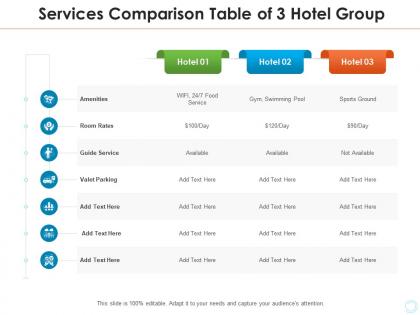
Services comparison table of 3 hotel group




Try Before you Buy Download Free Sample Product
 Impress Your
 Audience
 100%
100% Editable
 Save Hours
 of Time


Our Services Comparison Table Of 3 Hotel Group are topically designed to provide an attractive backdrop to any subject. Use them to look like a presentation pro.
People who downloaded this PowerPoint presentation also viewed the following :
Services comparison table of 3 hotel group with all 2 slides:
Use our Services Comparison Table Of 3 Hotel Group to effectively help you save your valuable time. They are readymade to fit into any presentation structure.

FAQs for Services comparison table of
So luxury hotels are all about the experience - think concierge, fancy restaurants, spas, the works. Budget chains? They keep it simple with clean rooms and maybe continental breakfast. Price reflects that difference obviously. It really depends on who you're trying to attract though. Some travelers just want a bed for the night, others expect to be pampered (and will pay for it). I've stayed at both and honestly, sometimes you don't need all the bells and whistles. What's your target guest like?
Honestly, they're all pretty different. Marriott and Hilton are big on energy stuff and green certifications. IHG's going hard on getting rid of single-use plastics - which is smart since those little shampoo bottles add up fast. Accor's probably winning though - they're already carbon neutral in some places. Hyatt does cool local sourcing and community work, but they're smaller so you don't hear about it as much. If you want actual numbers, they all put out sustainability reports every year. You can compare the data yourself instead of just taking their marketing at face value.
Dude, loyalty programs totally control where people book hotels. I've watched friends choose Marriott over way cheaper places just to hit elite status or rack up free nights. The whole points and upgrades thing creates this weird psychological trap - honestly genius marketing if you ask me. Hilton and other brands go crazy competing on who has better earning rates or easier redemptions. I bet you do this too without realizing it. When the program's good enough, people will literally ignore price and even location just for those rewards.
So hotel chains basically customize everything for different markets - loyalty programs, promos, room stuff, all of it. Marriott pushes family deals in Asia but goes hard on business perks in NYC, which honestly makes perfect sense. They'll partner with local influencers too and use whatever social platforms actually work in each region. Oh, and pricing gets adjusted based on what people there can actually spend. I learned this from a marketing friend who works at Hilton - she's always flying around doing market research. Bottom line though? You gotta study your audience first before launching anything.
Honestly, tech makes a huge difference for hotel chains these days. Mobile check-in is a game changer - no more waiting in lobby lines. The big players like Marriott and Hilton have pretty solid apps that let you unlock your room with your phone, adjust the AC before you even get there, stuff like that. Their loyalty programs are actually smart too, remembering your preferences across different cities. Though I swear half the "smart" room features still glitch out on me. Just stick with chains that focus on tech that actually works instead of gimmicky nonsense.
Hotels are obsessed with social media now. They monitor everything 24/7 - Instagram, TripAdvisor, you name it. Smart ones respond super fast to complaints before they spiral. Most have whole teams just for this stuff, plus they train staff to ask guests for reviews right at checkout. The really clever hotels create Instagram-worthy moments and partner with influencers (though some of those partnerships are kinda cringe). What I find interesting is how they flip negative reviews - they'll publicly show how they fixed someone's problem. Follow Marriott or Hilton on Twitter sometime and watch how quickly they jump on complaints. It's wild.
Honestly, regulatory stuff is probably your biggest headache - every country has weird rules you'd never think of. Then there's the whole cultural thing where what works in one place totally bombs somewhere else. Finding decent local partners is crucial but takes forever. Your staff training becomes this mess when you're trying to keep everything consistent across different languages and work cultures. Supply chains get complicated, currencies fluctuate like crazy (learned that one the hard way), and don't even get me started on managing teams across time zones. My advice? Start small, do your homework on each market first, and invest in local managers who actually get the local vibe.
So basically they have this giant playbook that every hotel has to follow - same check-in stuff, room setups, all of it. Doesn't matter if you're in Times Square or some random place in Montana. They're constantly sending mystery shoppers around (those people are literally everywhere, it's kinda wild). Staff gets trained the same way no matter which location they work at. The corporate people do regular check-ups too to make sure nobody's getting lazy. When you're looking at hotel chains, just ask them about their quality control process and how often they actually visit properties.
Hotel groups win with strong loyalty programs and brand recognition - that's like 80% of it right there. Scale helps them negotiate better deals and cut costs across properties. Distribution is huge too, you need those booking site partnerships and a decent direct booking system. Tech integration separates the winners from losers honestly, some chains are still stuck in 2015. Geographic spread protects against regional slumps. Consistent service builds trust, which sounds obvious but plenty mess this up. When you're looking at groups, check their tech, loyalty strength, and how they've bounced back post-COVID.
Hotel chains handle local partnerships totally differently depending on their vibe. Four Seasons goes for the fancy stuff - exclusive gallery tours, private guides, that whole thing. Budget places? They're more about practical discounts on attractions or shuttle deals. Marriott sits in the middle and kinda does everything - restaurant packages plus tourist discounts. Honestly, some hotel groups are way better at this than others. Oh, and definitely ask what partnerships they actually have going right now when you're booking. Their websites can be super outdated about that stuff.
Hotels got hit hard and had to change everything overnight. Most switched to contactless stuff - you can check in on your phone, get digital keys, scan QR codes for menus. They cut tons of staff too, which honestly was rough but probably needed to happen eventually. Business travel completely died so now they're going after families and vacation people instead. Health protocols became huge obviously. Plus way more flexible cancellation policies since nobody knows what'll happen next. When you're looking at different hotel chains, just see how fast they rolled out new tech and whether their setup actually makes sense long-term.
So hotel chains basically do this "glocal" thing - sounds weird but it works. They keep their main brand stuff the same everywhere (like service standards, loyalty programs, booking systems) but then adapt the food, decor, and local partnerships to fit each market. McDonald's does it too - same golden arches but they'll serve rice in Asia. Marriott's a good example. Their hotels will have the same booking experience globally, but the restaurant might serve local dishes and the lobby could have regional art. Honestly, it's pretty smart. The trick is figuring out what absolutely has to stay consistent for brand recognition versus what can change culturally. When you're checking out chains, just ask them directly how they handle local stuff in your target markets.
Most hotel chains are obsessed with Net Promoter Score and Guest Satisfaction scores - plus they track how much you're worth over time (Customer Lifetime Value). They're constantly watching repeat bookings, loyalty program stuff, and review scores on TripAdvisor and Google. Some even analyze the actual words in guest comments, which seems a bit much tbh. Everything gets compared to competitors quarterly. Here's the thing - executive bonuses are literally tied to these numbers, so that's why you get bombarded with surveys after every stay! If you're researching hotel groups, definitely ask about their NPS trends and loyalty retention rates.
Hotels are totally obsessed with wellness stuff these days. Marriott's pushing sleep programs, Hilton partnered with Peloton for their gyms. Even cheap chains are throwing yoga mats in rooms now - kinda wild how fast this caught on. You've got dedicated spa floors, meditation rooms, healthy room service. The loyalty programs are getting in on it too with spa credits as rewards. Oh, and when you're looking at hotel partnerships for work? Definitely ask about their wellness amenities. It's becoming this huge thing that separates the good programs from the meh ones.
So basically all the big hotel chains are on this crazy buying spree right now. Marriott, Hilton, IHG - they're all snatching up smaller brands and tech companies to fill gaps in their lineups. It's kinda nuts how aggressive they're being about it. Yeah, this means less competition which usually = higher prices for us, but you'll probably get better loyalty perks and more consistent service. Oh and way fewer independent hotels surviving this madness. When you're booking trips, expect everything to funnel through these massive integrated systems. Not sure if that's good or bad honestly, but that's where we're headed.
-
very pretty
-
Great product with effective design. Helped a lot in our corporate presentations. Easy to edit and stunning visuals.