


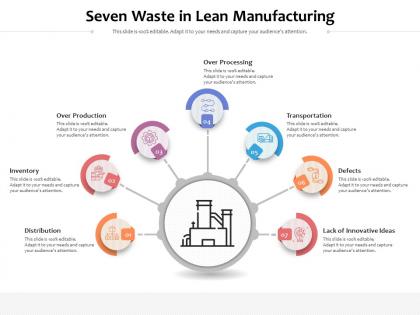
Seven waste in lean manufacturing




Try Before you Buy Download Free Sample Product
 Impress Your
 Audience
 100%
100% Editable
 Save Hours
 of Time


Our Seven Waste In Lean Manufacturing are topically designed to provide an attractive backdrop to any subject. Use them to look like a presentation pro.
People who downloaded this PowerPoint presentation also viewed the following :
Seven waste in lean manufacturing with all 2 slides:
Use our Seven Waste In Lean Manufacturing to effectively help you save your valuable time. They are readymade to fit into any presentation structure.
FAQs for Seven waste
Effective urban waste management strategies include source reduction, comprehensive recycling programs, composting initiatives, waste-to-energy conversion, and smart collection systems using IoT sensors. These approaches streamline operations by minimizing landfill dependency, reducing transportation costs, and optimizing resource recovery, with many cities finding that integrated systems deliver significant cost savings while enhancing environmental sustainability and operational efficiency.
Recycling reduces landfill waste by diverting materials like paper, plastics, metals, and glass from disposal sites, while conserving natural resources through material reuse and reprocessing. Manufacturing companies and municipalities increasingly find that comprehensive recycling programs deliver significant cost savings, reduced environmental footprints, and enhanced operational efficiency, ultimately creating competitive advantages in sustainability-focused markets.
Businesses can implement sustainable waste reduction through comprehensive recycling programs, digital documentation systems, lean manufacturing processes, circular economy models, and employee training initiatives. These approaches streamline operations by minimizing material costs, reducing disposal expenses, and enhancing brand reputation, with many manufacturing and retail organizations finding that strategic waste reduction delivers significant cost savings while meeting increasingly stringent environmental regulations.
Technology revolutionizes waste management through IoT sensors for bin monitoring, GPS tracking for route optimization, AI-powered sorting systems, automated collection vehicles, and data analytics platforms. These innovations streamline operations by reducing collection costs, minimizing environmental impact, and enhancing recycling efficiency, with many municipalities finding significantly improved service delivery and resource allocation.
Individuals can significantly reduce waste through strategic consumption choices, embracing reusable alternatives, composting organic materials, minimizing single-use plastics, and adopting repair-over-replace habits. These approaches streamline household resource management while reducing environmental costs, with many families finding that conscious consumption decisions ultimately deliver both financial savings and meaningful environmental impact.
Improper waste disposal leads to soil contamination, water pollution, air quality degradation, greenhouse gas emissions, and ecosystem disruption. These environmental impacts create significant operational challenges for industries like manufacturing and agriculture, while driving regulatory compliance costs higher, ultimately forcing organizations to adopt strategic waste management systems that enhance sustainability credentials and operational efficiency.
Countries approach waste management through diverse strategies including Sweden's waste-to-energy systems, Germany's comprehensive recycling programs, Japan's strict waste separation protocols, and Singapore's integrated waste treatment facilities. These approaches demonstrate that combining advanced technology with strong policy frameworks and citizen engagement delivers significant environmental benefits, operational efficiency, and resource recovery, with many nations finding that strategic waste management systems ultimately create competitive advantages while reducing long-term costs.
Emerging waste-to-energy innovations include advanced gasification systems, plasma arc technology, anaerobic digestion improvements, pyrolysis reactors, and AI-optimized sorting mechanisms. These technologies streamline conversion processes by maximizing energy output, reducing emissions, and enhancing operational efficiency, with many municipalities and industrial facilities finding that strategic implementation delivers cost savings while supporting sustainability goals.
Education and awareness campaigns reduce waste by teaching proper sorting techniques, highlighting environmental impacts, and promoting sustainable consumption habits. Through targeted programs in schools, workplaces, and communities, organizations see significant reductions in landfill contributions and operational costs, while fostering behavioral changes that deliver long-term environmental benefits and enhanced corporate sustainability profiles.
Municipalities face challenges including inadequate infrastructure capacity, rising collection and disposal costs, limited landfill space, complex recycling logistics, and regulatory compliance pressures. These operational constraints increasingly strain budgets and resources, with many cities finding that traditional waste management approaches struggle to keep pace with growing urban populations, ultimately driving the need for innovative solutions and strategic waste reduction programs.
Packaging design significantly influences waste generation through material selection, structural efficiency, and end-of-life considerations, with streamlined designs reducing excess materials while enhancing recyclability. Strategic packaging approaches enable companies across retail, food service, and e-commerce sectors to minimize environmental impact, reduce disposal costs, and meet sustainability targets, ultimately delivering competitive advantage in increasingly eco-conscious markets.
Key trends include circular economy adoption, sustainable packaging innovations, digital waste-tracking apps, community sharing platforms, and zero-waste retail models. These approaches streamline resource efficiency by eliminating single-use products, enhancing recycling systems, and enabling collaborative consumption, with many households and businesses finding that strategic waste reduction ultimately delivers significant cost savings while building competitive environmental advantages.
Circular economy principles mitigate waste by emphasizing reuse, recycling, refurbishment, and redesigning products for longevity rather than disposal. These approaches streamline resource utilization, minimize raw material consumption, and create closed-loop systems, with manufacturing, retail, and construction industries finding that circular strategies ultimately deliver significant cost reductions and enhanced operational efficiency.
Composting transforms organic waste into nutrient-rich soil amendments while significantly reducing landfill burdens, methane emissions, and disposal costs. This sustainable approach enables municipalities, agricultural operations, and institutions to create valuable products from food scraps and yard waste, ultimately delivering cost savings, environmental compliance, and circular economy benefits.
Government policies and regulations influence waste reduction through mandatory recycling programs, extended producer responsibility laws, landfill taxes, and emissions standards that incentivize sustainable practices. These regulatory frameworks enable organizations to streamline compliance processes, reduce operational costs, and enhance competitive positioning, with many manufacturing and retail companies finding that policy-driven sustainability initiatives ultimately deliver improved brand reputation and market advantage.
-
Use of icon with content is very relateable, informative and appealing.
-
Easy to edit slides with easy to understand instructions.
-
Illustrative design with editable content. Exceptional value for money. Highly pleased with the product.
-
Very well designed and informative templates.