


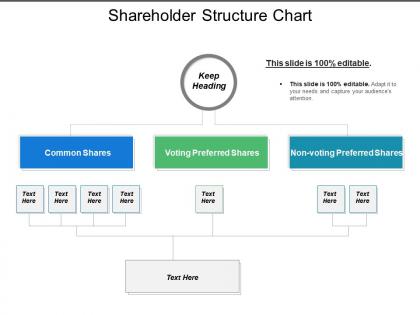
Organigramme de l'actionnariat




Try Before you Buy Download Free Sample Product
 Impress Your
 Audience
 100%
100% Editable
 Save Hours
 of Time


Discréditer les tentatives de créer des conflits avec notre organigramme des actionnaires. Exposer tout programme nuisible.
Structure de l'actionnariat
Structure des actionnaires
People who downloaded this PowerPoint presentation also viewed the following :
Structure de l'actionnariat avec les 5 diapositives : 1. Répartition du capital social 2. Principaux actionnaires 3. Évolution de la structure du capital 4. Participation des dirigeants 5. Actionnariat salarié
Chaque alternative est tout aussi facilitante.



FAQs for
So you'll want to start with the basics - who owns what percentage and their voting rights. Different share classes matter too. But honestly, the real juice is in those special deals some investors get. Like preferred shares or board seats that give them way more power than their ownership suggests. Anti-dilution stuff and tag-along rights can be game changers. I'd map out the percentages first, then dig into what rights actually come with those shares. That's where you'll see who really runs the show - sometimes it's not who you'd expect based on ownership alone.
So basically, whoever owns the most shares gets to call the shots and keep management in check. When one person (like a founder) owns 40%, they can move fast on big decisions - but yeah, they might totally screw over smaller investors. On the flip side, when ownership's spread out everywhere, nobody really has enough power to dominate. Sounds fair, right? But honestly it usually just means weak oversight because everyone thinks someone else is doing the watching. Bottom line - figure out your company's setup so you actually know who's running things behind the scenes.
So concentrated ownership cuts both ways, right? Decisions happen way faster since you don't have a million people weighing in on everything. But minority shareholders basically get ignored - which sucks if you're one of them. The big players can also push their own priorities instead of what's actually good for the company. You miss out on different viewpoints too, and sometimes those outside perspectives catch stuff the inner circle doesn't see. Honestly, I've seen this play out badly when the controlling group gets too comfortable. Before investing, just figure out who's really running the show and whether they care about the same outcomes you do.
So basically, big institutional investors want long-term growth and steady returns since they're managing huge funds. Retail investors? They're usually chasing quick wins and get hyped by quarterly numbers. Companies with lots of institutional money focus on boring stuff like sustainable growth and ESG - which honestly makes sense for stability. But retail-heavy companies go for flashier moves to keep people interested. Look at how meme stocks exploded on social media. The CEO communication style totally changes based on who owns the stock. Worth checking your annual report to see what kind of pressure your leadership's actually under from investors.
Dude, shareholder structure is massive for foreign investors. They want to know exactly what control they'll get before dropping any cash. Clear ownership stakes, voting rights, board seats - all that matters. Complex structures freak them out because nobody wants their equity getting diluted later by some weird arrangement they didn't catch. Clean cap tables make due diligence way easier too. Honestly, messy governance docs are probably the fastest way to scare off international money. Get your structure organized first - trust me, it'll save you headaches when you're actually trying to close deals.
So basically, who owns your stock totally changes how crazy the price gets. Institutional investors? They're chill - buy big chunks and hold forever, so volatility stays low. Day traders though... ugh, they're the worst for this. They panic sell over every little news story and trade constantly. Here's the thing - if just a few big players own most of your shares, watch out. When they finally do move, it's gonna be messy. I'd definitely check those shareholder reports to see what you're dealing with. Short choppy trades vs. steady institutional money makes all the difference.
Yeah, so when companies have mixed shareholders, they usually perform better. You get institutional investors keeping everyone honest, plus retail folks giving real market feedback. Having different types means no single group can steamroll bad decisions - kind of like getting advice from multiple friends instead of just your one know-it-all buddy. Stock prices tend to be less crazy volatile too since different investors freak out about different things. Honestly, I always check who owns what when I'm looking at companies. It's a decent way to gauge if management actually has their act together.
Look, shareholder activists basically buy stakes in companies then make a ton of noise to force changes. Board shake-ups, cost cutting, spin-offs - you name it. They rally other investors to their side, which honestly can get pretty messy during proxy fights. Management usually caves because nobody wants their stock tanking during some public drama. Companies will even change direction preemptively just to avoid becoming a target. My advice? Watch your major shareholders closely. Way better to deal with their complaints early than fight a full campaign later.
So there are basically three things you wanna focus on. Check who actually owns the shares - is it spread out or do a few big players control everything? Then dig into those proxy statements and 13F filings to see the split between institutional money and regular investors. Insider ownership is huge too since it shows if management actually cares about the stock price or they're just there for their salary (spoiler: usually the latter). Oh and grab their latest proxy filing first - that's where all the good stuff is. Voting patterns help too if you can find them.
So here's the deal - ownership structure totally affects dividends. Founder-led companies? They're usually reinvesting everything back into growth instead of paying out. Makes sense when you think about it. But institutional investors like pension funds will push hard for regular payouts since they need that income. Public companies with scattered ownership are kinda all over the place honestly. Oh and definitely look up who the top 10 shareholders are before you invest - saved me from some bad picks before.
Look for investors who actually know your industry and can open doors, not just write checks. Mix of institutional money gives you credibility, but don't let them slow you down with endless meetings (learned that one the hard way). Angels can be gold early on - just make sure they're not gonna micromanage every decision. Reserve equity for your key people too, keeps them thinking like owners instead of just employees. Really comes down to being picky about who you let in. Money's money, but the right partners make all the difference.
So this stuff falls under corporate law - state law if you're in the US. Your company's articles and bylaws usually have their own rules about share transfers too. Securities regs get involved with public companies or certain private deals. Honestly, the whole thing can get messy depending on what you're doing. My old boss learned that the hard way when he tried to skip steps. You'll want to check with a corporate lawyer before making any big moves - there's always some filing requirement or approval process you don't expect.
M&As totally flip your shareholder structure on its head. With acquisitions, your current shareholders either get completely bought out or watch their ownership get watered down when new shares go to the acquiring company. Mergers? Even messier - you're mixing two different groups of shareholders together. Stock deals usually let existing owners keep some stake, but cash deals often mean everyone walks away. Here's what I'd do: figure out exactly how this affects your current shareholders before you even sit down to negotiate. Trust me, once things get rolling, these details become a nightmare to sort out.
So I'd start with shareholder surveys - just send out questionnaires about communication, strategy, how they feel about management. Pretty straightforward. Annual meetings are gold too since you get real-time feedback during Q&As. Some companies track proxy votes and meeting attendance as satisfaction signals, though that's more indirect. Stock performance compared to competitors tells you something, but honestly there's so many variables there. Oh, and don't overthink it - a basic annual survey works great. It's cheap and you'll actually get solid data to improve your shareholder relations game.
Definitely be upfront about it - send press releases, update your investor page, all that stuff. Don't let people find out through the grapevine because that'll just breed suspicion. The big thing is explaining the "why" behind the change, not just announcing it happened. What does this mean for operations going forward? Any timeline they should know about? Honestly, if it's a major ownership shift, I'd probably do a call or Q&A session too. People hate feeling blindsided by this kind of news. Get ahead of it with clear communication across all your usual channels - newsletters, investor updates, whatever you normally use.
-
Appreciate the research and its presentable format.
-
Awesomely designed templates, Easy to understand.