


Short Term Incentive Plan Powerpoint Ppt Template Bundles




Try Before you Buy Download Free Sample Product
 Impress Your
 Audience
 100%
100% Editable
 Save Hours
 of Time


Introducing our comprehensive PPT on the Short Term Incentive Plan an essential tool for organizations seeking to drive performance and motivation among their workforce. This professionally designed presentation provides a detailed overview of departmental plans, outlining an effective employee incentive plan framework. With a focus on incentivizing desired behaviors and achieving short term goals, this PPT highlights the step by step process for implementing a successful incentive plan. From goal setting to performance measurement, our presentation covers key elements such as eligibility criteria, performance metrics, payout structure, and communication strategies. Equip your team with the knowledge and guidance they need to create a robust short term incentive plan that aligns with your organizations objectives.
People who downloaded this PowerPoint presentation also viewed the following :
Short Term Incentive Plan Powerpoint Ppt Template Bundles with all 20 slides:
Use our Short Term Incentive Plan Powerpoint Ppt Template Bundles to effectively help you save your valuable time. They are readymade to fit into any presentation structure.
-
Short Term Incentive Plan
-
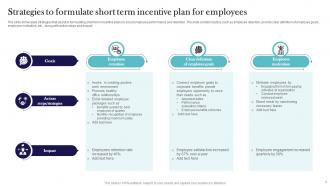
Strategies to formulate short term incentive plan for employees
-
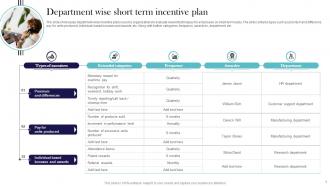
Department wise short term incentive plan
-
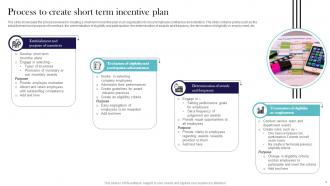
Process to create short term incentive plan
-
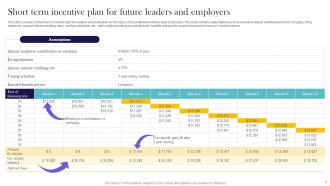
Short term incentive plan for future leaders and employers
-
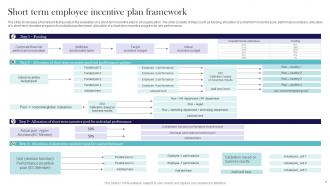
Short term employee incentive plan framework
-
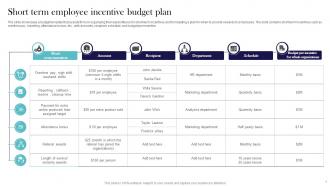
Short term employee incentive budget plan
-
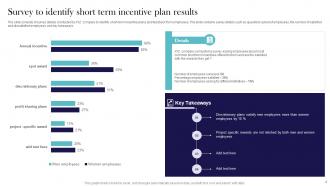
Survey to identify short term incentive plan results
-
Enterprise short term incentive plan icon
-
Icon for short term incentive plan to boost employee performance
-
Sales team short term incentive plan icon
-
Thanks for watching
-

-

-

-

-

-

-

-

FAQs for Short Term Incentive Plan Powerpoint
Okay so you need four key things for a STIP that doesn't suck. First, pick 2-3 performance metrics your team can actually control - this is where most companies screw up honestly. Second, set targets that aren't just "last year plus 10%" because that's beyond lazy. Third, build payout tiers for threshold, target, and knockout performance. Oh and fourth - communicate everything upfront and give updates so people aren't guessing where they stand. I've seen too many of these fail because leadership gets cute with complicated metrics nobody understands.
So STIPs basically connect your bonus straight to hitting numbers that actually move the needle for the company. Revenue goals, customer happiness scores, efficiency targets - whatever keeps the lights on. Pretty smart setup honestly because suddenly everyone's chasing the same wins instead of just... existing at work, you know? Your performance literally affects both your wallet and how well the business does. Just make sure you totally get which metrics they're judging you on and how those tie back to the bigger picture stuff management obsesses over.
Most companies mix financial and operational metrics for short-term incentives. Revenue targets, profit margins, EBITDA are pretty standard. Cost reduction goals too. Then they throw in operational stuff - customer satisfaction, safety metrics, quality targets. Really depends on your industry though. Some plans include individual performance ratings or team KPIs. Honestly, I've seen some pretty random metrics that don't make much sense. The main thing is making sure you can actually influence whatever they're measuring you on in your daily work, otherwise it's just frustrating.
So basically, individual incentives are about YOUR numbers - like sales targets or projects you finish. Team ones? That's when everyone's bonus depends on how the whole group does together. Most places I've seen do individual stuff like personal KPIs or whatever. Team incentives are more about department revenue or customer scores - things you can only hit if everyone's pulling their weight. Honestly, the hybrid approach works best since you're rarely working in a vacuum anyway. Just make sure people know which metrics are theirs vs. the team's, otherwise it gets messy fast and nobody knows what they're actually chasing.
Honestly, STIPs work because people can see exactly how their work = more money in their pocket. Way more motivating than waiting around for annual reviews, you know? The instant gratification when you hit targets is huge. Plus they're solid for retention - nobody's gonna quit right before bonus time lol. Just make sure your goals aren't impossible but aren't too easy either. Quick payouts after performance periods wrap up are crucial. Oh and definitely keep metrics simple - complicated formulas just confuse everyone. Have managers give regular updates so people don't lose steam halfway through.
Dude, transparency is everything with STIPs. Seriously - if people don't understand how the plan works or what drives their payouts, you're just wasting money. I've watched companies create these confusing incentive plans that nobody gets, and it backfires every time. Clear communication upfront is key. Show them the metrics, explain how performance gets measured, and actually let people track their progress. Regular updates help too - don't just disappear until payout time. When employees can see exactly what they're working toward (and where they stand), they'll actually care about hitting those targets. Pretty straightforward stuff, but you'd be surprised how many places mess this up.
Honestly, you've got to nail three main things: clear criteria, consistent standards, and regular check-ins. Define your performance metrics upfront so nobody's guessing what success looks like. Same rules for everyone - I don't care if someone golfs with the boss every weekend. Run pay equity audits regularly to spot problems before they blow up. Multiple people should review performance evaluations too, cuts down on bias. Oh, and document literally everything. When people can see your process is transparent, they'll actually trust that you're being fair about it.
Oh man, the classic mistakes? Don't go overboard with too many metrics - you'll just confuse everyone. Goals that are either ridiculously easy or impossible will kill motivation fast. I see companies all the time just recycling last year's plan without thinking it through (lazy much?). Your payout formulas shouldn't need a PhD to understand. Those threshold levels where bonuses actually kick in are huge - get those wrong and nobody participates. Honestly, alignment with business strategy matters more than people think. Keep it simple, test different scenarios first, and if you can't explain how someone earns their bonus in 30 seconds, you've overcomplicated it.
Honestly, once a year is way too slow for STIP reviews these days. I'd do quarterly check-ins to see if your metrics still make sense with current priorities, then formal updates annually. Your industry matters a ton here though - if you're in something volatile or your strategy suddenly shifts mid-year, just review them right away. Don't wait around. The whole point is keeping incentives tied to what actually moves the needle. Put those quarterly reviews on your calendar now or you'll be wondering in six months why everything feels misaligned.
Yeah, STIPs can definitely work if you set them up right. People get way more motivated when they can see how their work connects to real goals and actual rewards. But here's the thing - don't just focus on boring financial stuff like profit margins. Nobody cares about that day-to-day. Mix in some team goals, customer satisfaction metrics, maybe innovation targets too. The key is keeping everything realistic and transparent. I've seen too many companies mess this up by setting impossible targets or constantly moving the goalposts. That just pisses everyone off and kills motivation instead of building it.
Honestly, ditch the cash-only approach - that's where most companies mess up. Give people options like extra PTO, stock, quarterly bonuses, or even remote work perks. Also, don't make it all-or-nothing. Someone hitting 80% should still get rewarded, not left empty-handed. Quick wins deserve instant recognition too, not just waiting around for annual payouts. Here's what I'd do first though - just ask your team what actually motivates them. You'll probably get answers you weren't expecting. Choice is everything when it comes to this stuff.
Honestly, communication can make or break your whole STIP rollout. Get leadership on board first, then work your way down. People need to actually understand how it works - what they do, what they get paid for, why it matters to their specific job. I've watched so many of these things crash and burn because nobody explained them properly! Use whatever works for your company culture - town halls, emails, team meetings. Just don't make it sound like corporate BS. Oh, and definitely plan some follow-up sessions after launch. Trust me, you'll get tons of questions once people start thinking about it.
Your STIP design needs to flex with economic conditions - what motivates people totally shifts depending on the business climate. Cash preservation becomes huge during downturns, so you might need to dial down those performance targets. Nobody wants to chase impossible goals that just crush morale, you know? Growth periods are different though - that's when you can push harder on revenue targets and expansion metrics. The trick is picking what's actually controllable right now. I'd say review it yearly at minimum, maybe more if things get really volatile. You want targets that challenge people but don't set them up to fail.
So STIP payouts get taxed like regular income when you actually get the money. Your company will withhold at that supplemental rate - usually 22% federal plus whatever your state takes. Honestly, that withholding rarely covers what you'll actually owe though. Companies love STIPs because they can write them off as business expenses. The timing thing can be weird if your plan year is different from the calendar year - just creates more paperwork headaches. Definitely stash some extra cash if you're expecting a decent payout, because April's gonna hurt otherwise.
Honestly, the biggest game-changer is getting real-time data instead of waiting all year to see if things are working. Set up a basic dashboard to track your KPIs - even something simple makes a huge difference. You'll catch problems way earlier and people stay more engaged when they can actually see their progress. Analytics help you figure out which metrics actually matter (spoiler: half of them probably don't). Oh, and predictive modeling saves you from those awkward "wait, we owe HOW much in bonuses?" moments at budget time. Your HR team will love you for the automated reporting alone. Start with one good performance dashboard and build from there.
-
Amazing variety of PowerPoint slides. Really helpful in designing professional presentations.
-
Their products can save your time, effort and money. What else you need. All in one package for presentation needs!