


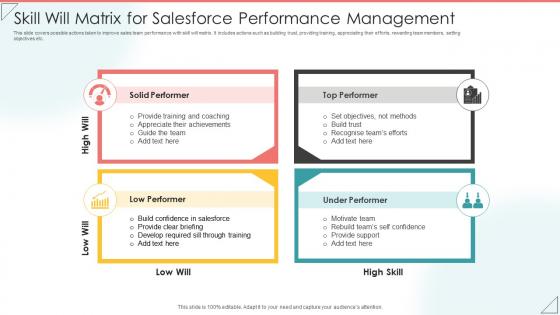
Skill Will Matrix For Salesforce Performance Management




Try Before you Buy Download Free Sample Product
 Impress Your
 Audience
 100%
100% Editable
 Save Hours
 of Time


This slide covers possible actions taken to improve sales team performance with skill will matrix. It includes actions such as building trust, providing training, appreciating their efforts, rewarding team members, setting objectives etc.
People who downloaded this PowerPoint presentation also viewed the following :
Skill Will Matrix For Salesforce Performance Management with all 6 slides:
Use our Skill Will Matrix For Salesforce Performance Management to effectively help you save your valuable time. They are readymade to fit into any presentation structure.





FAQs for Skill Will Matrix For
So basically it's this 2x2 grid where you plot people by skill level and how willing they are to actually do the work. High skill + high will? Those are your golden people - just give them the task and let them run with it. High skill but low will means something's bugging them, so dig into what's killing their motivation. Low skill + high will is perfect for coaching since they actually want to learn. And honestly, low skill + low will... that's rough. They either need major help or maybe aren't the right fit. Really helps you figure out how to manage different personalities instead of using the same approach for everyone.
So basically you plot your team on two axes - how skilled they are vs how motivated they are for specific tasks. Game changer, honestly. Someone's got high skills but low motivation? They don't need more training, they need you to figure out why they're checked out. Meanwhile that eager person who's still learning? Perfect for development programs. I used to waste so much time putting everyone through the same workshops (ugh). Plot your people this week - I bet you'll spot some obvious gaps you've been missing. It's weirdly addictive once you start.
The Skill Will Matrix is honestly a game-changer for figuring out what each person on your team actually needs. Map everyone out by their skill level and motivation - you'll get four different quadrants. Your high skill, high motivation people? Just delegate and get out of their way. The eager but inexperienced ones (usually your best learners) need coaching and training time. Now, skilled people who seem checked out - that's where you need to have real conversations about what's killing their motivation. Low skill AND low motivation is trickier... sometimes they need super clear direction, other times maybe they're just in the wrong role. Point is, stop managing everyone identically.
So the Skill Will Matrix is basically two questions: can they do the job (skill) and do they actually want to (will). Creates four boxes. High skill + high will? Lucky you - just delegate and get out of their way. Someone's eager but doesn't know what they're doing yet? Coach them through it. The tricky one is when they're totally capable but just... aren't feeling it. That's a motivation issue you'll need to dig into. Low skill AND low will though - oof, that's where you either micromanage everything or start having those awkward "is this the right fit" conversations.
Honestly, the Skill Will Matrix is clutch for succession planning. Plot your people on skill vs motivation and boom - you can see who's ready to step up right now versus who has potential but needs more development. Way smarter than just winging it when someone leaves! You'll spot dangerous gaps too, like when your best person might bounce but nobody's trained to replace them. I've seen that mess happen before. Use it to build targeted development plans so you're not scrambling later. Short sentences work. The matrix basically shows your bench strength before you actually need it.
Honestly, you can't just set up the Skill Will Matrix once and forget about it. Regular feedback is what makes the whole thing actually useful - otherwise you're just guessing where people belong. I'd say monthly check-ins work pretty well for most teams. People's motivation changes way more than their skills do, which is kinda interesting when you think about it. You'll catch when someone's improved or maybe lost steam. The conversations don't have to be formal or anything, but you need that ongoing dialogue to keep your assessments on track and adjust how you're managing each person.
Honestly, quarterly reviews work pretty well for this stuff. Just fold it into your existing performance review cycle - managers are already thinking about development then anyway. Don't make it this huge formal process though. Simple check-ins work better. Ask things like "what's changed in your role lately?" and "any new skills you're picking up?" Your matrix becomes totally useless if it just sits there getting outdated. I'd tie updates to actual events too - like when someone finishes training or gets assigned to a new project. Makes it feel more natural. Maybe schedule your first review session next month? That way you'll actually do it instead of just talking about it.
Honestly, start with one-on-ones to figure out what's actually going on. Are they burnt out? Feeling invisible? Maybe they just hate their role - happens more than you'd think. Sometimes "low motivation" is really just someone who's frustrated or overwhelmed. Once you get the real story, you can fix it properly. Could be they need more recognition, clearer goals, or just someone to connect their daily grind to something meaningful. Don't assume laziness right off the bat. Those conversations will tell you everything you need to know.
So the Skill Will Matrix is basically this grid where you plot people based on their skills and motivation for different tasks. Four boxes - if someone's skilled AND motivated, just let them run with it. Low skill but high motivation? They need coaching. High skill but they're not into it? You've got to figure out why they're checked out. And low skill, low motivation... honestly, maybe find someone else or be ready to micromanage forever. It's way better than just always asking the same reliable person to do everything (we've all been there). Actually helps you think through who's the right fit instead of just winging it.
Oh man, don't treat it like a one-time thing - that's huge. People change! Also, be brutally honest about actual skills vs what you're hoping they have. Wishful thinking will screw you over every time. Here's what really gets me though - assuming high will automatically means coachable, or that low will people are hopeless. Life happens, you know? Someone might be dealing with stuff at home or drowning in work. Their motivation isn't set in stone. And definitely get them involved in rating themselves. Otherwise you're just guessing where they actually sit.
Honestly, I'd start with something like 15Five or BambooHR since they already have skill/will tracking built in. Way easier than building from scratch. You could also set up custom dashboards in Monday.com or Notion if you're feeling crafty. The trick is getting people to actually use it - so keep things super simple at first. Maybe add pulse surveys or quick weekly ratings that feed into your matrix automatically. Heat maps are pretty slick for visualizing everything too. I learned this the hard way, but don't go crazy with features right away. Get your team doing regular check-ins first, then add the fancy stuff later.
Honestly, the Skill Will Matrix just makes those awkward performance conversations way less painful. You're not waiting around for yearly reviews anymore - instead you're constantly checking where people land on skill vs motivation. Short bursts work better anyway. Map your team quarterly and suddenly you're talking development instead of judgment calls. People can actually see themselves moving through the quadrants over time, which is pretty motivating. What I love about it is nobody gets to coast thinking they're "finished" learning. Everyone's developing something. Plus you stop giving that useless vague feedback and get specific about what someone actually needs next.
So basically you plot everyone on this matrix based on skill vs motivation, and it's wild how clear things become. High motivation but low skill? Perfect training candidates for stuff you actually need. Got someone super skilled but checked out? Maybe they need a role change or different incentives. I swear, mapping my team out for the first time was like putting on glasses - suddenly saw all these patterns I'd missed. The trick is turning those insights into real development plans that actually connect to where the company's headed. Honestly, just try plotting your people this week and see what jumps out.
So the Skill Will Matrix is way simpler than those marathon performance reviews everyone dreads. It just asks two questions: can they do the job, and do they actually want to? That's it. Most performance tools try to measure literally everything and honestly just become a pain to fill out. Traditional reviews get stuck on rating scales and goal-setting forms that take forever. But this thing? You can map your whole team in like 20 minutes and suddenly know exactly who needs what kind of help. I swear it makes your priorities so much clearer. Try it next week - you'll see what I mean about how much easier managing becomes.
So basically, you've got to figure out where each person sits on that skill/will matrix first. Got someone with tons of skill but zero motivation? That's all about digging into what's crushing their drive. The eager but inexperienced ones are honestly the easiest to coach - they actually want to learn stuff. Your high performers? Just point them where to go and stay out of their way. Now the really tough cases are low skill AND low will. Those people... you might need to have a completely different conversation about fit. Plot everyone out first, then completely switch up your style instead of coaching everyone the same boring way.
-
Their designing team is so expert in making tailored templates. They craft the exact thing I have in my mind…..really happy.
-
Understandable and informative presentation.