


Smart Mining Dashboard With Supply Chain Inventory How IoT Technology Is Transforming IoT SS




Try Before you Buy Download Free Sample Product
 Impress Your
 Audience
 100%
100% Editable
 Save Hours
 of Time


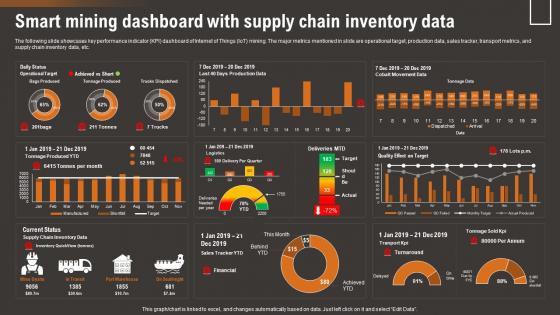
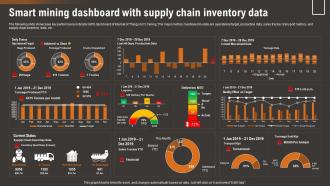
The following slide showcases key performance indicator KPI dashboard of Internet of Things IoT mining. The major metrics mentioned in slide are operational target, production data, sales tracker, transport metrics, and supply chain inventory data, etc.
People who downloaded this PowerPoint presentation also viewed the following :
Smart Mining Dashboard With Supply Chain Inventory How IoT Technology Is Transforming IoT SS with all 10 slides:
Use our Smart Mining Dashboard With Supply Chain Inventory How IoT Technology Is Transforming IoT SS to effectively help you save your valuable time. They are readymade to fit into any presentation structure.








FAQs for Smart Mining Dashboard With Supply Chain Inventory How IoT Technology Is
Start with equipment health - vibration, temps, motor performance. Downtime's a killer. Track your ore throughput and extraction volumes in real-time too. Safety can't be optional - air quality, gas detection, worker tracking, all that. Oh and environmental stuff like dust and water usage keeps the regulators happy. Honestly though? These dashboards turn into a hot mess real quick with too much data. I'd put your most critical alerts right up front. Make sure when something breaks, your operators actually know what to do about it instead of just staring at flashing red lights.
So basically these IoT sensors just stick right onto whatever equipment you already have - no need to rip anything out and start over. They'll track stuff like how fast your conveyor belts are running, equipment temps, all that good data you probably wish you had. Everything feeds into dashboards that spot bottlenecks and can actually predict when something's about to break down. Your team gets heads up before small issues turn into expensive disasters. Honestly, I'd just pick one machine that's critical and test it out first. Once you see the numbers, you'll want to put sensors on everything else.
Start with encryption - that's your biggest bang for buck. Data at rest, data moving between sensors and your dashboard, all of it. MFA is non-negotiable since mining data's worth serious money to competitors. Segment your network so one hacked device can't reach everything else. I know it sounds boring, but most breaches happen because people skip firmware updates and basic audits. Role-based access is smart too - operators don't need to see executive-level stuff. Honestly, just nail encryption and MFA first. Those two will stop like 80% of what hackers throw at you.
So basically, predictive analytics looks at all your IoT sensor data and spots trouble before it hits. Equipment about to fail? You'll know weeks early. Gas levels creeping up dangerously? Boom, instant alert. It even tracks worker fatigue patterns – which is kinda wild when you think about it. Ground instability, environmental shifts, all of it gets flagged ahead of time. Way better than scrambling after accidents happen, right? I'd start with whatever area scares you most safety-wise. The ROI comes fast once you're preventing instead of reacting.
So these smart mining dashboards basically connect to IoT sensors that monitor air quality, water usage, soil conditions - all that environmental stuff in real-time. When something goes wrong, you get instant alerts which honestly saves compliance teams so much headache. They also help optimize your equipment to cut down on fuel and waste. Oh, and the automated reporting feature is pretty clutch for dealing with regulators. My advice? Start with your biggest environmental trouble spots first. Deploy sensors there and you'll see improvements in both compliance costs and operations almost immediately. Way better than playing catch-up later.
Look, UI can totally make or break your Smart Mining Dashboard. I've seen operators just ignore systems because they're too confusing to navigate quickly. Clean data visualization is huge - people need to glance at it and instantly know what's happening with equipment issues or production numbers. Mobile-friendly design matters too since your team's constantly moving between office and field. Safety alerts especially need to pop up clearly in real-time. Honestly, you could have the best IoT sensors in the world, but if the interface sucks, nobody's gonna use it properly. Keep it simple and intuitive.
So basically, ML algorithms dig through all that messy mining data and find patterns you'd miss completely. They'll predict when equipment's about to break down, figure out better extraction paths, and catch safety issues as they happen. It's like having this crazy smart analyst who never sleeps, you know? The whole thing gets smarter over time by learning from old data - predicting ore quality, maintenance timing, all that stuff. Honestly, I'd start with the predictive maintenance angle first. That's where you'll see money back quickest and avoid those brutal equipment failures.
Honestly, connectivity is gonna be your worst nightmare - especially underground where signals just die. Old equipment that wasn't made for this stuff? Good luck getting that to play nice. The upfront costs are brutal too... sensors, new infrastructure, training everyone. Security's a big deal since you're sending operational data over the air now. Mining equipment takes a beating, so expect more failures than usual. Oh, and definitely pilot this in just one section first. I've seen too many companies go all-in and regret it big time.
Dude, real-time monitoring is a total game changer. Your IoT sensors watch vibration, temperature, all that stuff 24/7 so you catch problems way before things break. No more "oh shit the conveyor just died" moments - you'll actually know what's coming and can fix stuff during scheduled downtime. I've seen places cut unplanned outages by like 30-40%, which honestly blows my mind every time. You go from reactive scrambling to actually planning ahead. Start with your most critical equipment first and get sensors on those bad boys.
Honestly, start with air quality monitors - those gas detection ones are literal lifesavers in mines. You'll also want vibration sensors on your equipment to catch problems early. Temperature and humidity tracking is pretty standard too. Underground operations definitely need pressure sensors. Oh, and proximity sensors are super useful for keeping tabs on where everyone is. Acoustic monitoring can actually predict equipment failures which is pretty cool. Just make sure whatever you get can handle getting beat up - mining environments are brutal. I'd prioritize the air quality and vibration stuff first since those give you immediate safety wins.
Honestly, mobile compatibility is a total game changer for mining ops. Your field teams can finally ditch the whole "radio back to control room" dance and just pull up equipment status, production numbers, safety alerts - whatever they need - right on their phones or tablets. Whether someone's underground, at the crusher, or way out in some remote pit, they've got real-time data in their pocket. Supervisors can actually make decisions on the spot instead of running back and forth. I'd start testing it on tablets first since the screens are bigger, then see how it looks on phones.
Yeah, so upfront you're gonna drop serious cash - sensors, connectivity stuff, building dashboards, making it all talk to your current systems. Hardware alone? Could be tens of thousands depending on how big your site is. Honestly though, most places see payback in like 18-24 months because downtime drops and equipment runs way better. Don't forget you'll have monthly costs too - data plans and software subscriptions add up. But here's what I'd do: pick one area first, prove it works, then expand from there. Way smarter than going all-in right away.
So basically you get this one dashboard that everyone can jump into at the same time - ops, safety, management, whoever. Real-time data from all your sites is right there. No more of those awful meetings where everyone's got different numbers (seriously, the worst). You can share stuff instantly and actually make decisions without drowning in emails. Set up different permission levels so people only see what they need - keeps things clean. I'd start by figuring out which metrics each team actually cares about, then build their views around that.
Honestly, autonomous mining gear is gonna be everywhere in like 5-7 years - it's wild how fast that's moving. Your IoT sensors will process data locally with edge computing instead of constantly hitting the cloud. AI predictive maintenance is getting really good at catching equipment failures weeks ahead of time. Digital twins are pretty cool too, basically you get a virtual copy of your whole operation to test stuff without breaking anything real. Oh and 5G networks will let hundreds of devices coordinate in real-time, which sounds chaotic but apparently works. Definitely start planning infrastructure upgrades now though - retrofitting costs way more later.
So AI basically flips you from always reacting to stuff to actually seeing problems coming. Game changer for real. Your dashboard starts catching patterns and gives you heads up before equipment craps out or production tanks. You'll be able to fix maintenance schedules based on how things actually wear down, tweak production as it's happening, even predict safety issues. Makes decisions way faster and you're not just guessing anymore. Oh and start with whatever's driving you most crazy operationally - that's where you'll see the biggest wins first.
-
Excellent design and quick turnaround.
-
Wow, never been this impressed with any online service provider. Really appreciate the customer support all along from the navigation to purchasing the right products.