


Intelligentes Wassermanagement mithilfe von IoT-Präsentationsfolien




Try Before you Buy Download Free Sample Product
 Impress Your
 Audience
 100%
100% Editable
 Save Hours
 of Time


Erkunden Sie den Paradigmenwechsel im Wassermanagement mit unserer Smart Water Management Using IoT PowerPoint zum IoT-Wassermanagement. Beginnend mit einem Überblick und einem Branchenausblick analysieren wir Markttrends und Wachstumsprognosen. Praktische Anwendungen, von intelligenter Bewässerung bis hin zum Anlagenmanagement, werden anschließend vorgestellt. Sicherheitsherausforderungen wie Datenschutz und Netzwerkvulnerabilität werden ebenso behandelt wie robuste Lösungen wie Verschlüsselungsprotokolle. Eine überzeugende Fallstudie unterstreicht den Praxiserfolg und veranschaulicht Vorteile wie reduzierte Verschwendung und erhöhte Effizienz. Schließlich quantifiziert unsere ROI-Prognose die finanziellen Gewinne und bietet den Stakeholdern eine klare Investitionsplanung. Durch die Integration von IoT-Geräten und Analysen können Organisationen die Ressourcenallokation optimieren und Nachhaltigkeit vorantreiben. Diese Präsentation stattet die Stakeholder mit Wissen und Werkzeugen aus, um das transformative Potenzial des IoT-Wassermanagements zu erschließen und smartere, effizientere Praktiken zu fördern. Holen Sie sich jetzt die PowerPoint-Präsentation.
People who downloaded this PowerPoint presentation also viewed the following :
Inhalt dieser Powerpoint-Präsentation
Folie 1: Diese Folie zeigt den Titel Smart Water Management Using IoT. Geben Sie Ihren Firmennamen an.
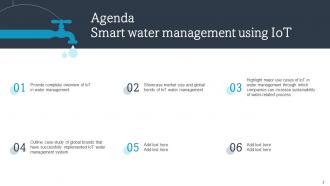
Folie 2: Diese Folie zeigt den Titel Agenda.
Folie 3: Diese Folie zeigt das Inhaltsverzeichnis.
Folie 4: Diese Folie zeigt das Inhaltsverzeichnis: Überblick über IoT im Wassermanagement.
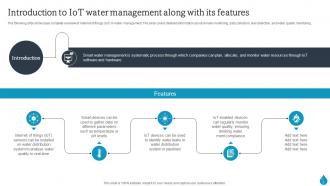
Folie 5: Diese Folie zeigt einen vollständigen Überblick über das Internet der Dinge (IoT) im Wassermanagement.
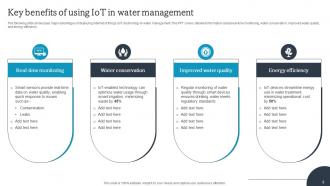
Folie 6: Diese Folie zeigt die wichtigsten Vorteile des Einsatzes der Internet der Dinge (IoT)-Technologie im Wassermanagement.
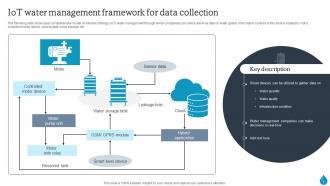
Folie 7: Diese Folie zeigt ein umfassendes Modell für das Internet der Dinge (IoT) Wassermanagement, mit dem Unternehmen Echtzeit-Daten zur Wasserqualität sammeln können.
Folie 8: Diese Folie zeigt mehrere kurz- und langfristige Ziele des Internet der Dinge (IoT) Wassermanagements.
Folie 9: Diese Folie zeigt das Inhaltsverzeichnis: IoT Water Management Industry Outlook.
Folie 10: Diese Folie zeigt einen Marktüberblick über das Internet der Dinge (IoT) Wassermanagement weltweit.
Folie 11: Diese Folie zeigt globale Trends, die mit dem intelligenten Wassermanagement verbunden sind.
Folie 12: Diese Folie zeigt eine statistische Darstellung der Marktgröße für intelligentes Wassermanagement.
Folie 13: Diese Folie zeigt eine grafische Darstellung der Marktgröße für das Internet der Dinge (IoT) Wassermanagement.
Folie 14: Diese Folie zeigt eine Karte der Marktgröße für intelligentes Wassermanagement nach verschiedenen Regionen.
Folie 15: Diese Folie zeigt die prominentesten Anbieter von intelligenten Wassermanagementlösungen für Unternehmen.
Folie 16: Diese Folie zeigt das Inhaltsverzeichnis: Wichtige Anwendungsbereiche von IoT im Wassermanagement.
Folie 17: Diese Folie zeigt verschiedene Anwendungsfälle des Internets der Dinge (IoT) im Abwassermanagement.
Folie 18: Diese Folie zeigt mehrere Anwendungsfälle für intelligente Bewässerung, mit denen Unternehmen die Produktivität steigern und Kosten minimieren können.
Folie 19: Diese Folie zeigt verschiedene Anwendungsfälle des Internets der Dinge (IoT) im Stauseenmanagement.
Folie 20: Diese Folie zeigt mehrere Anwendungsfälle des Internets der Dinge (IoT) im Anlagenmanagement, mit denen Unternehmen die Anlagenleistung verbessern und Betriebskosten minimieren können.
Folie 21: Diese Folie zeigt das Inhaltsverzeichnis: Sensoren und Technologien im IoT-Wassermanagement.
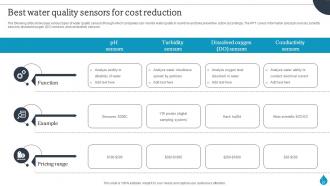
Folie 22: Diese Folie zeigt verschiedene Arten von Wasserqualitätssensoren, mit denen Unternehmen die Wasserqualität in Echtzeit überwachen und entsprechend vorbeugende Maßnahmen ergreifen können.
Folie 23: Diese Folie zeigt mehrere Wasserpegelsensoren, mit denen Unternehmen den Wasserstand in Echtzeit analysieren können.
Folie 24: Diese Folie zeigt mehrere Arten von Wettersensoren, mit denen Wassermanagementunternehmen Wettervorhersagen treffen und die Wasserverteilung optimieren können.
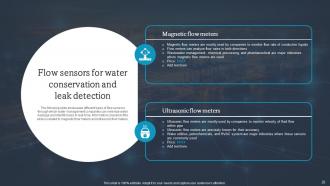
Folie 25: Diese Folie zeigt verschiedene Arten von Durchflusssensoren, mit denen Wassermanagementunternehmen Wasserverschwendung minimieren und Lecks in Echtzeit erkennen können.
Folie 26: Diese Folie zeigt das Inhaltsverzeichnis: Technologien.
Folie 27: Diese Folie zeigt mehrere Vorteile der Verwendung der Blockchain-Technologie im Internet der Dinge (IoT) Wassermanagement.
Folie 28: Diese Folie zeigt die wichtigsten Vorteile der Verwendung von Cloud-Computing-Technologie im Internet der Dinge (IoT) Wassermanagement.
Folie 29: Diese Folie zeigt die positiven Auswirkungen des Einsatzes von Künstlicher Intelligenz (KI) auf die Wassereinsparung und das Wassermanagement.
Folie 30: Diese Folie zeigt das Inhaltsverzeichnis: IoT-Wassermanagementsystem.
Folie 31: Diese Folie zeigt verschiedene Parameter bei der Auswahl eines Internet der Dinge (IoT) Wassermanagementtools.
Folie 32: Diese Folie zeigt eine vergleichende Analyse verschiedener Internet der Dinge (IoT) Wassermanagementtools.
Folie 33: Diese Folie zeigt den Preisplan für ein Internet der Dinge (IoT) Wassermanagementtool.
Folie 34: Diese Folie zeigt das Inhaltsverzeichnis: Sicherheitsherausforderungen und -lösungen.
Folie 35: Diese Folie zeigt verschiedene Sicherheitsherausforderungen, mit denen Unternehmen bei der Einführung eines Internet der Dinge (IoT) Wassermanagementsystems konfrontiert sein können.
Folie 36: Diese Folie zeigt eine grafische Darstellung mehrerer Sicherheitsherausforderungen, mit denen Unternehmen bei der Einführung eines Internet der Dinge (IoT) Wassermanagementsystems konfrontiert sein können.
Folie 37: Diese Folie zeigt verschiedene Sicherheitsherausforderungen, mit denen Unternehmen bei der Einführung eines Internet der Dinge (IoT) Wassermanagementsystems konfrontiert sein können.
Folie 38: Diese Folie zeigt das Inhaltsverzeichnis: Fallstudie und ROI-Prognose.
Folie 39: Diese Folie zeigt eine umfassende Fallstudie darüber, wie das Unternehmen AquaTech Solutions die Wasserverteilungsabläufe eines Kunden transformiert hat.
Folie 40: Diese Folie zeigt eine tabellarische Darstellung der Kapitalrendite (ROI) nach der Implementierung der IoT-Technologie im intelligenten Wassermanagement.
Folie 41: Diese Folie zeigt das Inhaltsverzeichnis: Dashboards.
Folie 42: Diese Folie zeigt ein umfassendes Kennzahlen-Dashboard (KPI), mit dem Unternehmen den Wasserverbrauch messen können.
Folie 43: Diese Folie zeigt ein Kennzahlen-Dashboard (KPI) für das Internet der Dinge (IoT) Wassermanagement.
Folie 44: Diese Folie zeigt alle in der Präsentation enthaltenen Symbole.
Folie 45: Diese Folie trägt den Titel Zusätzliche Folien für den weiteren Fortschritt.
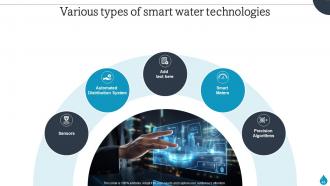
Folie 46: Diese Folie zeigt den Titel Verschiedene Arten intelligenter Wassertechnologien.
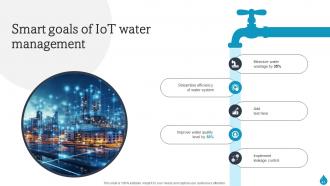
Folie 47: Diese Folie zeigt den Titel Intelligente Ziele des IoT-Wassermanagements.
Folie 48: Diese Folie zeigt den Titel IoT-gestützter Wassermanagementsystem-Rahmen.
Folie 49: Diese Folie zeigt den Titel Lösungen des Unternehmens für intelligentes Wassermanagement.
Folie 50: Dies ist eine Folie zur Ideengenerierung, um eine neue Idee zu formulieren oder Informationen, Spezifikationen usw. hervorzuheben.
Folie 51: Dies ist eine Zeitachsen-Folie. Zeigen Sie hier zeitbezogene Daten an.
Folie 52: Diese Folie zeigt ein Venn-Diagramm mit Textfeldern.
Folie 53: Dies ist eine Dankeschön-Folie mit Adresse, Telefonnummern und E-Mail-Adresse.
Intelligentes Wassermanagement mithilfe von IoT
Smart Water Management Using IoT Powerpoint Präsentationsfolien IoT CD effektiv nutzen, um wertvolle Zeit zu sparen. Sie sind fertig erstellt, um in jede Präsentationsstruktur zu passen.
-
Smart Water Management Using IoT
-
Smart water management using IoT
-
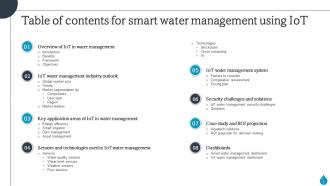
Table of contents for smart water management using IoT
-
Smart water management using IoT
-
Introduction to IoT water management along with its features
-
Key benefits of using IoT in water management
-
IoT water management framework for data collection
-
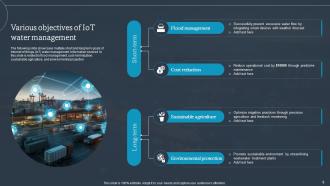
Various objectives of IoT water management
-
Smart water management using IoT
-
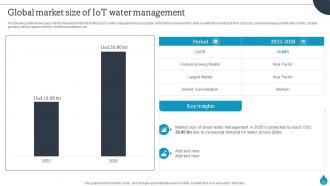
Global market size of IoT water management
-
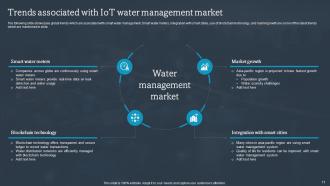
Trends associated with IoT water management market
-
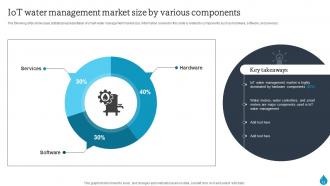
IoT water management market size by various components
-
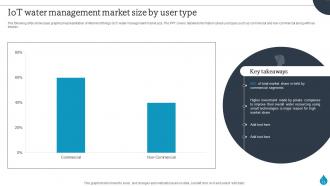
IoT water management market size by user type
-
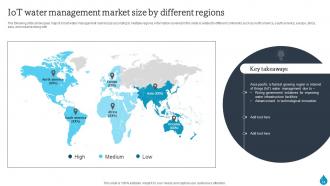
IoT water management market size by different regions
-

Key market leaders of IoT water management
-
Smart water management using IoT
-
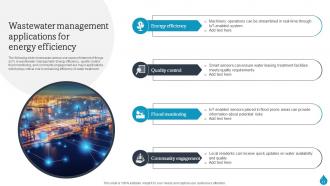
Wastewater management applications for energy efficiency
-
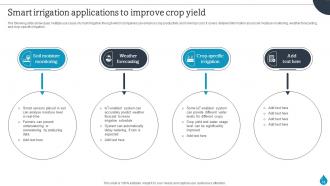
Smart irrigation applications to improve crop yield
-
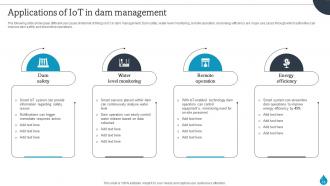
Applications of IoT in dam management
-
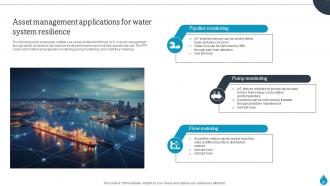
Asset management applications for water system resilience
-
Smart water management using IoT
-
Best water quality sensors for cost reduction
-

Water level sensors with their key benefits
-

Various types of weather sensors for forecasting and planning
-
Flow sensors for water conservation and leak detection
-
Smart water management using IoT
-
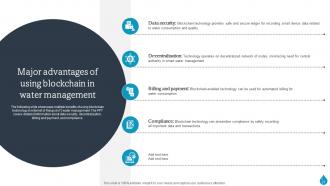
Major advantages of using blockchain in water management
-

Overview of cloud computing in smart water management
-
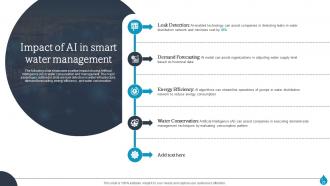
Impact of AI in smart water management
-
Smart water management using IoT
-
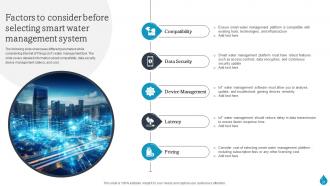
Factors to consider before selecting smart water management system
-
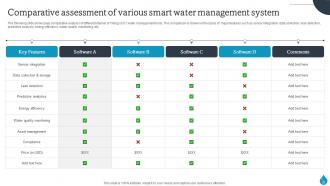
Comparative assessment of various smart water management systems
-
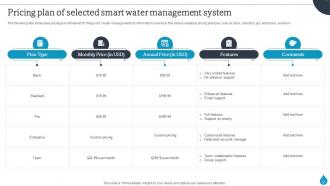
Pricing plan of selected smart water management system
-
Smart water management using IoT
-
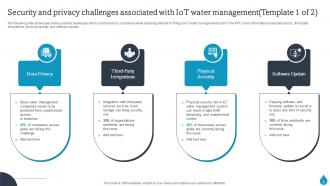
Security and privacy challenges associated with IoT water management Template 1 of 2
-
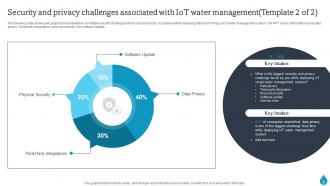
Security and privacy challenges associated with IoT water management Template 2 of 2
-
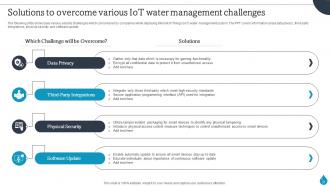
Solutions to overcome various IoT water management challenges
-
Smart water management using IoT
-
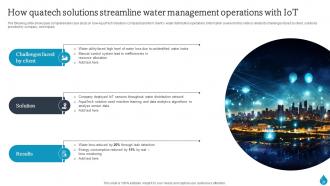
How quatech solutions streamline water management operations with IoT
-
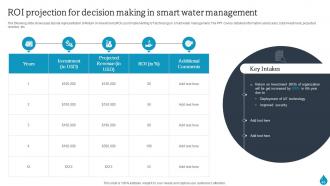
ROI projection for decision making in smart water management
-
Smart water management using IoT
-
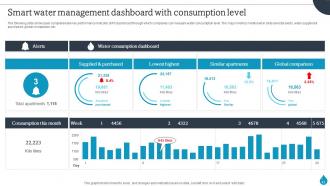
Smart water management dashboard with consumption level
-
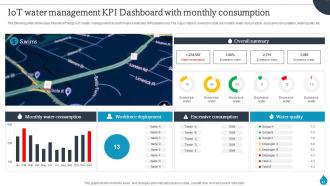
IoT water management KPI Dashboard with monthly consumption
-
Icons slide for Smart water management using IoT
-
Additional slides
-
Various types of smart water technologies
-
Smart goals of IoT water management
-
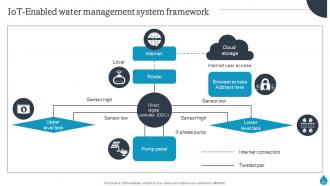
IoT Enabled water management system framework
-
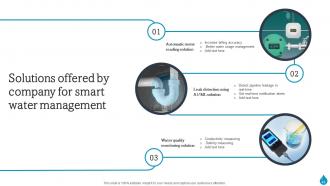
Solutions offered by company for smart water management
-
Idea generation
-

Timeline
-
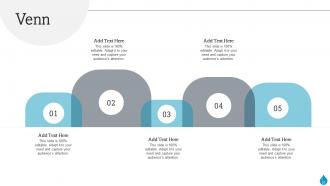
Venn
-
Thanks for watching
-

-

-

-

-

-

-

-

FAQs for Smart Water Management Using IoT Powerpoint Presentation
So you'll need IoT sensors to track water quality and flow rates, plus automated valves and pumps. Leak detection sensors are honestly a no-brainer - they'll save you tons when they catch big leaks early. Don't forget a central platform to crunch all that data in real-time. Oh, and make sure everything actually connects properly because nothing's worse than systems that can't talk to each other. I'd start by looking at your current setup first. Figure out where you're bleeding the most water or having quality problems, then build from there.
So basically, IoT sensors track everything happening in your water system - leaks, pressure drops, flow rates, all that stuff. You catch issues way before they turn into disasters like burst mains. Smart meters are actually pretty sweet because they show exactly how much water different areas use, so you can adjust pressure zones and predict when demand spikes. Your crews won't be driving around checking meters manually anymore, which honestly saves a ton of time. Best part? You can fix the stuff that matters most first instead of just guessing what's urgent. I'd definitely test it in one zone first though - see if the numbers make sense before going all-in citywide.
So data analytics is basically your crystal ball for water systems. You'll spot consumption patterns - like how everyone cranks up usage on scorching days (no surprise there). The cool part? Algorithms can actually predict demand spikes by crunching weather data, population trends, seasonal stuff, even economic factors. Pretty accurate too. Instead of scrambling when problems hit, you can plan ahead. Honestly, the key is getting consistent data from your meters first - that's what feeds everything else. Once you have that foundation, forecasting supply issues becomes way more manageable.
You know how much water just gets wasted without us even realizing? Smart management catches that stuff early - sensors pick up leaks right away and only water plants when the soil actually needs it. I was shocked when I learned you can cut usage by 20-30% without anyone changing their habits. Real-time data shows exactly when and where water's needed instead of just guessing. Honestly, the tracking part is kinda cool - you start seeing all these patterns you never noticed. I'd say pick your biggest water-wasting spots first and throw some basic monitors there.
Honestly, you're gonna hit three big walls: crappy infrastructure, expensive setup costs, and nobody knows how to fix the stuff when it breaks. Most places don't even have steady power or decent internet - which is pretty much a disaster when your whole system depends on both. Budget-wise, governments would rather spend money getting people basic water than fancy monitoring gadgets. Makes sense, I guess. Once you do get systems running, good luck finding local techs who can maintain them. I'd say start small with pilot projects that show quick wins, then build up from there while training people locally.
Dude, real-time monitoring is a game changer for catching water contamination before it hits the fan. When bacteria levels spike or weird chemicals show up, you get alerts instantly instead of waiting days for lab results. Your health teams can blast out boil-water notices right away and actually prevent people from ending up in the ER. The old way was basically damage control after everyone was already sick. Honestly, the automated alerts are clutch - your team knows within minutes what's happening. Way better than finding out the next morning when it's too late.
You should check out Singapore's NEWater program - they recycle wastewater so well it covers 40% of their water needs. Pretty wild for an island that size. Barcelona's doing cool stuff with smart meters and AI to catch leaks early, cut their water loss by 25%. Cape Town almost ran completely dry but their "Day Zero" campaign mixed smart tech with getting citizens involved to dodge disaster. Amsterdam has sensors everywhere optimizing pressure and flow. Honestly, I'd start with Singapore's approach since it's the most complete system. Their sensor network setup could probably work for your project too.
So basically these smart irrigation setups use sensors to check soil moisture and weather data, then only water when plants actually need it. Game changer honestly. You can cut water waste by like 20-50% and your crops do better too since they're getting the exact right amount. The whole thing connects to your phone so you can monitor everything - which is pretty cool but also kind of addictive once you start checking it constantly. Weather forecasts automatically adjust your watering schedule too. I'd say start with just a few soil sensors in one area first to test it out.
Honestly, climate change is screwing with water management in a big way. The old playbook doesn't work anymore since weather patterns are getting wild - like crazy droughts then sudden floods. Your infrastructure needs to be way more flexible now. Smart sensors and real-time monitoring become super important because you can't just look at last year's data and call it good. My cousin works in water management and says the unpredictability is intense. Short answer: build adaptive systems that can actually respond to whatever gets thrown at them, because rigid setups are basically useless now.
Ultrasonic meters are where it's at - they use sound waves so no moving parts to break. AMI systems are pretty cool too, giving you live data through cellular or LoRa. The AI leak detection stuff is honestly getting scary good at catching weird usage patterns before you get hit with a massive bill. Battery life has gotten way better lately which is huge since you're not swapping them out constantly. Some cities are testing pressure sensors that work with the meters too. Oh, and definitely check what your local utility is trying out first - you don't want compatibility headaches later.
Honestly, getting people involved is like the magic ingredient for water management. Residents actually change their behavior when they understand their usage patterns and feel like they're part of the solution. Quick leak fixes happen way more often when people feel invested, you know? Short, punchy dashboards showing neighborhood metrics work great - though I'd probably skip anything too technical. Town halls are clutch too since people love seeing how their efforts make a real difference. Plus you'll catch infrastructure problems that fancy sensors totally miss. Start simple with the data sharing and build from there.
First thing - map out what you've already got and find where stuff's breaking down. Leaks, weird pressure, areas that flood constantly. Don't try to do everything at once though, that's expensive and people hate it. Add the smart sensors and meters when you're already fixing pipes anyway. Your planning, utilities, and IT folks need to actually talk to each other from day one (shocking concept, I know). Pick one neighborhood to test everything first. Honestly, collecting tons of data is pointless if it doesn't help you make better decisions. Once you've proven it works and saves money, then you can expand citywide. Way less risky that way.
So ML basically becomes your 24/7 water treatment guy. Constantly watching pH, turbidity, chemical levels, flow rates - then tweaking everything automatically. Honestly, it's pretty cool how the algorithms start learning patterns and can predict equipment failures before they happen. You'll cut down on chemical waste and energy costs while getting way more consistent water quality. Oh, and maintenance headaches become way less frequent. I'd start by figuring out which variables in your system bounce around the most - that's where you'll see the biggest wins right away.
So these smart water systems are actually pretty neat - they monitor everything in real-time and catch leaks before you're dealing with a massive water bill. The irrigation part only kicks in when your soil actually needs it, which honestly makes so much sense. There's this predictive stuff that figures out when demand spikes so water gets distributed better across the whole network. Oh, and they can do dynamic pricing during busy periods to get people to conserve more. I'd start by just looking at where you're using the most water right now - that'll show you the best places to optimize first.
So basically you need policies with both carrots and sticks. Tax breaks, grants, cheap loans - that stuff helps utilities actually afford the upgrades. Data sharing rules are huge too since these systems need to work together (proprietary nonsense drives me crazy). Set some baseline standards for monitoring and efficiency targets. Oh and privacy policies since they're collecting tons of info on usage patterns. Honestly though, start by seeing what programs exist already - states have random incentive stuff you'd never think to look for. Regulatory framework sounds boring but it's what makes everything actually happen.
-
Love how there are no boring templates here! The design is fresh and creative, just the way I like it. Can't wait to edit and use them for my extended projects!
-
Time saving slide with creative ideas. Help a lot in quick presentations..