Solution architecture sample presentation ppt
Try Before you Buy Download Free Sample Product
Audience
Editable
of Time
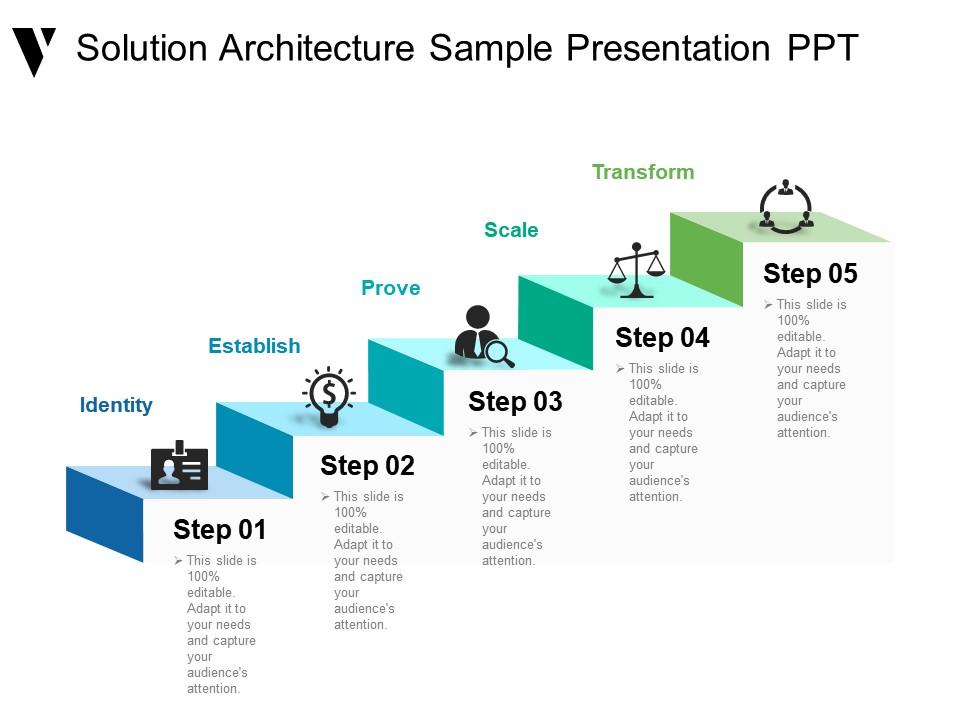
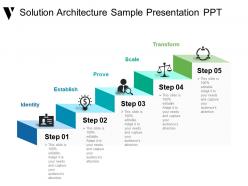
The solution architecture PowerPoint slide is useful for defining as well as describing an architecture of a system that delivers a specific solution. A user can illustrate an entire system or only its specific parts by using the solution architecture model presentation template. The solution architecture diagram PPT template design is suitable for a presenter who wants to highlight that solution architecture combines guidance from different enterprise architecture viewpoints like a business, information and technical, and from the enterprise solution architecture as well. For explaining that if solution architecture gets neglected, it can create huge trouble at the client end, you can go for the business solution architecture presentation template. The professionally designed SA PPT slide design provides a detailed as well as a structured demonstration of the features, process, and behavior of the solution. The business solution architecture with example PowerPoint template acts as base of the solution to define, manage, deliver, and operate the development process of the solution as well. A presenter can also highlight alternatives of the solutions by using the solution architecture example PPT template design. Folks feel in good humour due to our Solution Architecture Sample Presentation Ppt. They will enjoy the joke.
People who downloaded this PowerPoint presentation also viewed the following :
Solution architecture sample presentation ppt with all 5 slides:
Ensure folks are always informed with our Solution Architecture Sample Presentation Ppt. Get them aware of fresh developments.
FAQs for Solution architecture
Start with your data layer - that's your foundation. Then you need application services for business logic, integration points to connect everything, and security baked in from day one. Oh, and monitoring! I totally forgot that on my last build and paid for it later. Map out your data flow first though - seriously, this will save you so much pain. It shows you exactly where everything else should go. Your integration patterns matter way more than people think. Don't be like me and try to add security afterward... what a nightmare that was.
Honestly, you've gotta dig past the corporate BS and figure out what's actually broken. Don't just listen to meetings - find the real pain points. Then map everything back to those issues. Like if they're screaming about slow releases, go modular instead of chasing some perfect architecture that'll take forever. I swear, half the architects I know build these gorgeous systems that fix absolutely nothing. Stay close to stakeholders and keep checking that your tech choices actually help their metrics. Oh, and make a simple matrix linking your big architectural pieces to business outcomes - sounds boring but it works.
Honestly, integration is what makes or breaks your whole project. You'll have a total mess if your systems can't talk to each other - trust me on this one. APIs, data flows, messaging between components... all of it needs to be planned upfront. Don't try to patch it together later when everything's already built. Map out how your data moves around first. Figure out where systems need to connect before you start coding. Otherwise you're just asking for headaches down the road.
Look, cloud computing totally flips how you think about architecture. Scalability becomes your default mindset instead of working around hardware limits. You'll start favoring microservices and serverless functions over those clunky monoliths. The distributed approach just makes sense from the beginning. What really changed the game for me though? The pricing model. You're optimizing for ongoing efficiency, not massive upfront costs. My advice - go cloud-native right away. Seriously, don't try lifting and shifting old stuff later because it's honestly a nightmare.
Honestly? Over-engineering kills more projects than bad code does. I've watched teams spend weeks perfecting solutions nobody asked for. Get stakeholders involved from day one - trust me on this. Your favorite framework isn't always the right choice, and I learned that the hard way. Performance and security matter from the start, not after launch when everything's on fire. Document your decisions while they're fresh in your mind. Why did we go with microservices again? Good luck remembering six months later. Keep it simple, test with real users early, and make sure you're actually solving the right problem first.
Honestly, you gotta think about scaling right from the start - horizontal scaling, microservices, keeping things stateless. Figure out where your bottlenecks will be first (usually the database, let's be real). Load balancing and caching are huge wins here. Auto-scaling groups will save your ass when traffic spikes. Go distributed instead of building some massive monolith that'll haunt you later. Your data layer needs to handle partitioning too. Monitor everything so you catch problems before users start complaining. Oh and load test constantly - I can't stress this enough.
Look at both the tech stuff and business metrics - you need both sides. Response times, uptime, how it handles traffic spikes, the obvious ones. But also check if you're hitting budget goals and shipping features when you promised. User satisfaction is huge too, honestly nobody cares how elegant your code is if everyone's frustrated using it. Oh, and track how fast your team can push changes - that's a good sign your architecture isn't a mess. Get dashboards going early so you'll catch problems before they spiral. Way easier to fix things when they're small.
Dude, compliance and security will literally override every other decision you make. I'm talking choosing cloud regions just for data residency, going full zero-trust when basic auth would've been fine - the whole nine yards. Audit trails everywhere too. Super annoying when your clean, elegant solution gets tossed for whatever checks all the boxes. But seriously, build this stuff in from the start. Don't even think about retrofitting later, that's a nightmare. Always list your compliance requirements first in design meetings, then work around those constraints.
So for diagramming stuff, most teams use Visio, Lucidchart, or draw.io. TOGAF is supposedly the "gold standard" methodology but honestly it's pretty overwhelming when you're starting out. Design thinking helps with the user-focused stuff, and agile keeps things moving. Confluence is solid for documenting all your decisions - trust me, you'll forget why you made certain choices six months later. My take? Just use whatever diagramming tool your team's already on and focus on explaining your design choices clearly. Don't get hung up on following methodologies perfectly at first.
Start with a lightweight architectural vision instead of those massive docs everyone ignores. Work in sprints and evolve your architecture as you go - honestly, treating it like a rigid blueprint is where most teams mess up. Build prototypes early to test your decisions, and don't be afraid to change course when something isn't working. Regular reviews with stakeholders help, but keep documentation lean. Just enough to guide decisions without becoming a bottleneck. The whole point is collaborating closely with dev teams and letting your architecture grow naturally with the solution.
Dude, you NEED to document your architecture decisions - trust me on this one. When you're debugging at 2am six months from now, you'll want to kiss past-you for writing down why you chose that weird database setup. Plus your teammates will actually understand how things connect instead of just guessing. New people joining the team? They won't be completely lost. Even quick ADRs work - doesn't have to be fancy. I learned this the hard way when I inherited a system with zero docs. Total nightmare. Compliance audits are way easier too when everything's written down somewhere.
Dude, stakeholder engagement can totally make or break your architecture project. You'll catch requirements gaps early and avoid those painful "wait, that's not what we wanted" meetings later. People who actually use the system know weird business rules that aren't written down anywhere - seriously, some of the most important stuff lives only in someone's head. When you keep stakeholders involved, you get actual buy-in instead of resistance. Map out who matters from day one. Otherwise you're just guessing what people need, and that rarely goes well. Trust me, a little upfront engagement saves you from major headaches down the road.
Honestly, AI/ML stuff isn't just hype anymore - it's actually becoming standard practice. Edge computing is everywhere now for real-time processing, plus event-driven architectures are finally having their moment. Microservices and containers? Yeah, that's just expected at this point. Platform engineering is blowing up too, where teams basically build their own internal dev tools to make life easier. Green computing is weirdly becoming a real consideration now (didn't see that coming a few years ago). I'd definitely mess around with event streaming patterns if I were you. AI tooling integration is pure gold right now.
Think of it like your personal budget - split time between maintaining what you have and building new stuff. I stick to 70/20/10 most of the time: 70% keeping current systems running smooth, 20% for improvements, 10% experimental. Honestly, the hardest part is admitting when technical debt actually slows your team down. Don't let it pile up until nobody can move, but don't chase perfection either or you'll never ship. Each quarter I pick one big architectural headache to fix while we're working on the fun new features.
Start with a risk assessment matrix - what could go wrong, how likely, what's the damage. Document it all because trust me, you'll forget half this stuff in three months. Focus on the big decisions first: tech stack, how things connect, where you'll hit scaling issues, security holes. Redundancy matters for critical stuff. Always have a plan B. Monthly check-ins with the team catch things you missed - honestly, fresh eyes spot problems way better than you will solo. Being proactive beats scrambling later when everything's on fire.
-
Unique research projects to present in meeting.
-
Amazing product with appealing content and design.