


Starting A New Venture PowerPoint Presentation Slides





Try Before you Buy Download Free Sample Product
 Impress Your
 Audience
 100%
100% Editable
 Save Hours
 of Time


Our Starting A New Venture PowerPoint Presentation Slides are topically designed to provide an attractive backdrop to any subject. Use them to look like a presentation pro.
People who downloaded this PowerPoint presentation also viewed the following :
Content of this Powerpoint Presentation
Slide 1: This slide introduces Starting a new venture. State Your Company Name and begin.
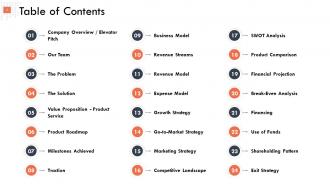
Slide 2: This slide shows Table of Contents of the presentation.
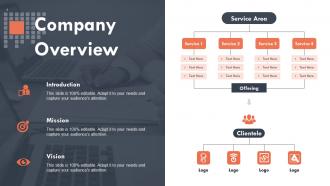
Slide 3: This slide presents Company Overview describing service area, offerings etc.
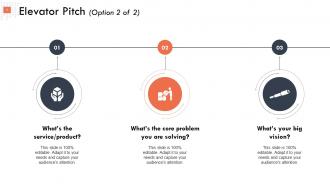
Slide 4: This slide displays Elevator Pitch describing- What’s the service/product? What’s your big vision? What’s the core Problem you are solving?
Slide 5: This is an optional slide for Elevator Pitch.
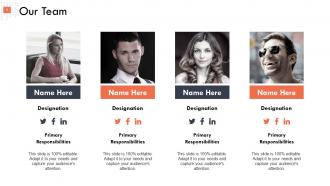
Slide 6: This is Our Team slide with names, designation and other information.
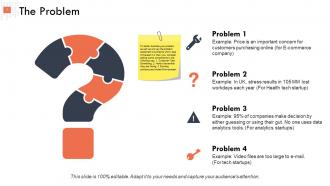
Slide 7: This slide is titled as The Problem to illustrate your problem, as well as convey the problem statement to someone who’s less immersed in it than you.
Slide 8: This slide is titled as The Solution for short explation and demo of your product explaining how its gonna solve the problem.
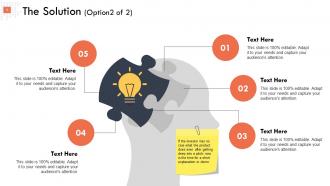
Slide 9: This is an optional slide for Solution.
Slide 10: This is another optional slide for Solution.
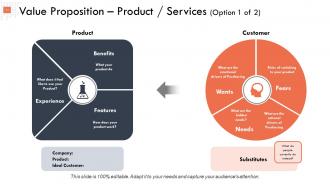
Slide 11: This slide shows Value Proposition – Product/Services with customer's needs, wants and fears along with product benefits, features and experience.
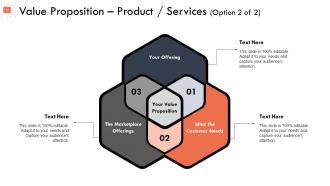
Slide 12: This is another slide on Value Proposition – Product/Services describing- Your Offering, What The Customer Needs and The Marketplace Offerings.
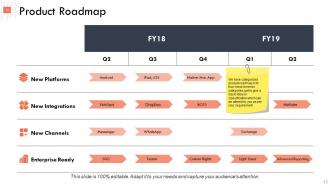
Slide 13: This slide presents Product Roadmap with four categories- New platforms, new integrations, new channels and enterprise ready.
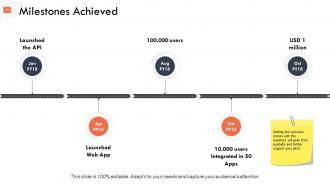
Slide 14: This slide displays Milestones Achieved to show your success stories.
Slide 15: This slide represents Traction with related imagery and text.
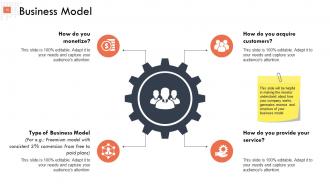
Slide 16: This slide showcases Business Model describing- How do you acquire customers? How do you provide your service? Type of Business Model and How do you monetize?
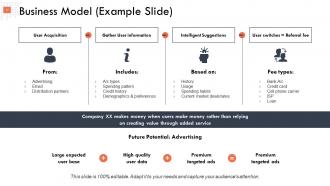
Slide 17: This is a Business Model (Example Slide) describing- User Acquisition, Gather User information, Intelligent Suggestion, User switches Referral fee.
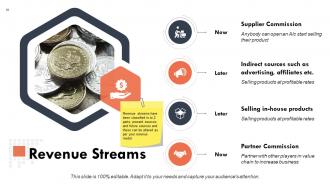
Slide 18: This slide shows Revenue Streams as- Partner Commission, Supplier Commission, Selling In-House Products, Indirect Sources Such As Advertising, Affiliates etc.
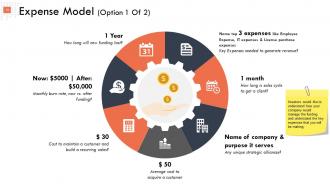
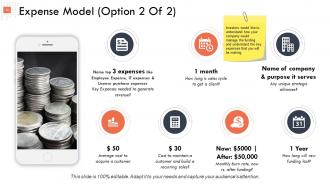
Slide 19: This slide presents Expense Model to help your investors understand how your company would manage the funding and understand the key expenses that you will be making.
Slide 20: This is an optional slide for Expense Model.
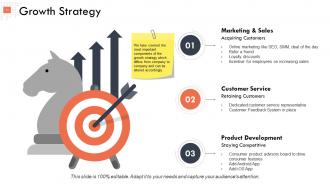
Slide 21: This slide represents Growth Strategy describing- Marketing & Sales, Customer Service, Product Development.
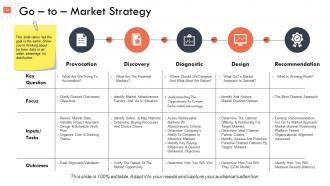
Slide 22: This slide showcases Go-to-Market Strategy with categories as provocation, discovery, diagnostic, design and recommendation.
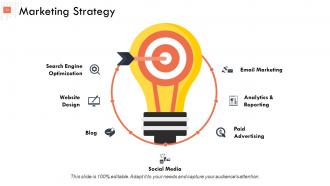
Slide 23: This slide shows Marketing Strategy with- Paid Advertising, Blog, Website Design, Search Engine Optimization, Social Media, Email Marketing and Analytics & Reporting.
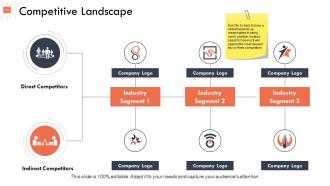
Slide 24: This slide presents Competitive Landscape comparing direct and indirect competitors.
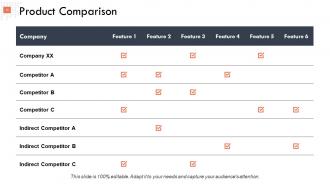
Slide 25: This slide displays Product Comparison in a table form with related text boxes.
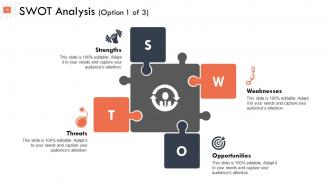
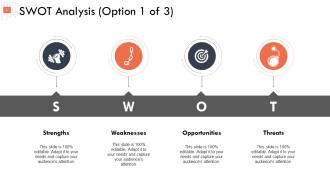
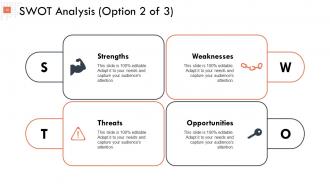
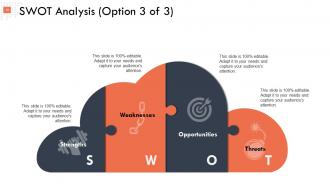
Slide 26: This slide represents SWOT Analysis describing- Strengths, Weaknesses, Opportunities, Threats.
Slide 27: This is an optional slide for SWOT Analysis.
Slide 28: This is another optional slide for SWOT Analysis.
Slide 29: This is another optional slide for SWOT Analysis.
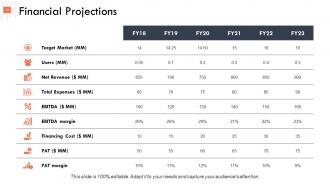
Slide 30: This slide presents Financial Projections. Show your projects here. You can add or edit data as per needs.
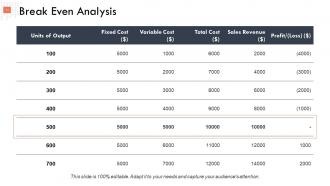
Slide 31: This slide displays Break-Even Analysis in a table form with categories as units of output, fixed costs, variable costs, sales revenue etc.
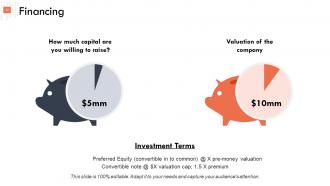
Slide 32: This slide is titled as Financing. Show your finance related stuff here.
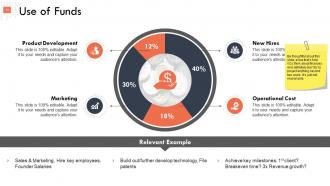
Slide 33: This slide showcases Use of Funds in Product Development, Marketing, New Hires etc.
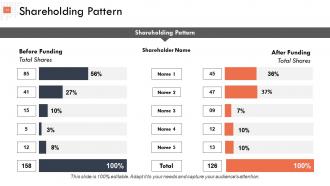
Slide 34: This slide shows Shareholding Pattern describing total shares before and after funding.
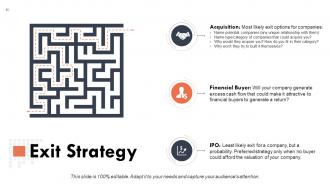
Slide 35: This slide presents Exit Strategy describing- Acquisition, Financial Buyer and IPO.
Slide 36: This slide displays Client Testimonials with name, designation and other information.
Slide 37: This slide represents Contact Details with address, contact numbers, email address etc.
Slide 38: This slide shows Starting a new venture Icons.
Slide 39: This is another slide presenting Starting a new venture Icons.
Slide 40: This slide is titled as Additional Slides for moving forward.
Slide 41: This slide presents Scatter bubble chart with two products comparison.
Slide 42: This slide displays Column Chart with two products comparison.
Slide 43: This is Our Mission slide with imagery and text boxes.
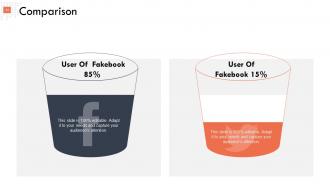
Slide 44: This is a Comparison slide to state comparison between commodities, entities etc.
Slide 45: This is Our great team slide with names and designation.
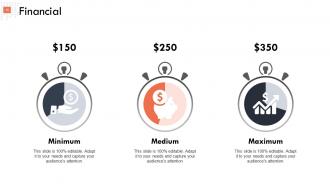
Slide 46: This is a Financial slide. Show finance related stuff here.
Slide 47: This is Our goal slide. Show your important goals here.
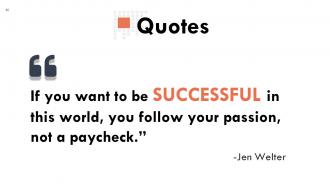
Slide 48: This is a Quotes slide to highlight or state anything specific.
Slide 49: This is Bulb or Idea slide to state a new idea or highlight specifications, information etc.
Slide 50: This slide shows Dashboard with text boxes to show information.
Slide 51: This is a Location slide with maps to show data related with different locations.
Slide 52: This is a Thank You slide with address, contact numbers and email address.
Starting A New Venture PowerPoint Presentation Slides with all 52 slides:
Use our Starting A New Venture PowerPoint Presentation Slides to effectively help you save your valuable time. They are readymade to fit into any presentation structure.











FAQs for Starting A New Venture
Honestly, I'd focus on three things first. Figure out if enough people actually have this problem AND can pay for your fix. Then get specific about what's driving them crazy - what problem makes them want to throw their laptop out the window? Where do they hang out online? LinkedIn, TikTok, those boring industry newsletters? You need to know so you can actually find them later. Quick reality check though - are competitors already crushing it in this space? If so, maybe dodge that for now. Start with a smaller group that's being ignored. Way easier than trying to win over everyone at once.
Honestly, you'll thank yourself later for doing one. Writing it out forces you to work through all the boring stuff - financials, target market, potential roadblocks. Plus investors expect it anyway. I've watched so many friends skip this step and then panic when reality hits (which it always does). Your brain will trick you into thinking you've got everything figured out, but putting pen to paper reveals the gaps fast. Start simple though - doesn't need to be some 50-page masterpiece. Even a basic version gives you something to reference when everything inevitably goes sideways.
Honestly, just start by actually talking to your potential customers - surveys through Google Forms or whatever work great. Check out what your competitors are doing wrong by reading their reviews (you'll find gold there). Industry reports give you the bigger picture stuff, but focus groups can drain your wallet pretty fast. Social media stalking your competition is free and surprisingly useful. Mix the customer feedback with seeing what others are screwing up. Otherwise you might end up building something cool that literally no one wants to buy. Government data's boring but helpful for trends too.
Honestly, forget your "brilliant" ideas for a sec. Talk to actual people first - find out what's driving them crazy. I spent way too long building stuff nobody wanted because it seemed cool to me. Once you've got real problems validated through customer interviews, THEN get creative with solutions. Build something simple, throw it at users, see what breaks. The magic happens when you're being inventive about solving problems that genuinely exist, not making up problems to fit your solution. Short sentences work. Customer feedback beats your gut every time, trust me.
So you've got a few options here. Bootstrapping with your own cash is slow but you won't answer to anyone. Angel investors are rich folks who write $25K-$500K checks early on - they usually give decent advice too. VCs throw around bigger money ($1M+) but they'll want a chunk of your company and expect crazy growth. Crowdfunding's actually pretty wild if you're doing consumer stuff - random people just backing your dream, you know? Banks are traditional but good luck without collateral. Oh, and government grants exist but that's a whole paperwork nightmare. Really depends what you're willing to give up for the money.
Start with content marketing and social - they're cheap and actually work. Blog posts, videos, whatever format you're comfortable with, just solve real problems people have. Social media lets you talk directly to customers which is pretty cool. Oh and don't sleep on email marketing! It's boring but keeps people engaged long-term. Honestly, consistency beats trying to do everything at once. Pick maybe 2-3 things, get good at those first. I see too many startups spread themselves thin and then wonder why nothing's working.
Honestly, you really need to nail your branding early because that's literally the first thing people see before they even know what you're selling. First impressions are brutal to change later - trust me on this one. When you have zero customers or reviews, your brand is what builds trust and sets you apart from everyone else doing similar stuff. Don't overthink it though. Figure out your main message, pick some colors and fonts that match your vibe, then just stay consistent everywhere. Your website, Instagram, business cards - make it all feel like it came from the same place. Consistency = credibility way faster than you'd expect.
Dude, networking is seriously everything when you're starting out. Don't just build stuff in a vacuum hoping people magically discover you. Real mentor relationships? They come from actual connections, not those weird LinkedIn cold messages nobody likes. Your best shots come from people who've seen how you work. Show up to industry stuff, join communities online, help people out before asking for anything back. I know it sounds basic but it works. Random conversations turn into huge breaks all the time - happened to my cousin last year actually. Just make it a regular thing, not something you scramble to do when you're desperate.
Oh man, the cash burn thing gets everyone. Don't hire a bunch of people right away or get some fancy office - that's startup suicide. The other huge mistake? Spending forever building stuff customers don't actually want. I know it feels weird showing people your janky prototype, but you gotta do it anyway. Talk to potential customers this week, not when you think it's "ready." Most founders I know (myself included tbh) waste way too much time trying to perfect everything solo. Get scrappy, validate early, and obsess over finding product-market fit before anything else.
Start tracking your revenue and customer numbers right away - those are your bread and butter. But honestly? The soft stuff matters just as much. Check if people are actually using your product regularly, not just signing up and disappearing. Social media buzz and what customers say can tell you more than spreadsheets sometimes. My advice is pick 3-5 metrics that actually matter for your business model and review them weekly. Daily checking will just drive you nuts and won't change anything anyway.
Dude, customer service is everything from day one. Seriously obsess over feedback and actually fix what people complain about. Build a community vibe - social media, exclusive stuff, early access programs. Handwritten notes sound cheesy but they work. I learned this the hard way lol. Make customers feel special instead of treating them like walking wallets. Personal touches matter way more than you'd think. Those loyal fans? They'll become your best salespeople through word-of-mouth. Start building real relationships now because authentic connections beat any marketing campaign you'll ever run.
Looking at your competitors is basically free market research - you get to see what's working and what's bombing before you even start. Check out their pricing, read through customer reviews (seriously, people love complaining about stuff that gives you ideas), and notice what gaps they're missing. Don't just copy the successful ones though, that's boring. Use what you learn to build something different or better. You'll also get a reality check on what it actually takes to compete. Their mistakes become your shortcuts, which is pretty sweet if you ask me.
Okay so first thing - pick your business structure and register it with the state. LLC or corp, whatever makes sense for you. Then grab an EIN from the IRS. Licenses and permits are honestly a pain because they're different everywhere, but you gotta research what your specific business needs. I'd also look into trademarking your name or logo if it's unique. Insurance is huge too, don't skip that. Oh and definitely tackle the business structure stuff first, then just work through everything else one by one. It's tedious but you'll get through it.
Honestly, start with cloud tools like Slack or Asana for project tracking - way better than drowning in emails. Automate the boring stuff first: invoicing through FreshBooks, social media posts, customer onboarding flows. Zapier is actually incredible for connecting different apps together (I probably overuse it tbh). Don't build everything from scratch when SaaS options exist for accounting, CRM, inventory management. Pick one or two areas that suck up most of your time and tackle those first. You can always expand later once you see what works.
Honestly, hire people who actually get your vibe, not just the ones with perfect resumes. Tell them straight up what they're walking into - the messy parts too. Weekly lunches are clutch for bonding (or those weird virtual pizza things if you're all remote). Here's what really matters though: let everyone weigh in on big decisions early. Nothing kills morale faster than feeling like just another cog. Oh, and write down your values now before things get chaotic. Trust me on that one - it's way harder to course-correct later when you've got 20 people doing things completely differently.
-
Excellent design and quick turnaround.
-
Attractive design and informative presentation.