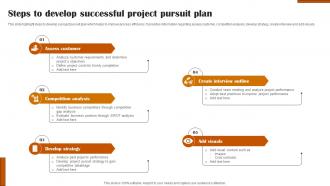
Steps To Develop Successful Project Pursuit Plan
Try Before you Buy Download Free Sample Product
Audience
Editable
of Time
This slide highlight steps to develop a project pursuit plan which helps to improve process efficiency. It provides information regarding assess customer, competition analysis, develop strategy, create interview and add visuals.
People who downloaded this PowerPoint presentation also viewed the following :
Steps To Develop Successful Project Pursuit Plan with all 6 slides:
Use our Steps To Develop Successful Project Pursuit Plan to effectively help you save your valuable time. They are readymade to fit into any presentation structure.
FAQs for Steps To Develop Successful
Okay so first things first - figure out exactly what projects you want and who you're up against. Honestly, the competitive research part can be a real rabbit hole depending on your field. Next, pull together a solid team that mixes technical people with business dev folks. Your win strategy needs to spell out why you're different and how you solve their actual problems. Oh, and don't forget to map out your timeline and budget from the start. I'd say just pick one opportunity coming up and work through each piece step by step - way less overwhelming that way.
Honestly, just map each project against what your company's actually trying to achieve this year. Does it help you break into new markets or hit those revenue numbers? Think of it like filtering - if a project doesn't clearly push forward at least one big business goal, skip it. I don't care how cool it sounds. Create some scoring system based on your strategy, then rank everything. Way easier than going in circles about which opportunities to chase. Focus on stuff that'll actually make a difference instead of just keeping you busy.
Start with a simple pursuit plan template - bid/no-bid criteria, competitive analysis, win strategy, the usual stuff. Most companies have their own but if you're building from scratch, check out proposal management associations or consulting firms for templates. Excel works fine honestly, though Deltek or SharePoint help with collaboration if you've got multiple people involved. The tool doesn't really matter as much as everyone actually following the same process. Make sure you're capturing customer requirements, competitor intel, pricing strategy, and who's doing what. Oh and start simple - you can always add more complexity later as you figure out what actually works for your team.
First thing - figure out who you're actually trying to reach. Map out companies that fit your sweet spot: right budget, project size, realistic timelines. Once you've got your list, be brutally honest about win probability. Are you even competitive here? Does it match what your team's good at? I learned the hard way to watch for red flags like clients wanting champagne on a beer budget. Create some kind of scoring system (doesn't have to be fancy) so you're not chasing every shiny opportunity. Honestly, you'll burn out fast that way. Pick your top 2-3 and go all in.
Okay so stakeholder analysis is basically mapping out who actually matters for your project. First, list everyone who could mess with your decision - budget people, end users, the big bosses, whoever. Then dig into what they actually care about and how they like getting info. Honestly, this part can feel tedious but it's worth it. Think of it like scoping out the room before a party - you want to know who's who. Once you've got that intel, it shapes how you pitch things and who you need to schmooze. Otherwise you're just guessing what'll stick.
Honestly, I'd focus on win rates and proposal scores first - those tell you the most. Revenue from your targeted opps is obvious but takes forever to show up, which is super annoying. Track relationship stuff too, like new stakeholder meetings or RFP invites you're getting. Pipeline quality matters way more than quantity IMO. Don't try measuring everything at once though. Pick 3-4 metrics that actually matter to your team and check them monthly. Quarter-over-quarter conversion rates will show you if you're heading in the right direction.
Honestly, just nail down who's doing what first - saves so much headache later. Those daily check-ins are clutch for catching problems before they blow up. Skip the email madness and get everyone in shared workspaces where they can actually work together. Oh, and make your tech people talk to the business dev folks regularly (I know, revolutionary concept lol). Throw everything on a shared calendar. Slack works great for quick stuff. Here's the thing though - don't forget to celebrate the little wins along the way. Trust me, it matters way more than you'd think during those crazy deadline pushes.
Honestly, most people mess up by being way too generic. Clients spot those copy-paste proposals instantly. Do your actual research on their specific problems first. Don't lowball your timeline just to win either - I've seen that backfire so many times. Get your tech people involved early so you're not promising impossible stuff. Oh, and definitely don't wait until the last second to start writing. Rushed proposals show, and you'll miss all the details that prove you actually get what they're dealing with. Competition's probably tougher than you think too.
Look, market research is basically your secret weapon for winning bids. You'll spot the real decision-makers and figure out what's actually keeping them up at night. Plus you can see how your competitors are playing the game - which honestly saves you from looking like an idiot later. The whole point is tailoring your pitch to what they genuinely care about, not just what sounds good on paper. Use those insights to nail your pricing and messaging. I mean, it's way better than going in blind and hoping for the best, right? Build your whole proposal around what you learned.
Start with the problem you're solving, not boring methodology stuff. Executives love visuals - timelines, impact charts, that kind of thing. Always throw in ROI numbers because they eat that up. Honestly, I've seen so many people bomb these presentations by getting too deep in the weeds. Keep it simple: problem-solution-timeline-budget-impact. Don't clutter your slides either - white space is your friend. Practice a quick elevator version too, just in case. Oh, and tie everything back to how it affects their bottom line. That's really what they care about at the end of the day.
Check it monthly at minimum, but honestly? Every two weeks is smarter for competitive stuff. Weekly if it's really high-stakes and you're talking to the client regularly. Things move fast - new people show up, requirements change, competitors bail. I learned this the hard way on a project last year when I got lazy about updates. Set phone reminders or you'll forget. Update immediately after any big client meeting or when you hear competitor gossip. Your plan's worthless if you're working off old info. Stay flexible with timing rather than sticking to some rigid schedule.
Track your win rate, pipeline value, and time-to-close for sure. Cost per pursuit too - seriously, you'd be shocked how much money gets burned chasing bad deals. I'd add relationship scores with key people and how fast you're turning around proposals. Competitive intel matters but don't go crazy with data collection. Five to seven metrics tops or you'll hate your life. Set up a weekly dashboard thing and actually review it with the team. Focus on what predicts wins, not just what's easy to count.
Look at three things: does it fit your business goals, can you actually win it, and what's the revenue upside. Score each project honestly - yeah, it feels weird and made-up at first but you'll get the hang of it. Chase the ones that hit high on all three. That shiny new opportunity with crazy revenue? Skip it if you can't win or it doesn't fit your strategy. I use a simple scoring sheet and update it monthly since things change. Honestly saves so much time and keeps everyone focused on stuff that actually matters.
Make sure stakeholders help build the plan from the start - they'll actually care if it feels like their idea too. Show how it fixes their real problems and ties to business goals they already have. I've watched so many good plans crash because people felt left out of the process, honestly. Back everything up with data but don't go crazy with endless spreadsheets. Quick wins are your best friend here. Check in regularly so you can pivot when things get weird. Celebrating those small victories keeps everyone bought in and proves this thing actually works.
Start by spotting risks early - technical stuff, money issues, competitors, client problems. Sort them by how likely they are and how bad they'd hurt. Then actually make plans to deal with each one, don't just worry about them. Honestly, I've watched so many teams blow this off completely. Keep a risk list that you update regularly (and I mean actually update it). Give someone ownership of each risk so there's no finger-pointing later. Schedule quick check-ins with your team. That way when something new pops up, you're not scrambling to figure out what to do.
-
The service is fast, and I could access any presentation after buying the subscription. I don’t think I’ll ever have to worry about a presentation in my life.
-
Innovative and attractive designs.