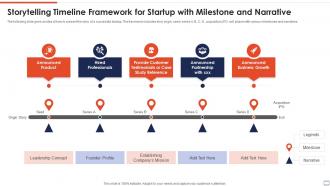
Storytelling Timeline Framework For Startup With Milestone And Narrative
Try Before you Buy Download Free Sample Product
Audience
Editable
of Time
The following slide gives an idea of how to present the story of a successful startup. The framework includes story origin, seed, series A, B, C, D, acquisition, IPO, exit phase with various milestones and narratives.
People who downloaded this PowerPoint presentation also viewed the following :
Storytelling Timeline Framework For Startup With Milestone And Narrative with all 6 slides:
Use our Storytelling Timeline Framework For Startup With Milestone And Narrative to effectively help you save your valuable time. They are readymade to fit into any presentation structure.
FAQs for Storytelling Timeline Framework For Startup With
Okay so basically you want to give people a roadmap so they don't get completely lost following your story. Without some kind of timeline structure, you'll just have this jumbled mess of random points that make no sense together. I always do chronological or thematic - builds way better momentum. Plus it keeps YOU on track too, which honestly might be even more important because we all know how easy it is to ramble. Oh and the engagement thing - people zone out fast when they can't see where you're headed. Just sketch out your timeline before anything else.
Okay so here's the thing - storytelling works because our brains are basically hardwired to follow stories. You set up the situation, throw in some conflict, hit the climax, then resolve it. Just like binge-watching Netflix honestly. People can't help wanting to know what happens next, right? Instead of just throwing facts at them, you're creating this whole journey with ups and downs. I've started using a simple three-act structure for presentations and it's crazy how much more people pay attention. Way better than the boring bullet-point dumps I used to do.
So you need the basics first - character intro, the thing that kicks everything off, rising action, climax, resolution. But honestly? The rising action is where I always screw up the pacing. Plot out your major story beats first, then worry about filling in between them later. Mark where the emotional stuff happens too - those moments where everything shifts and your audience should actually feel it. Oh, and don't forget those little transition bits between big scenes. Really it's about mapping when tension goes up and when it drops, not just what happens.
Honestly, think of your timeline like the spine of your whole story. Without it, people get totally lost in all the details. Chronological order makes cause and effect super obvious, which automatically makes everything more compelling. You'll avoid those cringe moments where you're like "oh wait, I need to go back and explain this thing first" - those just kill your momentum completely. Map out your main story beats before you even touch the slides. Then use that timeline as your guide rails. You can still throw in context and insights, just always circle back to that chronological flow. Trust me on this one.
Dude, visual design can make or break your timeline. I've watched amazing stories bomb because they looked like garbage - it's painful. Map out your key moments first, then build everything else around those. Clean hierarchy keeps people from getting lost, and colors can separate different themes or time periods. Typography sets the whole mood too. Your design needs to support the emotional beats, not fight against them. Consistent styling throughout helps, but honestly? The flow matters most. If readers can't follow your narrative arc easily, you've already lost them. Oh, and contractions make everything feel less stiff.
Honestly, I treat it like a music mixing board - sounds nerdy but it works! Start with your main timeline, then add other storytelling methods as separate "tracks." Character arcs get one layer, conflict escalation gets another. Airtable's pretty good for this, though I usually just use a spreadsheet with different columns. The trick is syncing everything up at your major plot points. Map out your chronological events first, then overlay the rest. Each track should contribute something different but they all need to hit the same beats when it matters.
Honestly, the worst thing you can do is cram everything in without giving people time to breathe. Like, don't jump around in time unless you're super clear about it - that just confuses everyone. Also? Not every moment needs the same energy. Save the big emotional punches for when they actually matter. I see people rush through their climax because they're worried about time, but that's backwards thinking. Oh and don't dump all the backstory upfront - nobody cares yet. Sprinkle it in as you go. Start with your biggest emotional moments first, then figure out how to connect them. Way easier that way.
Yeah, so your audience's cultural background totally changes how they'll follow your story timeline. Western crowds want that classic setup-conflict-resolution thing, but Eastern audiences? They're cool with circular stories that loop back around. Some cultures need all the backstory upfront - others just want you to jump right in. Middle Eastern storytelling traditions mix different timeframes together, which honestly can mess with people expecting everything chronologically. I'd definitely look into whatever storytelling style your specific audience grew up with. Don't assume everyone's used to that Hollywood three-act thing we're obsessed with here.
Milanote and Aeon Timeline are probably your best bet - they're made specifically for story stuff. But honestly? I've seen writers do incredible work just using Google Sheets or Notion. Way more flexible that way. Lucidchart's pretty decent if you want something more visual, and Miro is clutch when you're collaborating with other people. Oh, and don't sleep on basic tools you already have access to. You can always upgrade later if you need fancier features, but starting simple usually works out better anyway.
So you take the basic framework and just switch out the content for whatever your people actually care about. Like in marketing, your timeline follows how customers move - awareness to buying to sticking around. Education works differently - you'd build it around how people learn stuff, starting simple then getting more complex. Even the most mind-numbing topics have story arcs (compliance training, ugh). Find the moments that create tension or change for your specific situation. Map out when your audience feels stressed, confused, or excited - then build your timeline around those spots. That's where the magic happens.
Honestly, just steal from what works. TED talks nail this - they start personal, hit you with the problem, walk through their messy discovery process, then BAM the big reveal. Jobs was ridiculous at this too. He'd show you why current tech sucked, build all this tension, then drop the new iPhone like it was magic. For business stuff, before/during/after timelines are your friend. The trick is making each part pull people forward so they're thinking "okay what's next?" Don't overthink it - map your next presentation against the hero's journey or problem-solution format. Works every time.
Honestly, storytelling timelines are a game-changer for messy data. Instead of drowning people in spreadsheets, you're basically turning your numbers into a story they can actually follow. Map your data to 3-5 key moments—like plot points in a movie. The cause-and-effect stuff becomes super obvious this way. I mean, think about it: would you rather sit through someone reading off statistics, or hear how things unfolded over time? Your audience won't get lost in the weeds because they're following a natural progression. Stories stick way better than random numbers ever will.
Definitely use clear time markers and go chronological - people get lost otherwise. If you've got multiple plot threads, throw in some colors or icons to keep them separate. Brief descriptions work best, but make them specific enough so anyone can grasp what happened. Honestly? I'd run it by someone else first because what seems obvious to you might be total gibberish to them. Also leave plenty of white space - nobody wants to stare at a wall of text. Oh, and don't let it jump around randomly like some timelines I've seen. Total nightmare.
Don't wait until the end to get feedback - build it right into your timeline as checkpoints. After big story moments or when you introduce characters, pause and collect input. Then actually use it to fix pacing issues or confusing plot points. I used to be super stubborn about my "vision" but honestly? Stories get way better when you iterate. The trick is leaving buffer time between major segments so you can make changes without your whole schedule falling apart. Oh, and sometimes you'll need to completely pivot storylines that just aren't working - that's totally normal.
Honestly? Just watch if people stay engaged and actually get it. I track attention spans, comprehension, whether they remember the story beats in order later. Fewer questions during your presentation usually means you nailed the flow. Hit your time markers without rushing - that's huge. Survey them afterward about emotional connection and if everything felt logical. Oh, and check if the progression made sense to them. But here's the thing - the real test is whether they actually did what you wanted afterward. That's when you know your timeline really worked.
-
Wonderful ideas and visuals. I'm really pleased with the templates, which are unique and up to date.
-
The quality of the templates is as fine as it could get. It was a purchase well made!