

Strategic Planning Gap Analysis Powerpoint Presentation Slides





Try Before you Buy Download Free Sample Product
 Impress Your
 Audience
 100%
100% Editable
 Save Hours
 of Time


To build and present an exceptional gap analysis PowerPoint presentation can be a challenge on its own. To save you time and assist you with this our team as come up with a 53 slides ready-made Strategic Planning Gap Analysis Powerpoint Presentation Slides. These gap analysis PowerPoint slides are well suited for all businesses as it acts as an important tool to figure out the planning required for improvement. Best part is that all our slides are fully editable and can be edited as per your need. This gap analysis template PowerPoint has slides like gap analysis overview, gap analysis procedure, gap analysis graph, current state analysis, financial comparison, revenue versus target, fit gap analysis, growth share matrix, servqual model, swot analysis, 6Ms fishbone analysis, and many more. Furthermore, our PPT presentation slides will aid you to put your point across easily and for quick solution of a problem. Additionally, to cover all the necessary aspects here we have included template designs like our team, mission and vision, about us, our goals, comparison, quotes, dashboard, location, post it notes, timeline, hierarchy and various charts. In short, you can add value to your business by comprehensively discussing the required strategic plans with help of our pre-made gap analysis PowerPoint slides. So, quickly download Strategic Planning Gap Analysis Powerpoint Presentation Slides and present an one off visual PPT presentation. Insist on compliance with our Strategic Planning Gap Analysis Powerpoint Presentation Slides. Ensure adherence to directions.
People who downloaded this PowerPoint presentation also viewed the following :
Content of this Powerpoint Presentation
Slide 1: This is an introuctory slide for Strategic Planning Gap Analysis. State Your Company Name and begin.
Slide 2: This is an Agenda slide. State your agendas here.
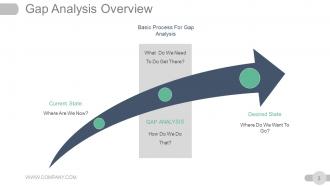
Slide 3: This slide showcases Gap Analysis Overview consisting of- Basic Process For Gap Analysis Desired State Where Do We Want To Go? Current State Where Are We Now? Gap Analysis How Do We Do That? What Do We Need To Do Get There?
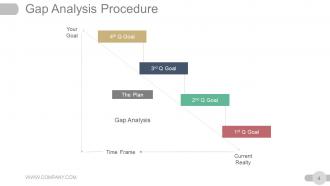
Slide 4: This slide presents a Gap Analysis Procedure showcasing- Time Frame, Your Goal, Current Realty, Gap Analysis, The Plan Quarterly Goal.
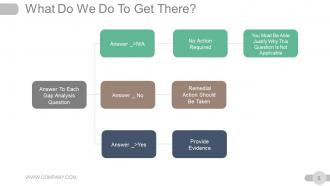
Slide 5: This slide displays What Do We Do To Get There with the min subheading-Answer To Each Gap Analysis Question divided into: Provide Evidence Answer _>Yes You Most Be Able Justify Why This Question Is Not Applicable No Action Required Answer _>N/A Remedial Action Should Be Taken
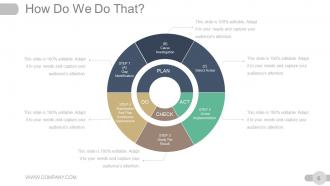
Slide 6: This slide shows How Do We Do That with the following points- Gap Identification, Cause Investigation, Select Action, Action Implementation, Study The Result, Standardize And Plan Continuous Improvement, PLAN, ACT, CHECK.
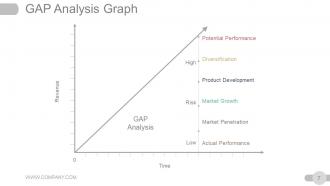
Slide 7: This slide presents a GAP Analysis Graph displaying- Potential Performance Diversification Product Development Market Growth Market Penetration Actual Performance in terms of- Revenue, Time, Low, High, Risk.
Slide 8: This slide shows Current State Analysis Company's Mission. State related aspects here.
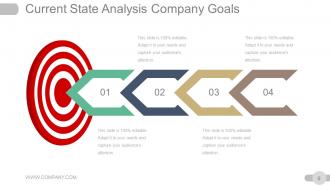
Slide 9: This slide presents Current State Analysis Company Goals. State respective goals here.
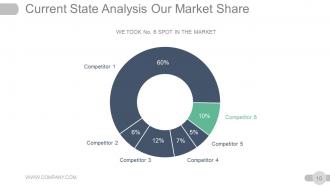
Slide 10: This slide shows Current State Analysis Our Market Share. Present it here.
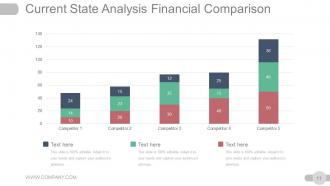
Slide 11: This slide showcases Current State Analysis Financial Comparison in bar graph form.
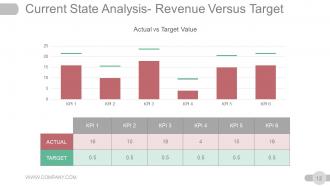
Slide 12: This slide shows Current State Analysis- Revenue Versus Target in bar graph form.
Slide 13: This slide presents a Basic Gap Analysis Chart with the following points- What exactly is the gap? What are the consequences of the gap? What is timing? Who is responsible? What are the option? What are the cost?
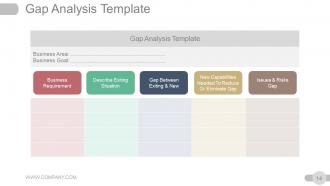
Slide 14: This slide presents a Gap Analysis Template with the following points- Business Requirement, Describe Exiting Situation, Gap Between Exiting & New, New Capabilities Needed To Reduce Or Eliminate Gap, Issues & Risks.
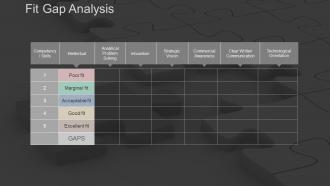
Slide 15: This slide shows a Fit Gap Analysis in tabular form.
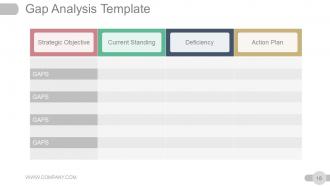
Slide 16: This slide presents a Gap Analysis Template with the following points- Strategic Objective, Current Standing, Deficiency, Action Plan.
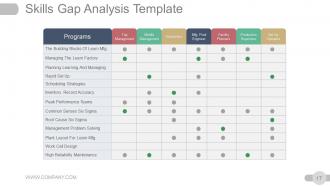
Slide 17: This slide presents a Skills Gap Analysis Template with the following points- Strategic Objective, Programs, Top Management, Middle Management, Schedulers, Mfg. Prod Engineer, Facility Planners, Production Supervisor, Set Up Operative.
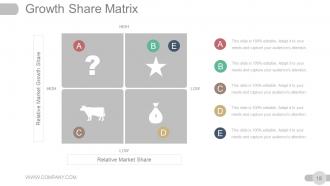
Slide 18: This slide shows a Growth Share Matrix displaying- Relative Market Share, Relative Market Growth Share.
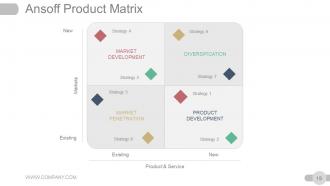
Slide 19: This slide shows an Ansoff Product Matrix displaying- Market Development, Market Penetration, Diversification, Product Development.
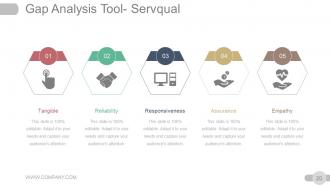
Slide 20: This slide shows Gap Analysis Tool- Servqual with- Assurance, Tangible, Reliability, Responsiveness, Empathy.
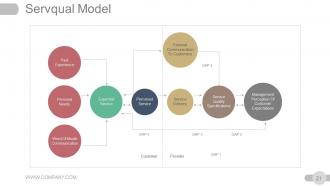
Slide 21: This slide displays a Servqual Model showing- Customer, Provider, GAP, External Communication To Customers, Word Of Mouth Communication, Past Experience, Management Perception Of Customer Expectations, Personal Needs, Perceived Service, Service Delivery, Service Quality Specifications, Expected Service.
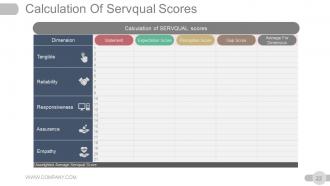
Slide 22: This slide shows Calculation Of Servqual Scores with- Statement, Expectation Score, Perception Score, Gap Score, Average For Dimension.
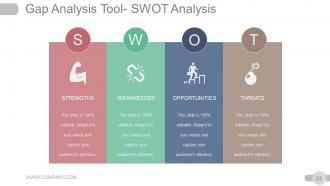
Slide 23: This slide shows Gap Analysis Tool- SWOT Analysis. State it in details here.
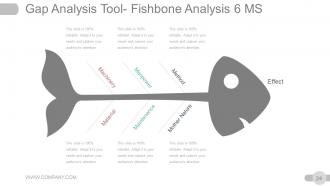
Slide 24: This slide shows Gap Analysis Tool- Fishbone Analysis 6 MS with the following points- Material, Maintenance, Mother Nature, Machinery, Manpower, Method.
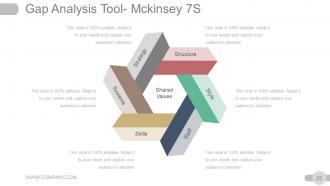
Slide 25: This slide presents Gap Analysis Tool- Mckinsey 7S namely- Shared Values, Structure, Style, Staff, Skills, Systems, Strategy.
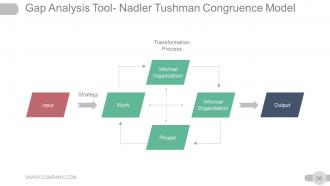
Slide 26: This slide shows Gap Analysis Tool- Nadler Tushman Congruence Model displaying Strategy, Transformation Process, Work, Informal Organization, Informal Organization, People, Output, Input.
Slide 27: This slide is titled Additional Slides to move forward. You can change the content as per need.
Slide 28: This slide presents Mission and Vision showing Vision and Mission aspects to be stated.
Slide 29: This slide presents Our team with names, designation and image boxes.
Slide 30: This is an About Us slide. State company/team specifications, solutions here.
Slide 31: This is Our Goal slide. State goals, targets etc. here.
Slide 32: This is a Comparison slide to compare product/enitities etc.
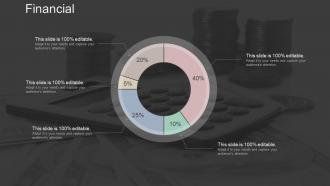
Slide 33: This is a Financial Scores slide. State financial aspects, etc. here.
Slide 34: This is a Quotes slide to convey company's message, beliefs etc. You may change the slide content as per need.
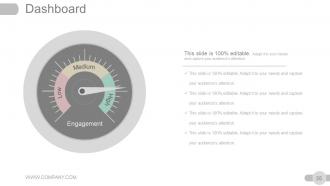
Slide 35: This is a Dashboard slide. Present metrics, Kpis etc. here.
Slide 36: This is a Location slide to show global presence, growth etc.
Slide 37: This slide presents a Timeline. Jot down your highlights, or present milestones etc. here.
Slide 38: This slide showcases Post It notes. State important events, information etc. here.
Slide 39: This slide showcases Newspaper image. State important events, information etc. here.
Slide 40: This slide showcases Puzzle imagery. Present information, specifications etc. here.
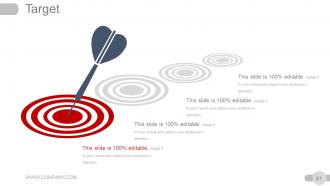
Slide 41: This slide shows Target image with text boxes. Present information, specifications etc. here.
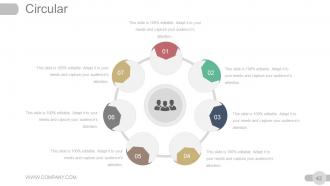
Slide 42: This slide presents a Circular diagram with text boxes. Present information, specifications etc. here.
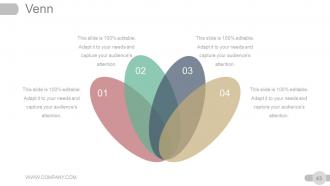
Slide 43: This is a Venn Diagram image slide. State information, specifications etc. here.
Slide 44: This is a Mind Map image slide. State information, specifications etc. here.
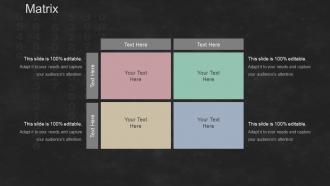
Slide 45: This slide presents a Matrix. Present information, specifications etc. here.
Slide 46: This is a Lego image slide. State information, specifications etc. here.
Slide 47: This is a Silhouettes image slide. State people related information, specifications, solutions etc. here.
Slide 48: This slide presents a Hierarchy image. State information, specifications etc. here.
Slide 49: This is an Idea & Bulb image slide. State information, specifications, innovative aspects etc. here.
Slide 50: This is a Magnifying glass image slide. State information, specifications etc. here.
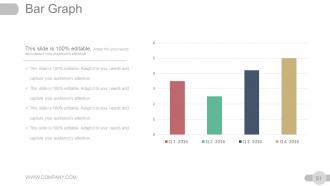
Slide 51: This is a Bar Graph slide to show product/entity comparison.
Slide 52: This is a Funnel image slide to show product/entity information, funneling aspects etc.
Slide 53: This is a Thank You slide with Email, Address# street number, city, state, Contact Numbers.
Strategic Planning Gap Analysis Powerpoint Presentation Slides with all 53 slides:
Acquire the go ahead with our Strategic Planning Gap Analysis Powerpoint Presentation Slides. You are bound to be given the all clear.













FAQs for Strategic Planning Gap Analysis
Okay so you need three main things: figure out where you're at now, decide where you want to be, then spot the gaps between them. Be brutally honest when you're looking at your current situation - performance, resources, all that stuff. Most teams totally bomb this part because they're not specific enough about their vision (drives me crazy honestly). Once you know your future goals, prioritize which gaps actually matter for your strategy. Don't try to fix everything at once. Then build action plans to close those priority gaps. The whole thing falls apart if you're not real about your starting point though.
Start with an honest assessment - where are you now vs where you need to be? Get your department heads involved because honestly, they'll catch stuff you miss from up top. Performance, resources, capabilities, all of it. Then prioritize ruthlessly. Which gaps are killing your biggest goals? What can you actually tackle with your current bandwidth? I've seen too many teams try to fix everything at once and just burn out. Pick maybe 2-3 critical ones that'll actually make a difference. The rest can wait - there's always another quarter.
You absolutely need stakeholder feedback - it's your reality check. Sure, you might think you know where the gaps are, but employees and customers are living with these problems every day. They'll spot blind spots you totally missed. I've watched so many analyses crash and burn because leadership thought they could figure it out alone (big mistake). The feedback shows you which gaps actually matter most. Plus it tells you if your solutions will work in the real world or just sound good in meetings. Get people talking early and keep asking questions throughout the process.
Okay so break this into two buckets - your 1-year tactical stuff and the 3-5 year strategic picture. Short-term gaps should tackle immediate fires and market pressure. Long-term ones? Focus on building capabilities you'll actually need down the road. Here's the thing though - don't let quick fixes screw over your future self. I've watched companies get so obsessed with immediate optimization that they basically made themselves irrelevant. Try a simple impact vs timeline matrix to spot where things clash. Start with short-term gaps that actually feed into your bigger strategy first. Makes the whole thing way less messy.
Honestly, go for metrics that actually connect to your big goals - revenue growth, customer retention, market share, whatever matters most to your business. Don't fall into the vanity metrics trap (I've seen way too many teams obsessing over stuff that looks cool but means nothing). Pick maybe 3-5 max that leadership actually reviews. Oh, and grab some leading indicators too - like pipeline health or employee engagement - since they'll warn you about problems before they hit. Map each major objective to one main metric plus one early warning sign. That's really all you need to start.
Dude, technology makes gap analysis so much easier. Analytics platforms pull your performance data automatically - no more manual spreadsheets (thank god). Project management tools show you where you are vs where you need to be. The visual dashboards are honestly the best part - gaps just jump out at you. Tableau's great but even Excel works if you set up decent templates. Your whole team can jump in on collaboration platforms instead of that endless email back-and-forth. I'd start with one solid analytics tool first, then add more as you figure out what you need.
Don't be vague about your current situation - say "we take 48 hours to respond vs the 4-hour industry standard," not "customer service needs work." Also, you'll burn out trying to fix everything simultaneously. Been there, learned that lesson the hard way. Get input from people actually doing the work, not just C-suite folks who haven't touched operations in years. Markets shift constantly, so revisit your analysis regularly. Oh, and pick your biggest pain points first. Being brutally honest about where you suck right now is half the battle.
Honestly, once a year isn't enough anymore - things move too fast. I'd do a full analysis annually, then quick quarterly check-ins to catch any big shifts. Tech and retail companies? Probably need to look every six months because those industries are crazy volatile. The whole point is catching gaps before they bite you in the ass. Don't be like my old company that waited two years and suddenly realized we were way behind competitors. Set those calendar reminders now or you'll totally forget and end up playing catch-up later.
Think of gap analysis as your heads-up for what could go wrong. You map where you are now against where you want to be, and boom - suddenly you can see all the stuff that might trip you up. Missing skills, not enough budget, competitors breathing down your neck, you name it. Honestly, it beats flying blind and hoping for the best. Once you spot these gaps, rank them by how badly they could mess things up and how likely they are to happen. That way you're not wasting time on tiny risks while ignoring the big ones. Build your backup plans around whatever bubbles to the top.
Honestly, visual aids are game-changers for gap analysis. Your brain processes charts way faster than endless spreadsheet rows - I've definitely wasted hours squinting at numbers that a simple graph would've made obvious in seconds. Plus stakeholders actually pay attention when you show colorful before/after comparisons instead of droning through data tables. Heat maps are perfect for spotting your biggest problem areas right away. You can color-code priority gaps and track progress over time without losing people's attention. Charts also make patterns and weird outliers jump out at you. Trust me, it's so much easier than the old school spreadsheet method.
Honestly, just make a simple visual dashboard first - color code it so they instantly see what's broken (red = yikes, yellow = meh). Don't make people hunt through boring reports. Frame everything as lost money or missed opportunities because that's what actually gets attention. You'll need different meetings though - executives want the big picture while your ops teams need the nitty-gritty details. Oh, and this is crucial: always give 2-3 specific next steps with actual names attached. Nothing kills momentum faster than "someone should probably look into this eventually."
Here's what I've seen work really well - when you build that continuous improvement mindset, gap analysis stops being this awful yearly thing everyone dreads. Your team actually starts seeing gaps as chances to learn instead of pointing fingers at who screwed up. People get way more honest about problems because they're not worried about getting blamed. You're already tracking stuff and making tweaks regularly, so the data collection happens naturally. The best part? You catch issues early before they blow up into major headaches. I'd definitely make it a quarterly thing - waiting for those formal planning cycles is just too slow these days.
Skip the gut-check approach and grab some actual numbers instead. SWOT analysis works great, plus competitor research with real data. Surveys are solid too, but ask specific stuff - not vague "how are we doing?" questions that don't tell you anything useful. Third-party industry reports give you that outside perspective, which honestly can be way more honest than internal feedback. Document everything so you've got proof later. Oh, and create a simple scoring system for the gaps you find - makes it easier to focus on what actually matters instead of whatever's loudest in meetings.
Pick 3-5 competitors and dig into what makes them tick - their pricing, market share, how happy their customers are, stuff like that. It's honestly the fastest way to see where you're falling behind and what gaps actually matter. Some things that seem important internally? Turns out customers don't really care. But then you'll spot these obvious blind spots you totally missed. I always start with direct competitors since they're fighting for the same customers. Map their strengths against what you're currently doing. Trust me, it makes prioritizing way easier when you can see what's actually killing your competitive edge versus just wishful thinking.
SWOT analysis is probably your best bet - super straightforward for spotting internal gaps vs what's happening outside. McKinsey's 7S framework is solid too, though honestly most people make this way harder than it needs to be. Just do a simple current vs future state comparison using balanced scorecard stuff (financial, customer, internal processes, learning). Capability Maturity Model works if you're focused on operations. Oh, and whatever you pick, make sure your whole team actually gets it - I've seen beautiful frameworks completely flop because nobody understood them. Pick one that clicks with how your people think.
-
Enough space for editing and adding your own content.
-
Design layout is very impressive.