


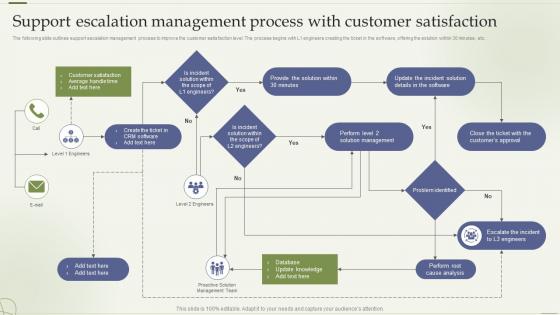
Support Escalation Management Process With Customer Satisfaction




Try Before you Buy Download Free Sample Product
 Impress Your
 Audience
 100%
100% Editable
 Save Hours
 of Time


The following slide outlines support escalation management process to improve the customer satisfaction level. The process begins with L1 engineers creating the ticket in the software, offering the solution within 30 minutes, etc.
People who downloaded this PowerPoint presentation also viewed the following :
Support Escalation Management Process With Customer Satisfaction with all 6 slides:
Use our Support Escalation Management Process With Customer Satisfaction to effectively help you save your valuable time. They are readymade to fit into any presentation structure.
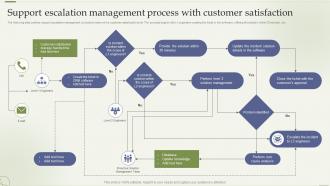





FAQs for Support Escalation Management Process
So there's basically four things you should watch. Response time is huge - customers hate waiting for that first reply. Resolution time matters too, but honestly I think response time pisses people off more. Customer satisfaction scores are pretty brutal to look at sometimes, but you gotta know where you stand. Oh, and track first contact resolution - that's when your team actually fixes stuff without bouncing people around to three different agents. These four will tell you if you're doing decent or totally sucking at support.
Honestly, tech can totally transform your customer support if you do it right. Chatbots are clutch for handling basic stuff 24/7 - saves your team from repeating the same info constantly. What I really love is how AI can read customer mood and automatically send the really frustrated ones to your best agents. CRM integration is huge too since reps can pull up someone's entire history instantly. No more of that "sorry, what was your order number again?" nonsense. Just make sure whatever you choose actually helps your team instead of creating more headaches - I've seen companies mess that up.
Training your team is literally everything. I can't stress this enough - without it, you'll have inconsistent responses, slow resolution times, and cranky employees (customers sense that vibe instantly). Product knowledge is obvious, but don't forget communication skills and de-escalation tactics. Your specific processes and tools matter too. The companies crushing it? They do ongoing training, not just some rushed week-long thing when people start. I'd honestly audit your current team first - see where the gaps are, then build your program around fixing those specific issues.
Think of customer feedback as your cheat sheet for what needs fixing. Track complaint patterns weekly - if tons of people are bitching about slow service, boom, there's your answer. Don't ignore the good stuff either though. Positive feedback shows what you're nailing, so double down on that. Here's what really works: circle back to customers when you actually fix their issues. Sounds obvious but most companies suck at this. They'll remember you listened and probably become repeat customers. I'd start small - maybe just group similar complaints into themes each week and tackle the biggest pain point first.
Okay so first thing - just let them get it all out without jumping in. I know it's tempting to interrupt but don't! Once they're done, say something like "yeah I totally get why you're pissed about that." Stay chill even when they're losing it (which honestly is the hardest part). Ask questions to figure out what's really bugging them underneath all the yelling. Tell them what you CAN actually do instead of listing what you can't. If you have to pass it up the chain, just explain why and give them a timeline. Really though, half the battle is just making them feel like someone's actually listening.
Dude, response time is everything in customer service. Most people expect you to get back to them in like 10 minutes or less - which is crazy fast but that's just how it is now. Look, even if you can't fix their problem right away, just shoot them a quick "hey, got your message" response. Trust me, silence makes frustrated customers way worse. We've all been there waiting forever for someone to reply, and it's the worst feeling. Set up some auto-replies so nothing gets missed, and have a clear plan for who handles what when things get busy.
Honestly, just dig into the data you already have - most companies collect tons of stuff they never actually use. Pull up their purchase history and past tickets before jumping on calls. Your team should use names and reference previous conversations. People genuinely lose their minds when you remember they called about that broken widget last month, it's wild how much goodwill that builds. Make sure your CRM shows all the context so agents aren't playing detective every single time. Oh, and offer different ways to reach you - some folks hate phone calls but love chat.
Look, hire people who actually give a damn about helping customers - that's step one. Then don't handcuff them with stupid policies. Train them on real listening skills, not robotic scripts. Most support sucks because agents can't DO anything meaningful. Let them approve refunds or whatever without calling their manager every time. I'd also make sure leadership gets on calls regularly so they remember what customers are dealing with. Oh, and celebrate the wins where someone really helped a customer, not just whoever gets through calls fastest. That stuff matters way more than people think.
Start with your helpdesk analytics - Zendesk and Freshdesk both have solid reporting for ticket volume, resolution times, all that stuff. I'm kinda obsessed with trend charts tbh, they make everything so obvious! Set up weekly dashboards and pull data from everywhere: social media, chat logs, phone calls. Sentiment analysis tools help track customer mood over time. Here's the thing though - stick with the same KPIs for at least a quarter or you'll just be chasing random noise instead of actual patterns. Consistency beats perfection every time.
So basically you let customers figure stuff out themselves instead of bugging your support team. FAQs, help docs, chatbots - you know the drill. Most people actually want this anyway since who wants to wait on hold at midnight, right? The trick is covering what people actually ask about, not random stuff you think they need. I'd start by looking at your biggest ticket categories and build around those first. Once you get the common problems sorted, you'll notice way fewer people contacting support. Pretty much cuts your workload in half if you do it right.
Honestly, omnichannel support is a game-changer for customer satisfaction. People want to reach you however works for them - chat, email, phone, whatever. The real magic happens when they can switch between channels without repeating their entire sob story every single time (we've all been there, right?). When customers don't have to start over, they actually feel heard. Their history follows them around, so your team knows what's up. Satisfaction scores go through the roof because there's way less friction. My advice? Start small - just get your main channels talking to each other so customer info transfers smoothly.
Honestly, just pick Twitter or Facebook to start - wherever your customers already complain anyway. Monitor mentions so you're not blindsided by angry posts. Quick public responses are clutch because other people see you actually care. Don't just tell everyone to "slide into DMs" either, that's annoying. If things get crazy busy, maybe create a separate support account later. The whole thing works best when you're actually helpful instead of robotic. Oh, and nail your response time on one platform before spreading yourself thin across everything. People notice when brands are slow to respond.
Oh man, this is so true from my experience. Japanese customers want super polite, detailed responses - like, almost painfully thorough. Americans? They just want their problem fixed fast. Germans are all about efficiency and being direct (which honestly I respect). But with Latin American customers, you've gotta build that personal connection first or they won't trust you. Response times matter differently too - some cultures expect immediate replies while others are way more patient. Your team really needs to pick up on these patterns instead of treating everyone the same. Makes such a difference.
So basically proactive support means you catch problems before customers even know they exist. Way less stressful than constantly dealing with angry people, trust me. Your satisfaction scores will be way better because people feel like you actually care about them. Plus fewer tickets overall since you're fixing stuff at the root cause. Downside is you need to invest in monitoring tools and someone who can actually analyze the data - which isn't cheap. But honestly? Just pick your 3 most annoying recurring problems and build some workflows to prevent those. That's literally how I'd start.
Honestly, you've gotta bake this stuff right into your processes from the start. Train your team on whatever rules hit your industry - privacy laws, accessibility, financial regs, all that fun stuff. Document literally everything because auditors are obsessed with paper trails (learned that the hard way). Regular compliance checks help catch issues early. When your agents hit something they're not sure about, they need clear steps for escalating it up the chain. The trick is making it feel routine, not like some annoying extra task. Start by figuring out which regulations actually matter for your support team, then build simple checklists they can follow.
-
I loved the hassle-free signup process. A few minutes and, I had this giant collection of beautiful designs.
-
Their products can save your time, effort and money. What else you need. All in one package for presentation needs!