


Swot Analysis Architecture And Construction Services Firm




Try Before you Buy Download Free Sample Product
 Impress Your
 Audience
 100%
100% Editable
 Save Hours
 of Time


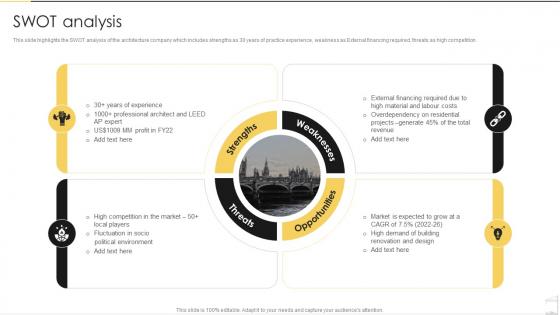
This slide highlights the SWOT analysis of the architecture company which includes strengths as 30 years of practice experience, weakness as External financing required, threats as high competition.
People who downloaded this PowerPoint presentation also viewed the following :
Swot Analysis Architecture And Construction Services Firm with all 6 slides:
Use our Swot Analysis Architecture And Construction Services Firm to effectively help you save your valuable time. They are readymade to fit into any presentation structure.





FAQs for Swot Analysis Architecture And
So SWOT is basically four boxes - Strengths/Weaknesses (stuff you control) and Opportunities/Threats (outside factors). Here's the thing though: most people just make lists and call it done, which is pretty useless tbh. The real trick is connecting them. Like, can your strengths help you capitalize on opportunities? Do your weaknesses leave you exposed to threats? Think of it as a business health check. Once you fill out each section honestly - and I mean brutally honest - look for 2-3 priorities where everything intersects. That's where the actual strategy lives.
Honestly, you've gotta be real with yourself about what you're actually good at versus what's broken. Start with the basics - your team, money situation, how stuff gets done, your tech, reputation. Ask your employees straight up what's working and what sucks, especially the people who aren't in meetings all day. They see things you don't. Look at what customers complain about most and where your competitors are smoking you. Anonymous surveys work way better than asking people face-to-face (nobody wants to tell their boss the truth). The whole thing only works if you can handle hearing that some stuff is genuinely messed up.
So basically, opportunities = go on offense, threats = play defense. Growth stuff for opportunities - new markets, products, partnerships, whatever makes sense. Threats need you building safety nets or diversifying so you're not screwed if things go sideways. Netflix is actually a perfect example - they went global (opportunity) but also started making their own shows so they wouldn't be totally dependent on other studios (threat protection). Smart companies do both at once. I'd pick your top 3 of each and just start brainstorming concrete actions. Don't overthink it.
Honestly, SWOT is one of those tools that actually works. You map out your strengths and weaknesses first - the stuff you can control. Then look at outside opportunities and threats. It's like taking a step back to see the whole picture when you're drowning in decisions. The cool part? You start connecting things between all four boxes and suddenly spot moves you totally missed before. I always do this before any big planning stuff now - saves me from making dumb choices later. Trust me, it's worth the 20 minutes.
Market trends basically tell you what opportunities and threats are out there - it's like getting the scoop on what's happening beyond your company bubble. Consumer habits change, new regulations pop up, the economy shifts. Tech disruption is honestly crushing some businesses while creating goldmines for others. These trends also help you spot internal strengths you might've overlooked or weaknesses that need fixing. I'd say update your SWOT every quarter though - markets move crazy fast now and you don't want to be working with stale info.
Honestly, most companies do it yearly and that's fine for stable industries. But if you're in tech or something that changes fast? Quarterly makes way more sense. Here's the thing though - don't just stick to a rigid schedule. Major stuff happens between your planned reviews, right? New competitor shows up, economy shifts, you launch something big. That's when you need to pause and reassess. I learned this the hard way when we missed a huge market shift because we were waiting for our "annual review." Bottom line: pick your baseline frequency but stay flexible when big changes hit.
Mix different data sources - surveys, interviews, focus groups with employees and customers. Financial analysis plus market research keeps things grounded in reality instead of just hunches. Cross-functional teams are key since marketing sees stuff that finance misses, you know? I'd add competitor benchmarking and customer feedback tools for objectivity. Too many SWOTs end up being total wishful thinking. Performance metrics help too. Oh, and definitely run a validation workshop afterward - like a sanity check before you commit to anything. Sounds like a lot but it's way better than guessing your way through strategy.
Honestly, you've got way more flexibility than those big companies stuck in endless meetings and approval processes. Think about it - you can change direction overnight, they take months. Your customers actually get to talk to YOU, not some call center in another state. Plus there's tons of smaller markets that aren't worth their time but could totally work for your business. I'd make a list of everything you do better than the corporate giants (probably more than you think) and then just hammer that stuff in how you market yourself. The personal relationship thing is huge - people are so tired of feeling like just another number.
Dude, you really can't do SWOT analysis alone - you'll miss way too much stuff. Different people see different angles that you'd never think of. Like, marketing spots opportunities that operations would totally overlook, you know? Get voices from all departments, even different levels. That intern might actually catch something brilliant that everyone else missed. I've seen it happen! When people bounce ideas off each other, that's where the good stuff comes out. Your own biases will mess with the results if it's just you staring at it.
So basically you just gotta tailor the SWOT to whatever industry you're dealing with. Tech companies? Focus on innovation speed, talent pipeline, scalability - stuff like data privacy regulations screwing you over. Healthcare's a whole different beast though. You're worrying about compliance nightmares, patient outcomes, how long FDA approval takes, insurance reimbursement drama. Same framework, totally different priorities. Honestly, I'd look up 2-3 industry examples first before jumping in. Saves you from missing obvious stuff that insiders know but you might blank on. The categories don't change but your questions definitely should.
SWOT's actually perfect for testing product ideas before you waste money on them. Start with strengths - got the right team? Decent budget? Your weaknesses are just as crucial though - maybe you're missing key skills or don't have enough cash. Opportunities are where it gets fun (honestly my favorite part) - you're hunting for market gaps your product could actually fill. Threats? Think competitors who might crush you or regulations that could screw things up. I always tell people to hit all four boxes early. Way better than learning expensive lessons later when it's too late to pivot.
Honestly, most people way overthink this and just get paralyzed trying to decide. Start with the high-impact stuff that hits your main goals directly. I'd focus on strengths you can use right now and threats that could actually hurt you in the next year or so. Then tackle opportunities with the best ROI and weaknesses that are genuinely blocking you (not just wishlist items). Quick tip - make a simple grid plotting impact vs urgency for everything. Sounds basic but it works. You'll see exactly what needs your attention first instead of spinning your wheels on analysis.
Ugh, the worst thing companies do is get super vague - like saying "we have great customer service" without any actual proof or numbers. Everyone thinks their customer service rocks! Also, don't make it just a bunch of executives patting themselves on the back. Pull in people from different departments who actually know what's going on day-to-day. And here's the thing that drives me crazy - so many teams spend hours creating this beautiful SWOT analysis, then literally never look at it again. What's the point? Use it to make real decisions or don't bother doing it at all.
Honestly, getting different people's takes on your SWOT is a game-changer. You'll catch blind spots you'd never see otherwise - like your customers might hate something your sales team thinks is amazing. Each group brings their own angle to what's working, what sucks, and what's coming down the pipeline. Without that input, you're basically just validating your own assumptions (been there). Try to hit up 3-4 different groups if you can. The finance folks always have interesting doom-and-gloom perspectives that are actually pretty useful.
Totally! SWOT's actually perfect for that. I always tell people to use it as your jumping-off point, then dig deeper with other stuff. Like, take your SWOT results and feed them into Porter's Five Forces or slap them onto a Business Model Canvas. Works really well. One thing I've done before - and this might sound weird but trust me - is use SWOT first, then do scenario planning based on whatever opportunities and threats popped up. Also pairs nicely with competitive analysis. Don't just stop at SWOT though. It's your foundation, not the finish line. Try combining it with one other tool next time you're planning.
-
The service is fast, and I could access any presentation after buying the subscription. I don’t think I’ll ever have to worry about a presentation in my life.
-
I looked at their huge selection of themes and designs. They appeared to be ideal for my profession. I'm sure I'll grab a few of them.