


Swot Analysis Related To The Coffee Shop Master Plan Kick Start Coffee House Ppt Show




Try Before you Buy Download Free Sample Product
 Impress Your
 Audience
 100%
100% Editable
 Save Hours
 of Time


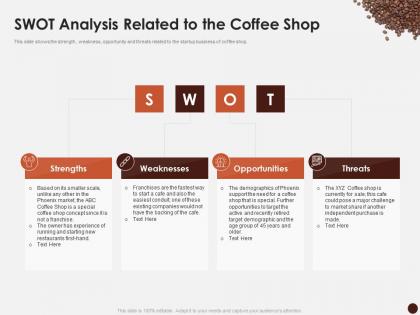
This slide shows the strength , weakness, opportunity and threats related to the startup business of coffee shop.
People who downloaded this PowerPoint presentation also viewed the following :
Swot Analysis Related To The Coffee Shop Master Plan Kick Start Coffee House Ppt Show with all 2 slides:
Use our Swot Analysis Related To The Coffee Shop Master Plan Kick Start Coffee House Ppt Show to effectively help you save your valuable time. They are readymade to fit into any presentation structure.

FAQs for Swot Analysis Related To The Coffee Shop Master Plan Kick Start Coffee
So SWOT has four parts - strengths/weaknesses are stuff you control internally, while opportunities/threats are external market things you can't really change. The cool part is when you start connecting them, like pairing your strengths with opportunities or fixing weaknesses before threats become a problem. Think of it as brutally honest self-reflection for your business (which honestly most companies avoid). Internal vs external matters because you'll spend your time differently on each. Just dump everything into the four boxes first, then look for patterns where they intersect - that's where the real insights are.
So SWOT is actually perfect for this. First, list out all the emerging trends and customer problems you see in the opportunities section. Your strengths go in another box - think tech skills, reputation, whatever you're genuinely good at. Then comes the fun part: see where they overlap. Like if you're great at customer service and there's a market full of people pissed off at competitors, that's your opening right there. I always look for that sweet intersection - honestly, that's where the real money is. Where your actual capabilities meet problems nobody else is solving well.
Honestly, competitive analysis is what makes SWOT actually worth doing. You think you're great at customer service? Cool, but how does that stack up against your competitors - is it really a strength or just table stakes? Same goes for weaknesses. Maybe what feels like a huge flaw is actually pretty normal in your industry. Looking outward also helps you spot opportunities and threats you'd totally miss if you're just navel-gazing. I usually pick 3-5 main competitors to compare against. Without that external view, your SWOT becomes this weird echo chamber that doesn't reflect reality.
SWOT analysis is honestly pretty useful for big decisions - it makes you map out strengths, weaknesses, opportunities, and threats instead of just winging it. Though honestly, sometimes your gut isn't totally wrong either. But here's the thing: once you've got those four categories down, you can actually test your options against them. Like, does this choice play to what we're good at? How's it handle our biggest risks? It stops your team from getting tunnel vision on the first shiny idea. Next time you're facing something major, just run through it real quick.
So for startups, you're basically playing the "what if" game - focus on your speed and ability to pivot fast. Resources are tight and nobody knows your name yet, but damn, the opportunities are endless when you're small enough to chase anything. Established companies? They've got the opposite problem. Market position and existing assets are their bread and butter, but they're also sitting ducks for scrappy newcomers. They need to watch for threats while figuring out how to expand without breaking what already works. Startups bet on tomorrow. Big companies work with what they've already built.
Honestly, SWOT analysis is like forcing yourself to have that awkward conversation you've been avoiding. You know those skill gaps everyone whispers about? Or how your processes are stuck in 2015? This makes you actually write it down. The threats part always surprises people - suddenly you realize competitors are lapping you or new regulations could mess things up. Get folks from different teams involved when you do this. They'll catch stuff you totally missed. It's basically a business health check, but way more honest than the usual "everything's fine" attitude most companies have.
Oh totally, a good template saves so much time! Just make a basic 2x2 grid in Excel or Sheets - honestly even sketching it on a whiteboard works. If you're working with a remote team, Miro and Mural have some decent collaborative ones that make it way easier to get everyone's thoughts in there. Canva and SmartSheet have free templates too if you want something prettier. Don't overthink it though - the simpler the better. Set a timer for like 20-30 minutes and just start throwing ideas at it. Works every time!
Definitely get other people involved - you'll miss so many things doing it alone. Different departments see totally different stuff. Like sales knows what customers actually complain about, but operations might spot internal problems that executives don't even realize exist. Having multiple people also keeps you honest about whether something's really a strength or just... you know, what you want to believe. The back-and-forth usually creates better ideas too. Mix people from different levels and departments if you can. Honestly makes a huge difference in how useful the whole thing ends up being.
Don't be super vague or list obvious crap that won't actually move the needle. Skip generic stuff like "we have good customer service" - what specifically makes yours better? Talk to people in other departments too because you'll miss things if it's just marketing doing this alone. I've seen teams make crazy long lists that try to cover everything, which isn't helpful. Focus on external factors, not just internal stuff. Oh and be honest about the weaknesses - nobody improves by pretending problems don't exist. Keep it tight and actionable.
At minimum, update it yearly. But honestly? Don't wait that long if big stuff happens - new competitors pop up, market goes crazy, your team gets restructured. I've watched companies treat their SWOT like gospel for years... huge mistake. Fast-moving industries probably need quarterly check-ins. More stable ones can stretch it to annual. The key is actually remembering to do it though - I'd set a calendar reminder right now or you'll totally forget. Your business changes constantly, so the analysis should change with it.
SWOT analysis is honestly a game-changer for nonprofits. You map out your strengths first - maybe you've got amazing volunteers or tight community connections. Then hit your weaknesses (limited funding, crappy outdated systems, whatever). The opportunities part? That's where you find grants, partnerships, or new community needs that fit your mission. Threats could be budget cuts or other orgs moving into your space. Once you've got it all laid out, you can actually build smart strategies that play to your strengths and tackle those weak spots while going after the good opportunities.
Oh dude, this is so real. What counts as a "strength" totally depends on who you're talking to - like being super aggressive might fly in some business cultures but come off sketchy in others. Your audience's background changes everything. Government rules? Some see protection, others see annoying red tape. I learned this the hard way once when presenting to international clients. Hierarchy stuff gets weird too - what looks organized to some looks outdated to others. You'll probably want to tweak how you frame the same SWOT points depending on who's in the room.
Track your SWOT strategies with financial stuff like ROI and revenue growth, plus operational metrics - think market share, customer satisfaction, that kind of thing. Pick metrics that actually connect to your SWOT findings though. If you spotted a strength, measure whether it's really helping you win. Honestly, most people go overboard and try tracking everything, which just creates chaos. Stick to 3-5 solid KPIs and check them quarterly. The real payoff? You'll actually see if you're fixing those weak spots or making the most of good opportunities.
Honestly, going digital with SWOT analysis is a game changer. Tools like Miro or Lucidchart let your whole team jump in and edit simultaneously - no more waiting for Karen from accounting to email back her thoughts (you know how that goes). Google Jamboard works too if you want something free to start with. You can color-code different ideas, add voting to see what matters most, then export everything into a clean report. The best part? Create a template once and you're set for future projects. Way better than those messy whiteboard sessions we used to do.
SWOT analysis basically helps you figure out where to put your energy when developing products. Look at your strengths first - what you're already good at or connections you have. Honestly, the weaknesses part sucks but it's super useful because it shows you what to fix before wasting time on new features. Then opportunities are like... market gaps you should jump on. Threats? That's your competition and market changes that could mess things up. The real trick is connecting everything - use what you're good at to grab those opportunities, or shore up weak spots that make you an easy target.
-
It saves your time and decrease your efforts in half.
-
Innovative and attractive designs.
-
Awesomely designed templates, Easy to understand.