


System Integration And Architecture Powerpoint Presentation Slides




Try Before you Buy Download Free Sample Product
 Impress Your
 Audience
 100%
100% Editable
 Save Hours
 of Time


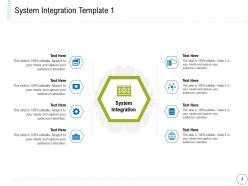
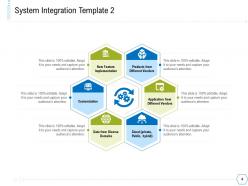
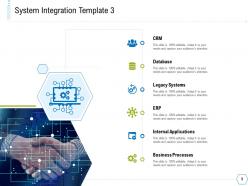
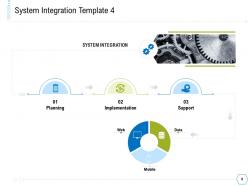
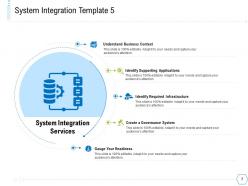
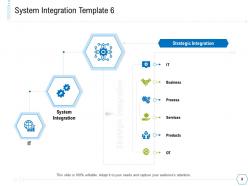
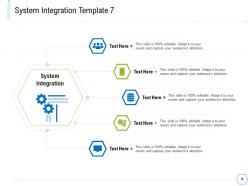
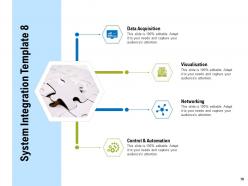
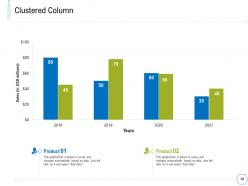
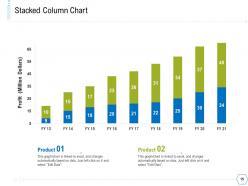
Introducing System Integration And Architecture PowerPoint Presentation Slides. Discuss the role of architecture in system integration with the use of a readily available PPT slideshow. Take the assistance of these continuous integration PPT themes to demonstrate the functioning of all systems together. Illustrate system integration services by taking advantage of integration platform PowerPoint templates. Challenges of integration can be discussed with your team by efficiently employing our professionally designed AI system PPT visuals. Describe the components of strategic integration by using these aesthetically appealing enterprise application PPT themes. Discuss in detail data acquisition, visualization, networking, control, and automation with the aid of content-ready PPT infographics. You can also display the comparison of various products through graphs and charts. Describe the methods of integration by incorporating our ready-to-use system integration PowerPoint slide design. Thus, download and create a stunning presentation by employing our ready-made PPT slides.
People who downloaded this PowerPoint presentation also viewed the following :
System Integration And Architecture Powerpoint Presentation Slides with all 27 slides:
Use our System Integration And Architecture Powerpoint Presentation Slides to effectively help you save your valuable time. They are readymade to fit into any presentation structure.







FAQs for System Integration And Architecture
You'll need an integration platform - ESB or API gateway works. Standardized APIs are crucial for everything to talk properly. Message queues handle the async stuff, and you absolutely need monitoring tools plus security baked in everywhere. Honestly, spend time on error handling upfront. When systems crash at 2am (and they will), you'll be grateful you did. Keep it all modular so swapping components doesn't mean rebuilding everything from scratch. Oh, and start with your data contracts first - define those standards, then build everything else around them. Makes life way easier down the road.
Look, point-to-point is super fast for basic stuff, but scaling it becomes a total mess - learned that the hard way. API gateways slow things down a bit but you get caching and way better monitoring. Message buses? They're overhead-heavy at first but absolutely crush high-volume async work and keep your services nicely separated. ESBs will choke you if the design sucks. Honestly, I'd just start with simple APIs and move to event-driven stuff when your traffic picks up. Way less headache that way.
Honestly, data format mismatches are gonna be your worst enemy. Your old system's probably stuck on SOAP while everything new wants REST - it's like they're speaking different languages. Performance issues will drive you crazy too since legacy stuff wasn't built for today's traffic. Oh, and good luck finding decent documentation - half the time it doesn't exist or makes zero sense. Security standards are usually outdated which is fun to deal with. Start mapping your integration points early though, seriously. Budget way more time than you think because nothing ever works on the first try.
So microservices are pretty sweet because you can swap out individual pieces without nuking your whole system. Think LEGO blocks vs one massive concrete block - way less painful to work with. Each service has its own API and runs separately, so upgrading or adding new stuff doesn't require touching everything else. Plus when something breaks, it won't tank your entire app (learned that one the hard way). I'd start by looking for natural breaking points in what you've got now - places where functionality already feels separate. Those are your best candidates for splitting off.
Honestly, data quality will make or break your integration project. Bad data just multiplies when you're syncing between systems - duplicates everywhere, processes failing left and right. It's a nightmare. Start by checking what you've got now and find the worst problem areas. Fix those first before they spread. You'll need validation rules and consistent formats at every connection point. I learned this the hard way on a project last year - spent weeks cleaning up garbage that could've been caught early. Trust me, do the data audit upfront.
Moving to cloud means ditching those old point-to-point connections for API-first designs. You'll deal with more latency and network hiccups - honestly, it can be annoying at first. But the trade-off is worth it. Design for eventual consistency and throw in circuit breakers for when things go sideways. Message queues become your best friend for async stuff. Yeah, it gets more complex juggling multiple providers and their different SLAs, but your system ends up way more resilient. I'd start by mapping what you've got now, then see which integrations would actually benefit from serverless or managed messaging.
Three main things to nail down: authentication, encryption, and monitoring. API keys or OAuth for anything talking between services. Data needs encryption both moving around and sitting still. Network segmentation matters way more than people think - if systems don't need to chat directly, don't let them. Honestly, I've watched so many companies get burned because they rushed through the "boring" security steps during crunch time. Get proper logging running so you can actually see what's happening. Oh, and start by checking your current integrations - figure out which ones touch sensitive stuff first.
So basically an ESB is like having one central hub that handles all your app-to-app talking instead of connecting everything directly to everything else. No more spaghetti mess of integrations everywhere. It translates messages between different systems, routes stuff where it needs to go, and deals with all those annoying protocol mismatches. Plus you get centralized security and monitoring - honestly such a lifesaver when things break. I'd start small though, just pick your most important data flows and see if it's worth the setup effort for those first.
Track your tech stuff first - response times, error rates, how much data's moving through. Business metrics matter just as much though: are people actually using it? Getting the ROI you promised? Honestly, I've seen too many integrations that work perfectly but nobody cares about the results. Data quality is huge too because fast garbage is still garbage. Set up some dashboards so you can watch things in real-time. Oh, and grab baseline numbers before you launch - you'll need those to prove it was worth doing.
Honestly, your middleware choice is gonna make or break your project. RabbitMQ and similar message queues are great for async stuff - they handle failures without everything crashing. API gateways give you that centralized control but lock you into REST/GraphQL patterns. ESBs are pretty outdated now, though some companies still swear by them. Here's the thing - whatever you pick determines your communication patterns and data formats going forward. I'd match it to what your team actually knows rather than chasing whatever's hot right now. Trust me on this one.
Event-driven stuff and API-first design are pretty much becoming standard now. Microservices are still popular but it's more about being smart with how you break things up - not just going crazy and splitting everything (trust me on that one). Serverless is really picking up steam for those random traffic spikes. Low-code platforms are actually getting decent for enterprise work, which surprised me. AI tools are starting to handle the boring mapping tasks we used to spend hours on. You should mess around with Kafka if you haven't yet - it's worth the learning curve.
So sync is like calling someone - you're stuck waiting until they pick up before you can do anything else. Async is more like texting where you fire off the message and go about your day. Honestly, async usually wins for performance since nothing gets blocked. But sync is way easier to write and debug when things go wrong. I'd go async if you're hitting slow APIs or need to handle tons of requests. Otherwise sync might save you some headaches, especially if you're just starting out with this stuff.
Start with API contracts and proper versioning - saves you from everything breaking when someone makes changes. Document your data flows even when you're swamped (I know it sucks but you'll hate yourself later if you don't). Centralized monitoring is huge so you can actually see what's going wrong. Keep things modular with clear boundaries between systems. The complexity builds up gradually, which is honestly the worst part - you don't notice until it's a total mess. Regular cleanup of integration points helps. I'd audit what you have now and tackle the ugliest ones first.
Dude, seriously - document everything from the start. I learned this the hard way when I was debugging some broken API at like midnight and had zero clue what past-me was thinking. You'll forget how that weird data mapping works, trust me. Cover your integration flows, error handling, all that stuff. Oh and dependencies too - those always bite you later. Don't treat docs like homework you do at the end. Make it part of the actual work. Your future self will thank you when things inevitably break.
Think of API management as your bouncer and traffic cop rolled into one. It handles authentication, rate limiting, load balancing - basically keeps your APIs from melting down when everyone hits them at once. You get centralized monitoring too, which honestly is a lifesaver during those middle-of-the-night emergencies. The versioning part is huge because you can roll out changes without breaking stuff for existing users. I'd say start small with rate limiting and basic monitoring. You don't need all the fancy bells and whistles right away - build up as you go.
-
Easy to edit slides with easy to understand instructions.
-
Excellent Designs.
-
Wonderful templates design to use in business meetings.
-
Excellent products for quick understanding.
-
Thanks for all your great templates they have saved me lots of time and accelerate my presentations. Great product, keep them up!