


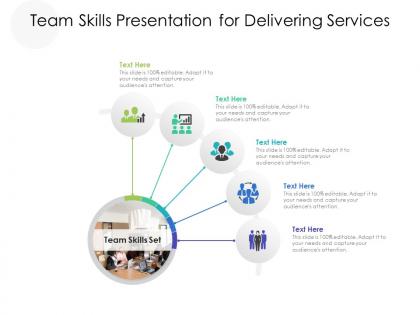
Team skills presentation for delivering services infographic template




Try Before you Buy Download Free Sample Product
 Impress Your
 Audience
 100%
100% Editable
 Save Hours
 of Time


This is a Team Skills Presentation For Delivering Services Infographic Template that can be used by professionals belonging to any domain. It is a powerful illustrative tool that can be deployed to showcase consumer behavior, sales reports, progress reports, IT research results, and many more. In short, this PPT layout works for every industry, irrespective of its operations. The combination of compelling information and visual content added in this template makes it a very resourceful layout to grab. Utilize it to present information and insightful details about your business or the finished product that can be visualized from the onset. This PPT design features high quality elements like graphics, icons, etc. that can be used to further enhance the illustrative properties of a presentation. It can also be reproduced as PNG, JPG and PDF, for the users convenience.
People who downloaded this PowerPoint presentation also viewed the following :
Team skills presentation for delivering services infographic template with all 2 slides:
Use our Team Skills Presentation For Delivering Services Infographic Template to effectively help you save your valuable time. They are readymade to fit into any presentation structure.

FAQs for Team skills presentation for delivering
Honestly, active listening is everything - you've gotta actually hear what people are saying, not just wait for your turn to talk. Cultural awareness matters too, obviously. But here's the thing nobody talks about: patience is clutch because everything moves slower when you're dealing with different time zones and work styles. Clear communication saves your ass, especially across languages. Oh, and learn some conflict resolution skills since misunderstandings happen way more often. My advice? Just ask your teammates upfront how they like to communicate and make decisions. Trust me on this one.
Honestly, active listening changed everything for me - like actually hearing people instead of just waiting for your turn to talk. I used to be awful at this! Ask questions when you're confused rather than pretending you get it. Being direct with feedback helps, but there's a difference between honest and harsh, you know? Some people need a beat to think before they speak up in meetings. The real game-changer though? Making sure everyone feels safe to mess up. I started admitting my mistakes out loud and suddenly other people felt okay doing it too. Creates this whole different vibe on the team.
Dude, emotional intelligence is seriously underrated for teams. Like, when you can actually read people and notice your own reactions, everything just works better. I've watched super smart groups completely implode over drama they could've avoided. The trick? Pay attention to how people react when you say stuff. Short, weird responses usually mean something's up. Check in with teammates when they seem off - most people appreciate it more than you'd think. Oh and managing your own emotions before they spiral helps too. Sounds basic but it's honestly what separates good teams from total disasters.
Honestly, it all comes down to doing what you say you're gonna do. Every time. When you mess up (and you will), just own it instead of making excuses - I've watched entire teams implode over stupid cover-ups that started small. Share your wins AND your failures openly. Actually listen when people talk, even if their ideas suck. Trust builds super slowly but disappears overnight, which is frustrating but true. Be the person everyone can count on first. The rest of your team will start matching that energy once they see you're for real.
Honestly, deal with stuff early before it gets messy - I've watched teams blow up because nobody wanted to have the awkward conversation. Make sure people feel safe speaking up about problems. When disagreements happen (and they will), focus on the actual issue instead of making it personal. Really listen to what others are saying rather than just planning your comeback. "I feel like..." works way better than "You always..." for bringing up concerns without people getting defensive. Oh, and definitely set some ground rules upfront about how you'll handle conflicts. Trust me, you'll need them eventually.
Oh man, cultural differences are HUGE for teams. Some people are super direct with feedback, others drop hints and expect you to read between the lines. Then you've got the whole individual vs team success thing - honestly drives me crazy when it's not addressed upfront. Communication styles clash all the time too. But here's what I've learned: teams get so much stronger when you actually talk about these differences instead of pretending they don't exist. Just ask people how they prefer to work and communicate. Sounds obvious but most teams never do it, and it totally changes everything.
Start with making people feel safe to throw out crazy ideas - nobody's judging, right? Mix up who's in the room and actually ask for different takes on stuff. Block out real brainstorming time where literally anything goes (I swear some of my weirdest ideas turned into the best ones). Use "yes, and..." instead of shutting people down immediately. Let everyone think solo first before jumping into group mode - saves you from groupthink hell. But here's the kicker: you've gotta actually DO something with the good ideas. Nothing kills creativity faster than watching suggestions vanish into thin air.
Honestly, your leadership style makes or breaks how your team grows. Give people space to mess up and experiment? They'll get way better at solving problems on their own. Micromanage them or freak out over mistakes? Nobody's gonna try anything new - they're too scared of getting in trouble. I've noticed collaborative leaders just naturally get their teams sharing knowledge more. The directive types though... they create these weird dependencies where people can't do anything without asking first. Match what you do to what they need - newer people want more guidance, experienced ones just want you to get out of their way.
Honestly, the right tech tools are game-changers for teamwork. Slack or Teams keeps everyone chatting in real-time without drowning in emails. Google Docs is clutch for editing stuff together - no more version chaos. Project management apps like Asana help you actually see who's doing what (and who's slacking lol). Video calls are obvious but necessary, even when someone's kid inevitably crashes the meeting. Here's the thing though - don't go crazy with too many platforms or people just won't use them. Pick maybe two solid tools that actually fit your team's vibe and stick with those first.
Okay so first thing - actually look at who's good at what and who isn't swamped already. I made this mistake where I kept giving our developer all the design stuff because he was available, not because he was good at it lol. Be super clear upfront about deadlines and what you actually want the end result to look like. Then let them figure out how to get there - nobody likes being micromanaged. I started using this shared doc where everyone just updates their progress when they feel like it. Way better than me constantly asking "how's it going?" every five minutes.
Honestly? Send an agenda ahead of time - that's like 80% of the battle right there. Start on time even if Dave's running late again. Keep conversations focused and make sure the quiet people actually get to talk too. But first - do you even need this meeting? So many of them should just be emails, seriously. Have someone jot down notes and action items. Oh, and always end with who's doing what by when. People need to walk out knowing their next steps, otherwise you'll just be having the same meeting next week.
Honestly, start with weekly check-ins and make sure it goes both ways - not just managers giving notes. Anonymous feedback tools are clutch because people actually tell the truth when they're not worried about being awkward. I'd do monthly retrospectives too where you ask what's working and what sucks. The trick is being specific instead of just saying "nice work" or whatever. Oh, and peer feedback sessions work really well once people get comfortable with it. Don't try to do everything at once though - pick one thing first and see how it goes.
Honestly, team-building stuff works because it gets people talking in ways they never would at their desks. You'll discover your super quiet coworker is actually funny as hell during game night. Problem-solving together shows you how everyone's brain works differently - which is weirdly helpful later. The shared experiences create inside jokes that actually bond people. I know it sounds cheesy, but even just quarterly lunch outings make a difference. Just don't overthink it. The magic happens when people drop their "work personas" and act more like themselves.
Honestly, forget job titles and figure out what everyone's actually good at first. Your analyst might crush presentations while your designer secretly rocks at project management. Do a quick skills check with everyone - you'll be surprised what comes up. Mix people up during brainstorming sessions on purpose. Have whoever's best at something lead that part of the discussion. Cross-training works wonders too. I've seen teams completely transform when they stop putting people in boxes and start using their real strengths. Just don't overthink it.
Track the obvious stuff first - project deadlines, quality scores, completion rates. That's your baseline data. But honestly? The real goldmine is watching how your team actually works together. Are they collaborating across departments or staying in silos? How fast do they resolve conflicts? Knowledge sharing happens naturally or do people hoard info? 360 feedback and engagement surveys show communication growth over time. Retention rates matter too since good team dynamics usually keep people from jumping ship. My advice - pick 2-3 things you can actually measure consistently. Don't go crazy trying to track everything.
-
Illustrative design with editable content. Exceptional value for money. Highly pleased with the product.