

Diapositivas de presentación de Powerpoint de procesos impulsados por tecnología





Try Before you Buy Download Free Sample Product
 Impress Your
Audience
 100%
Editable
 Save Hours
of Time


Presentación de diapositivas de presentación de PowerPoint de procesos impulsados por tecnología para maximizar la eficiencia de su negocio y mejorar sus operaciones comerciales. Utilice esta presentación de PowerPoint de inteligencia empresarial para analizar y presentar datos procesables. Al ser un ejecutivo, gerente o cualquier otro usuario corporativo, es muy importante tomar decisiones comerciales informadas, que es en lo que esta presentación de diapositivas PPT de innovación tecnológica puede ayudarlo. Tomando la ayuda de esta presentación de diapositivas de PowerPoint de tecnología de procesos, puede establecer los objetivos de su empresa, tales como impulsar el desempeño organizacional, hacer que la empresa sea la primera en el campo, superar desafíos, etc. También puede mencionar varios componentes, estadísticas clave, razones y otros aspectos vitales de inteligencia de la máquina utilizando este PPT de automatización de procesos robóticos visual. Por lo tanto, descargue sin dudarlo esta presentación de PowerPoint de tecnología de procesos innovadora y extremadamente útil ahora, así que manténgase por delante de sus competidores aprovechando la tecnología adecuada en el momento adecuado.
People who downloaded this PowerPoint presentation also viewed the following :
Contenido de esta presentación de Powerpoint
Diapositiva 1 : esta diapositiva presenta el proceso impulsado por la tecnología. Indique el nombre de su empresa y comience.
Diapositiva 2 : Esta es una diapositiva de Agenda. Exprese sus agendas aquí.
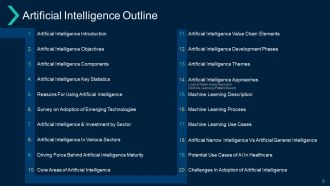
Diapositiva 3 : esta diapositiva muestra el esquema de inteligencia artificial.
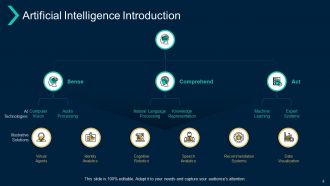
Diapositiva 4 : Esta diapositiva presenta la Introducción a la inteligencia artificial con las principales categorías: Sentir, comprender y actuar.
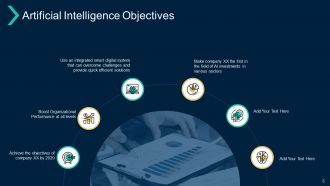
Diapositiva 5 : Esta diapositiva muestra los objetivos de inteligencia artificial con iconos relacionados.
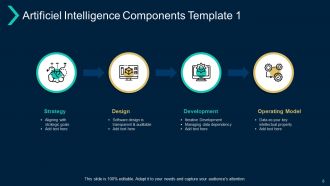
Diapositiva 6 : Esta diapositiva representa la plantilla 1 de los componentes de inteligencia artificial que describe la estrategia, el diseño, el desarrollo y el modelo operativo.
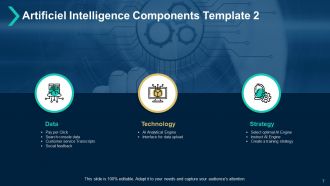
Diapositiva 7 : Esta diapositiva muestra la Plantilla 2 de Componentes de Inteligencia Artificiel que describe: Datos, Tecnología, Estrategia.
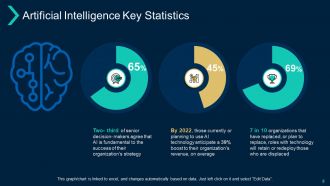
Diapositiva 8 : Esta diapositiva muestra las estadísticas clave de inteligencia artificial.
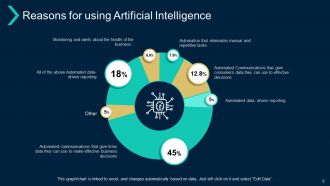
Diapositiva 9 : Esta diapositiva presenta las razones para utilizar la inteligencia artificial.
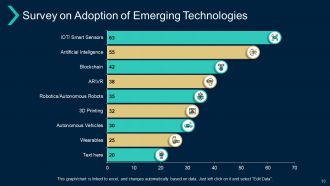
Diapositiva 10 : Esta diapositiva muestra la Encuesta sobre la adopción de tecnologías emergentes.
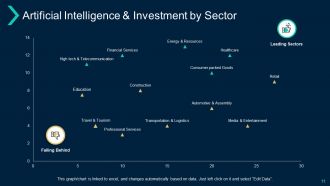
Diapositiva 11 : Esta diapositiva representa la inteligencia artificial y la inversión por sector.
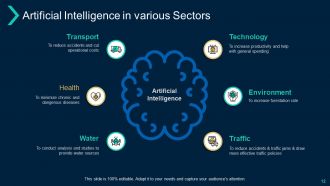
Diapositiva 12 : Esta diapositiva muestra la inteligencia artificial en varios sectores, incluidos el agua, el tráfico, la salud, el medio ambiente, el transporte y la tecnología.
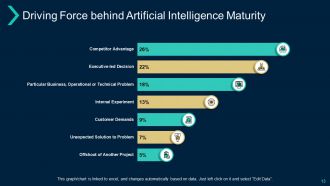
Diapositiva 13 : Esta diapositiva muestra la fuerza impulsora detrás de la madurez de la inteligencia artificial.
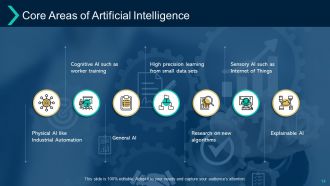
Diapositiva 14 : Esta diapositiva presenta las áreas fundamentales de la inteligencia artificial.
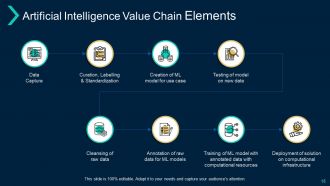
Diapositiva 15 : Esta diapositiva muestra los elementos de la cadena de valor de la inteligencia artificial.
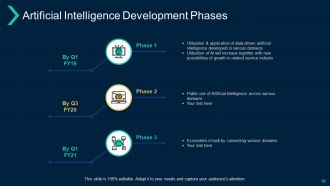
Diapositiva 16 : Esta diapositiva representa las fases de desarrollo de la inteligencia artificial.
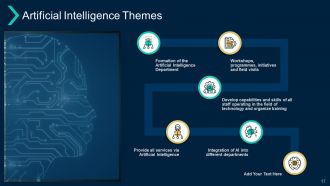
Diapositiva 17 : esta diapositiva muestra los temas de inteligencia artificial con un diagrama relacionado.
Diapositiva 18 : Esta diapositiva recuerda una pausa para el café de 30 minutos.
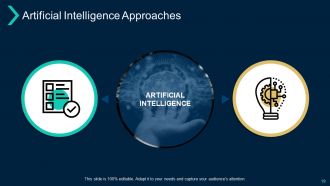
Diapositiva 19 : Esta diapositiva muestra los enfoques de inteligencia artificial, incluido el aprendizaje automático (enfoque basado en patrones) y el enfoque basado en la lógica y las reglas.
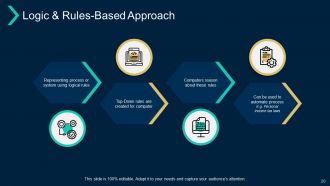
Diapositiva 20 : Esta diapositiva presenta el Enfoque basado en la lógica y las reglas como: Puede usarse para automatizar procesos, Representar procesos o sistemas usando reglas lógicas, Las computadoras razonan sobre estas reglas, Las reglas de arriba hacia abajo se crean para computadoras.
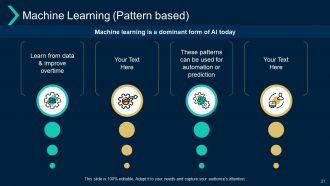
Diapositiva 21 : Esta diapositiva muestra el aprendizaje automático (basado en patrones) como: Aprenda de los datos y mejore las horas extraordinarias, estos patrones se pueden usar para automatización o predicción, etc.
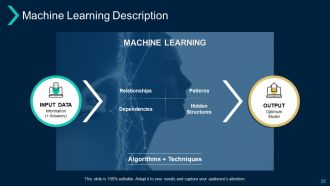
Diapositiva 22 : esta diapositiva representa la descripción del aprendizaje automático con el diagrama relacionado.
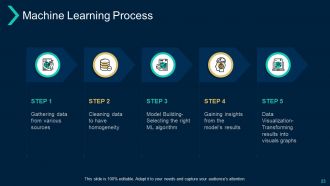
Diapositiva 23 : Esta diapositiva muestra el proceso de aprendizaje automático con estos 5 pasos: limpieza de datos para que tengan homogeneidad, recopilación de datos de varias fuentes, creación de modelos, selección del algoritmo de aprendizaje automático correcto, obtención de información a partir de los resultados del modelo, visualización de datos, transformación de resultados en gráficos visuales. .
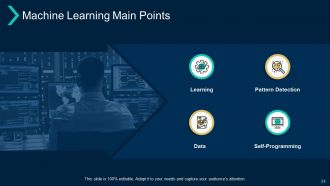
Diapositiva 24 : Esta diapositiva muestra los puntos principales del aprendizaje automático como: aprendizaje, detección de patrones, datos, autoprogramación.
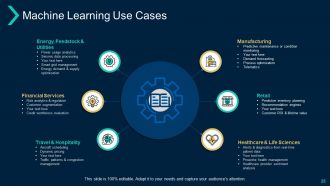
Diapositiva 25 : Esta diapositiva presenta casos de uso de aprendizaje automático que describen: fabricación, comercio minorista, atención médica y ciencias biológicas, viajes y hotelería, servicios financieros, energía, materias primas y servicios públicos.
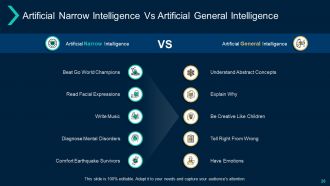
Diapositiva 26 : Esta diapositiva muestra la inteligencia artificial estrecha frente a la inteligencia artificial general.
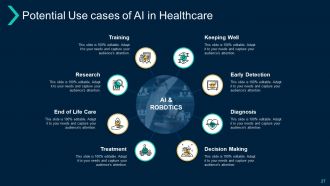
Diapositiva 27 : Esta diapositiva representa los casos de uso potencial de la IA en la atención médica que describen: cómo mantenerse bien, detección temprana, diagnóstico, toma de decisiones, capacitación, investigación, atención al final de la vida, tratamiento.
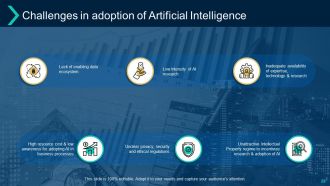
Diapositiva 28 : Esta diapositiva muestra los desafíos en la adopción de la inteligencia artificial.
Diapositiva 29 : esta diapositiva muestra iconos para el proceso impulsado por la tecnología.
Diapositiva 30 : esta diapositiva se titula Diapositivas adicionales para avanzar.
Diapositiva 31 : Esta es la diapositiva Nuestra misión con imágenes y texto relacionados.
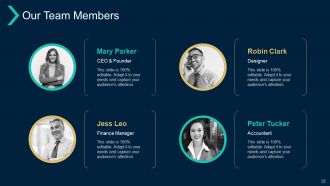
Diapositiva 32 : Esta es la diapositiva de los miembros de nuestro equipo con nombres y designaciones.
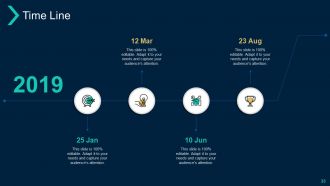
Diapositiva 33 : Esta es una diapositiva de la línea de tiempo para mostrar información relacionada con el período de tiempo.
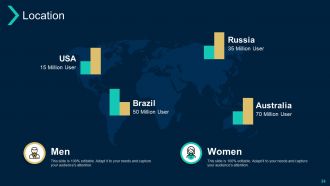
Diapositiva 34 : Esta es una diapositiva de Ubicación con mapa para mostrar datos relacionados con diferentes ubicaciones.
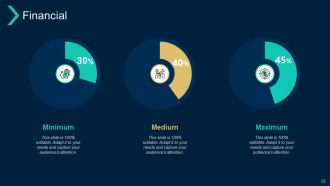
Diapositiva 35 : Esta es una diapositiva financiera. Muestre sus cosas relacionadas con las finanzas aquí.
Diapositiva 36 : esta diapositiva se titula Notas importantes. Publique sus notas importantes aquí.
Diapositiva 37 : esta es una diapositiva de rompecabezas con cuadros de texto para mostrar información.
Diapositiva 38 : Esta es una diapositiva de Generación de ideas para enunciar una nueva idea o resaltar información, especificaciones, etc.
Diapositiva 39 : Esta es una diapositiva de agradecimiento con dirección, números de contacto y dirección de correo electrónico.
Diapositivas de presentación de PowerPoint de proceso impulsado por tecnología con las 39 diapositivas:
La gente comienza a mostrar una mayor dedicación debido a nuestras diapositivas de presentación de PowerPoint de proceso impulsado por la tecnología. Asegura que la intensidad aumente.




FAQs for Technology driven process
Honestly, start by mapping what you're doing now - that's where you'll spot the biggest time wasters. Automation tools handle all the boring repetitive stuff, while data dashboards give you real-time insights to actually make decisions with. Cloud infrastructure keeps everything running smoothly, and APIs are what make different platforms talk to each other (super important). Digital workflows replace those paper forms that used to disappear into black holes. The whole thing just clicks when you get workflow automation, analytics, and integrated software working together. Your processes get faster and way more accurate. Plus everything scales better, which is clutch if you're growing.
Honestly, map out what you're doing now before changing anything - sounds boring but you'll thank me later. Look for the stuff that actually wastes time, not just what seems trendy to automate. Don't go crazy with a total system overhaul. Small changes work better. Your team needs to be on board early or they'll just ignore whatever you implement (learned this the hard way). Test new tools with just a few people first. Way too many companies roll out expensive software that sits unused. Track if it's actually helping productivity and tweak from there.
Honestly, data analytics is like having a super smart assistant that never sleeps. It'll catch bottlenecks you didn't even know existed and predict when stuff's about to break down. You can automate decisions instead of babysitting every little thing, which is honestly a lifesaver. Real-time optimization? Yep, it does that too. I always tell people to start small though - pick one messy process that's driving you crazy and just track basic metrics there first. Way less overwhelming than trying to analyze everything at once, and you'll actually see results pretty quickly.
So automation tools just take all that boring, repetitive stuff off your plate - data entry, moving files around, generating reports, whatever. You get to focus on actual thinking instead. The cool part is when you connect different tools together. Like your CRM updates something, then inventory gets checked automatically, then boom - purchase orders get created without you lifting a finger. I've watched teams slash their processing time by like 60-70% once they get their workflows dialed in. Honestly though, don't go crazy at first. Just pick one daily task that annoys you and start there.
Honestly, the worst part is usually people just hating change - they're used to their routine and don't want some new system messing it up. Your current tech probably won't play nice with whatever you're implementing either. Money's always tight too, between buying the actual software and getting everyone trained up. Oh, and migrating data is such a pain. Security gets sketchy during transitions, plus your productivity will tank for a while before things improve. I'd definitely start with a small test group first. Getting people on board early makes everything way smoother.
Start with training your team - seriously, most hacks happen because someone falls for a phishing email or whatever. Multi-factor authentication is a must, plus keep everything updated and monitor your network constantly. Only give people access to stuff they actually need for their job. The trick is weaving security into your daily routine instead of treating it like some once-a-year checklist thing. Set up automated backups too. Oh, and practice your response plan regularly so you're not scrambling around like headless chickens when things go sideways.
So basically, good tech makes everything smoother for your customers. They get instant answers from chatbots that don't suck, plus you can predict what they need before they even ask. Automation handles the boring stuff while people focus on real problems. Your customers can help themselves when they want to, or get personalized recommendations that actually make sense. I've seen too many companies just throw random tech at problems though - you want stuff that removes headaches, not creates them. Cross all your channels so someone doesn't have to repeat their story five times.
Track both your process stuff and actual business results - that's the only way to really know if it's working. Start with basics like how fast things get done now vs before, error rates, throughput. Then look at cost savings, customer satisfaction, whether your team's actually more productive. ROI calculations are a pain early on but you gotta do it. Oh and here's something people always forget - check if anyone's even using the damn thing! Best automation in the world won't help if everyone just ignores it. Set up maybe 4-5 key numbers on a simple dashboard and review monthly. Don't go crazy with data.
Dude, totally! Start with the boring stuff - automate invoicing, chatbots for customer service, maybe inventory tracking. The cool thing is all this cloud tech is actually cheap now compared to like 5 years ago. Being small helps too since you don't need corporate approval for everything. Pick one thing, get it working right, then add more. SaaS tools for CRM and analytics give you the same insights big companies have without breaking the bank. My buddy did this with his shop and honestly it's night and day difference in efficiency.
AI's probably your best bet right now - you'll see returns pretty fast compared to other stuff. Machine learning is handling crazy complex decisions in factories, hospitals, you name it. Edge computing's pretty cool too, brings processing right to where the action is instead of bouncing everything to the cloud. Quantum computing sounds like sci-fi but it's getting real - imagine solving logistics puzzles that would take regular computers forever. Oh, and digital twins are wild - basically copying your whole operation virtually so you can predict when things break. Honestly though? Start with AI integration and worry about the rest later.
Start with good communication tools - Slack channels for each project work great. Everyone needs to see real-time updates through shared dashboards, otherwise you'll get those annoying "what's happening with X?" messages constantly. Regular sync meetings help too, but make them actually useful, not just boring status updates that should've been emails. Define who's doing what upfront so people aren't duplicating work or dropping the ball on important stuff. Oh, and create feedback loops where your tech people can explain constraints to the business folks without everyone getting frustrated. Trust me, this saves so much headache later.
Honestly, start with the basics - get comfortable with whatever software your team actually uses daily. Digital literacy is huge right now. You'll also want to work on critical thinking since tech changes how we approach problems, not just makes them faster. Process mapping is clutch too because you can't automate stuff you don't understand first. Oh, and don't ignore soft skills - communication and being adaptable matter way more when everything's changing constantly. The real game changer though? Developing that mindset where you're cool with always learning new things. It sounds exhausting but it's kind of exciting once you get into it.
Dude, tech processes are game-changers for going green. AI can predict when machines need fixing before they break down completely - saves tons of waste. Smart energy systems automatically adjust power usage too. Going paperless with digital workflows is obvious but actually works. Remote work has been clutch for cutting commissions... I mean commuting emissions, obviously. My brain's fried today lol. Cloud computing's solid because instead of every business running power-hungry servers, everything's centralized. Just make sure you're not digitizing wasteful stuff and calling it "sustainable."
Okay so privacy is huge - people hate when companies are shady about data collection. Bias in AI is actually way worse than most people think, especially if your training data sucks. Automation will definitely mess with jobs, so factor that in early. Also who takes the blame when algorithms screw up? That's still being figured out honestly. Oh and don't try adding ethical reviews as an afterthought - build them in from day one or you'll regret it later. Trust me on that one.
Honestly, the best part about tech-driven stuff is how fast you can test ideas and bail when they're not working. Your team gets to skip the tedious manual work and actually think creatively. Real-time data is like having superpowers - you'll catch trends way before competitors even notice. I'd start with just one process though, maybe A/B testing or some basic automation. Once you see how quickly you can iterate, it's pretty hard to go back to the old slow way of doing things.
-
Awesomely designed templates, Easy to understand.
-
Much better than the original! Thanks for the quick turnaround.