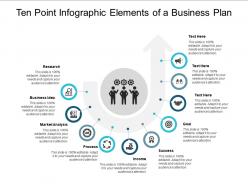
Ten point infographic elements of a business plan
Try Before you Buy Download Free Sample Product
Audience
Editable
of Time
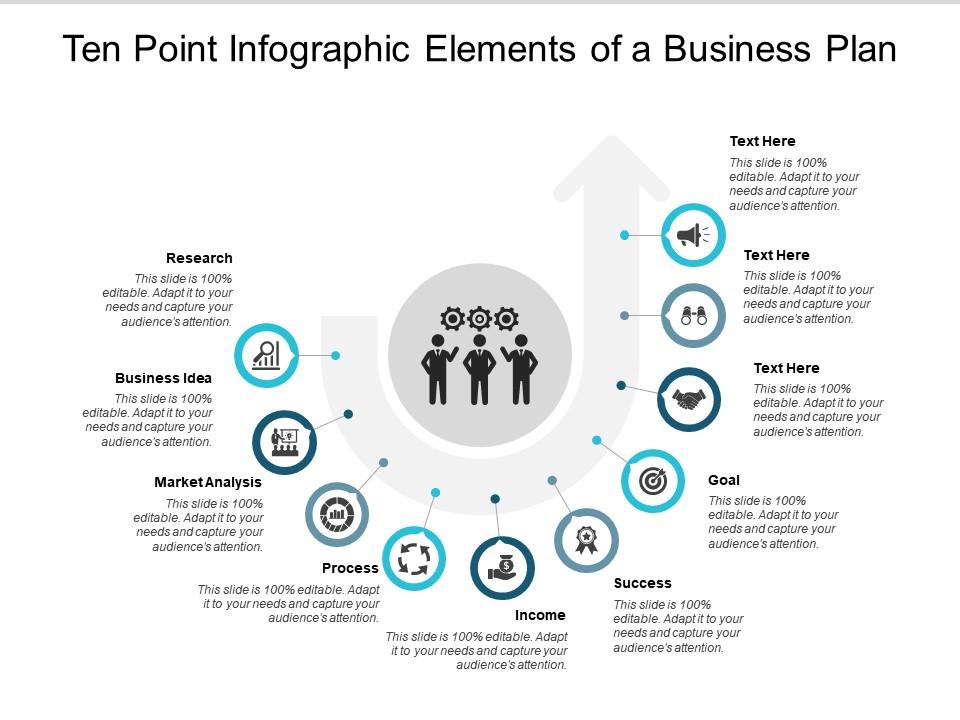
Are you planning to deliver a presentation on key elements of business plan for your firm? Our professionally created ten-point info graphic elements of a business plan presentation template will help you to do it efficiently and effectively. The PPT template encourages you to do some research to see important components of business plan that may be applicable to your business. You can display various business components such as executive summary, business description, market analysis, organization management, sales strategies, funding requirements, financial projections, goals, process, and research results with this wonderful business plan PowerPoint presentation. This is one of the most wonderful among a variety of business plan templates available as it displays all the major technical aspects of business plan such as business concept, financial features, financial requirements, current business position and major business achievements in a well-organized manner. So, don’t wait now, just download this amazing business plan and marketing PowerPoint template and create impressive slideshows to meet your business requirements. Our Ten Point Infographic Elements Of A Business Plan bring out the best in folks. They will follow correct etiquette.
People who downloaded this PowerPoint presentation also viewed the following :
Ten point infographic elements of a business plan with all 5 slides:
Awaken inherent ingenuity with our Ten Point Infographic Elements Of A Business Plan. Folks feel driven to be inventive.
FAQs for Ten point infographic elements of
Okay so you need these main parts: executive summary, business description, market analysis, org structure, products/services, marketing plan, funding request, and financial projections. Plus an appendix for extra stuff. The executive summary is huge - people literally decide in like 30 seconds if they'll keep reading. Your market research can't be some BS generic stats either, investors see right through that. Financial projections should go three years out and actually make sense. Oh and don't stress about making it perfect right away - just grab a template and build it up as you go.
Okay so think of the executive summary like a movie trailer for your business plan. Write it last even though it goes first - sounds backwards but trust me on this. You'll need to cherry-pick the best stuff from each section once you've written everything else. Cover your business concept, target market, what makes you different, money projections, and how much funding you need. Most investors honestly decide whether to keep reading based on just these 1-2 pages. It's basically your elevator pitch but written down. Make sure it works as a mini-version of your whole plan since some people might only read this part.
Okay so market analysis is basically your sanity check before making big moves. It tells you who your actual customers are and what they'll pay for. Plus you get to see what competitors are screwing up or nailing. Without it, you're just throwing darts blindfolded when it comes to pricing and positioning. Honestly, I learned this the hard way with my cousin's food truck idea - we thought we knew our market but didn't do the research first. Big mistake. Use your analysis to back up every major decision before you dump money into it. It's like having GPS instead of just winging it.
Honestly, good structure is everything for business plans. Investors don't have time to hunt around for info - they want executive summary up front, then market analysis, financials, all that stuff in order. Makes you look like you actually know what you're doing instead of just winging it. Plus when you're forced to organize everything properly, you end up thinking through details you might've missed otherwise. I always tell people to outline first before jumping into writing (learned that the hard way). It's kinda like... you wouldn't build a house without blueprints, right?
You need three main projections - income statements, cash flow, and balance sheets for about 3-5 years out. Cash flow is honestly the big one investors care about most. They want to see exactly when you'll hit profitability and how much money you'll burn getting there. Throw in your break-even analysis too. Here's the thing though - don't just dump numbers on them. Be ready to explain why every projection makes sense. Oh, and definitely lowball your revenue estimates at first. I've seen too many pitches crash because the numbers were way too rosy.
So your demographics basically decide everything about your marketing approach. Gen Z hanging out on TikTok? Don't waste money on Facebook ads. Figure out where your people actually spend time and what keeps them up at night. Age, income, location - map all that stuff out into real personas. Then connect each marketing move back to those groups. Like, there's no point running LinkedIn campaigns if you're selling to college students, you know? The whole strategy should flow from who you're trying to reach. Otherwise you're just throwing money at random tactics.
Honestly, just focus on four main things when scoping out competitors. Check their market share and how many customers they've got. Look at their pricing and what they're actually selling. Figure out where they're strong vs where they suck compared to you. And see what their marketing looks like - sometimes you'll find they're doing something brilliant you hadn't thought of. Don't go down the rabbit hole analyzing every little thing though. Stick to direct competitors who want the same customers. Their website, reviews, any public financial stuff - throw it all in a simple chart so you can reference it later when making decisions.
Think of your mission statement as your anchor point - everything else in the business plan should tie back to it. Marketing strategy? Check if it aligns. Financial projections? Same thing. I always tell people to literally reference the mission in each major section because otherwise reviewers won't make the connection themselves (they're skimming way faster than you think). It's super easy to get lost in spreadsheets and forget the bigger picture. But honestly, investors eat this stuff up when they see that thread running through your whole plan. Makes you look way more intentional than most people.
Honestly, nail these three things: what problem you're fixing, why your solution rocks, and how big the market is. Investors sit through tons of pitches daily - they want that lightbulb moment where your idea just makes sense. Show what sets you apart, whether it's cool tech, exclusive deals, or a totally fresh angle. Skip the feature list and tell them why customers would actually pick you. Traction is gold if you've got it - even pilot users or pre-orders prove people want this stuff. Keep it real and ditch the corporate speak that puts everyone to sleep.
Don't hide your biggest risks in some random footnote - make a whole section for them. Seriously, investors can smell BS from a mile away when you try to make everything sound perfect. Pick your 3-5 worst nightmares (competition crushing you, running out of cash, losing your star employee) and just own it. But here's the key part - right after each risk, explain how you'd handle it. Having backup plans actually makes you look way more credible than pretending problems don't exist. Shows you're not some clueless optimist who hasn't thought this through.
You gotta make your business goals measurable, otherwise you're just hoping for the best. Like, how do you even know if your marketing's working without actual numbers to track? I made this mistake early on - had all these fluffy goals that sounded good but meant nothing. Measurable goals keep you honest with yourself and show investors you're serious. Every goal needs a number and deadline attached. Otherwise you'll just keep moving the goalposts when things get tough, which trust me, they will.
Don't just dump your USP in one spot - weave it through your whole business plan. Put it front and center in your executive summary so investors immediately get what sets you apart. Your market analysis should show the gap you're filling, and your marketing section needs to explain how you'll actually tell customers about this advantage. I swear, half the business plans I've seen treat their USP like some boring checkbox exercise. Make sure it solves a real problem people actually have. Oh, and test your messaging with potential customers first - you'd be surprised how often what sounds amazing in your head falls flat in reality.
Start with the big numbers right away - revenue, funding needs, when you'll break even. Charts and tables are your friend here because walls of text just make people's eyes glaze over. Show 3-5 years ahead with monthly details for year one at least. I'd definitely include both best-case and realistic scenarios so they know you're not just being blindly optimistic. The thing that trips up most people? They'll say something like "we're targeting 1% market share" but then can't explain how they actually plan to get there. Back up your assumptions with real logic, not just hopeful math.
Honestly, you'll want visuals and templates - they make everything so much cleaner. Charts and graphs are lifesavers for showing financial stuff without boring people to death with paragraphs of numbers. Templates keep you organized too, so you don't forget important sections like market analysis. Plus they make your whole presentation look professional, which investors definitely notice. I'd grab a template from SCORE (they're free, which is nice) and then customize charts that show off your best data. Trust me, it's way less overwhelming than starting from scratch.
Dude, the worst thing you can do is be crazy optimistic with your numbers - I've seen so many people do this. Also don't skip the market research part, that'll bite you later. Your plan shouldn't be some vague mess, but also don't write a novel about every tiny detail. Actually explain how you'll get customers and make money (shocking concept, right?). Keep that executive summary snappy since most people won't read past it anyway. Oh and back everything up with real data, not just hopes and dreams.
No Reviews