


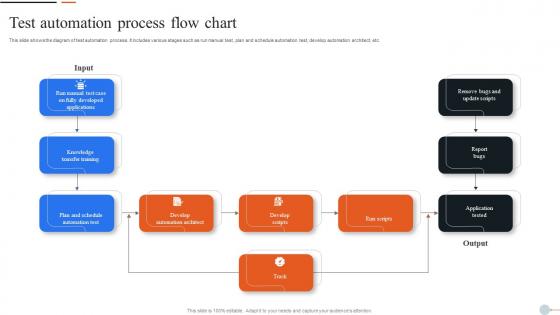
Test Automation Process Flow Chart




Try Before you Buy Download Free Sample Product
 Impress Your
 Audience
 100%
100% Editable
 Save Hours
 of Time


This slide shows the diagram of test automation process. It includes various stages such as run manual test, plan and schedule automation test, develop automation architect, etc.
People who downloaded this PowerPoint presentation also viewed the following :
Test Automation Process Flow Chart with all 6 slides:
Use our Test Automation Process Flow Chart to effectively help you save your valuable time. They are readymade to fit into any presentation structure.





FAQs for Test Automation
Honestly, automation is a game changer - you get way faster feedback and catch bugs before they become expensive nightmares. Your team won't hate doing the same boring regression clicks every single sprint anymore (which is honestly such a relief). Coverage gets way better too, and the tests don't randomly fail because someone was tired or distracted. I'd say start with whatever your most critical flows are - maybe login and checkout if it's e-commerce? Don't go crazy at first. The consistency alone makes it worth it since automated tests basically never have bad days.
Start with the stuff that's killing you - those repetitive regression tests and smoke tests you're sick of running. API testing is where it's at honestly, way less headaches than UI automation. Don't waste time on things that change constantly or need actual human thinking, you'll just be fixing broken tests forever. Data-driven scenarios are perfect candidates too. I'd pick your biggest manual testing pain points first. That way you actually see results quickly and people stop questioning why you're spending time on automation instead of "real testing" (ugh). Build from those wins.
So for web stuff, Selenium's still everywhere but Cypress is way nicer for modern apps. Playwright though? That thing's been absolutely killing it - super fast and way more reliable than I expected. Mobile testing, you're looking at Appium or Detox. APIs? Postman's dead simple, REST Assured if you want something more robust. But honestly, don't get caught up in what's trendy right now. Pick whatever your team can actually stick with long-term. I've seen too many projects fail because they jumped to some fancy new tool nobody knew how to debug. Start with one, master it, then branch out.
So basically you can't do CI/CD properly without test automation - it's what makes the whole thing actually work. When you push code, tests fire off right away and catch bugs before they hit production. Manual testing? Forget it, that'll kill your entire pipeline speed. You'd be sitting around waiting for QA to check every little change, which honestly defeats the point of going continuous in the first place. Just make sure your test suite runs fast and doesn't flake out on you. Start with the stuff users actually care about most and expand from there.
Oh man, flaky tests will absolutely destroy your sanity - random failures everywhere when there's nothing actually wrong. Use stable locators and proper waits to help with that mess. Maintenance is brutal too, so page object models are your friend to keep changes from cascading. Don't try automating everything right away (learned that the hard way). Start with your most critical user flows first. Yeah, the setup feels expensive upfront, but honestly? Pick the tests that'll save you the most headaches later. Keep everything modular and you won't hate yourself in six months.
Honestly? Budget's probably your biggest factor here. Selenium's free and crazy flexible, but someone on your team needs to actually know what they're doing - the setup can be a real headache. TestComplete and those commercial ones cost a fortune but they're pretty much plug-and-play with decent support. I'd personally lean open-source if you've got the tech skills and tight budget. Otherwise, paying for the commercial stuff might actually save your sanity in the long run. Just write down what features you absolutely can't live without first.
So Java, Python, and JavaScript are the big three you'll see in most job postings. Python's really nice because it's easy to read and has solid libraries like pytest. Java dominates enterprise stuff - lots of TestNG and JUnit work. JavaScript makes sense for web testing since you're already working in that world anyway. C
-
I never had to worry about creating a business presentation from scratch. SlideTeam offered me professional, ready-made, and editable presentations that would have taken ages to design.
-
Exclusive and extensive collection of templates. Really helped me create a professional presentation in just no time.