

Three Phases of Business Relocation Plan




Try Before you Buy Download Free Sample Product
 Impress Your
 Audience
 100%
100% Editable
 Save Hours
 of Time


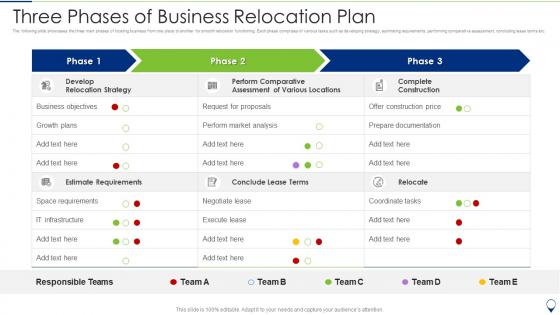
The following slide showcases the three main phases of locating business from one place to another for smooth relocation functioning. Each phase comprises of various tasks such as developing strategy, estimating requirements, performing comparative assessment, concluding lease terms etc.
People who downloaded this PowerPoint presentation also viewed the following :
Three Phases of Business Relocation Plan with all 6 slides:
Use our Three Phases of Business Relocation Plan to effectively help you save your valuable time. They are readymade to fit into any presentation structure.





FAQs for Three Phases of
Honestly, start with your budget because moving a business is expensive as hell. Can your customers still find you easily? That's huge. Look into what the job market's like there - are there good people to hire and what's it gonna cost you? Tax stuff might be different too, which could bite you later. Make sure they have decent internet and shipping options because those basics will make or break you. Your current employees are probably freaking out about this, so figure out how it affects them. I'd throw all this into a spreadsheet so you can actually see if it makes sense financially.
Start with a survey to see who's actually willing to move - you'd be surprised how many people have been secretly wanting a change anyway. Figure out the money stuff: cost of living differences, relocation help, salary bumps. Map where everyone lives first though - some might already be closer to the new spot. I'd have those tough one-on-one conversations with your key people early. Don't wait on this part. Also check what the local talent pool looks like since you'll probably lose a few who just can't relocate. The sooner you loop everyone in, the less drama you'll have later.
Honestly, the worst part is always the logistics nightmare and people freaking out about change. Permits drag on forever - like, ridiculously long. Your IT move will be messier than planned, guaranteed. Finding decent contractors? Good luck with that. Some employees will bail rather than deal with relocating or the chaos. Timeline's gonna slip, so pad it with extra months. Oh, and talk to your customers constantly about what's happening - they hate being left in the dark. I learned this the hard way when we moved our office last year. Just expect everything to cost more and take longer than quoted.
Honestly, just talk to them constantly - even when you don't have everything figured out yet. Radio silence is the worst thing you can do because people's minds immediately go to "am I getting fired?" Hold weekly meetings, send updates, maybe set up a Slack channel for questions. Be upfront about timelines and what help you're actually offering - moving costs, temporary housing, whatever. I've watched companies totally bomb this by disappearing for months while making big decisions behind closed doors. People need multiple ways to bring up concerns, and you've gotta actually respond when they do.
Look, moving without doing market research first is like driving blindfolded. Check out the demographics - are your actual customers even living there? Then scope out the competition and see what you're up against. Economic stuff matters too: job rates, income levels, all that. If you're doing retail, definitely walk around and see how busy the streets get. I learned this the hard way when I almost picked a dead zone once! Start with census data and local business info, but honestly nothing beats just hanging out in the area for a few hours. Gets expensive fast if you guess wrong on location.
First thing - call up the economic development offices in your target cities. They'll literally pitch you their whole incentive package over the phone, which is pretty wild honestly. Look beyond just tax breaks too. Utility rebates and fast-tracked permits can save you tons. Start these conversations super early, before you commit to anything. That's when you have actual negotiating power. Get 2-3 locations competing against each other - some of these packages are genuinely crazy generous. Don't forget the smaller stuff like workforce training programs either.
Oh man, this stuff gets messy fast - every state has totally different rules for taxes, business licenses, employment law, all of it. Start talking to a lawyer who knows both places like, months ahead of time. You'll be updating licenses, figuring out tax stuff in two states, maybe redoing employee contracts. Some industries have their own weird regulations too (manufacturing is particularly annoying from what I've heard). Seriously though, don't put this off until the last second or you'll be stressed out of your mind trying to catch up on paperwork.
First thing - map out every critical function and when it might get hit during the move. Audit what you've got now and figure out your biggest vulnerabilities. Customer service, inventory, that one ancient server that runs everything (we all have one). Build in way more buffer time than you think you need - I learned this the hard way. Set up backup spots for anything essential. Communication is huge here. Tell your team, customers, and vendors what's coming before they start panicking. Don't try to juggle everything yourself - assign someone to own each part so nothing gets forgotten.
Honestly, start telling your best clients like 2-3 months early - send them personal emails explaining the move and how it'll actually help them. Update your website and social media right away. Oh, and don't forget Google My Business (you'd be shocked how many people mess that up). Maybe throw a farewell party at the old spot or do a grand opening thing? During the actual move, answer calls super fast since everyone's gonna be confused about where you are. Over-communication is your friend here - can't really do too much of it.
Honestly, jump into the local scene ASAP - that's where the magic happens. Chamber of commerce, networking events, partnering with other businesses nearby. I can't stress enough how much these connections will save your butt down the road. Also scope out what your new city offers - tax breaks, good talent, maybe you're closer to suppliers now? Oh and don't forget your team needs to feel at home too, otherwise they'll just complain about missing the old office coffee shop. Start building this stuff while you're still surrounded by moving boxes.
Honestly, start by listing absolutely everything - even that crappy office coffee maker nobody likes. Work backwards from when you need to be operational again. Shipping delays are brutal right now, so build in extra time. Critical stuff should move first, obviously. Check that your new place can actually handle your power and internet needs before the movers show up. You'll want specialized movers for servers and expensive equipment. Trust me, regular movers will treat your $10k machine like a couch. Create a priority system so you're not scrambling to find essential equipment on day one.
Pick buildings with good energy efficiency and try to get near transit lines - makes a huge difference. Those LEED certifications are confusing but actually matter. Solar panels and decent insulation are obvious wins. Don't just dump your old furniture; donate it instead. Buy refurbished stuff for the new place and get recycling going immediately. Eco-friendly movers exist too, though they're sometimes pricier. Honestly, make that sustainability checklist right at the start. Way less of a headache than trying to go green after you've already moved everything in and realized you messed up.
Honestly, moving employees is way more complicated than most companies think. You need three big buckets: money stuff, logistics, and keeping people sane. Cover their moving costs, maybe temporary housing, cost-of-living adjustments if they're going somewhere pricey. House-hunting help is clutch, plus school research for families and all that paperwork nonsense. The emotional side though? That's where people really struggle. Pair them with local employees as mentors, throw some welcome events. Maybe support groups for spouses - they're often the ones having the hardest time. Start planning this whole thing 3-4 months out minimum.
Dude, cultural stuff is huge when relocating your business. Research how locals communicate and make purchasing decisions first. Your current marketing approach might totally bomb in the new market - I've watched companies crash because they didn't bother adapting their customer service style. Look at hierarchy structures and social norms that influence buying habits. Honestly, just copying your existing model somewhere else is asking for trouble. Spend time watching local competitors and actually talking to potential customers before launching. Oh, and decision-making processes vary wildly between cultures too.
Dude, tech literally saves your ass during moves. Set everything up in the cloud first - like, before you even start packing boxes. That way your team can work from anywhere when the office is total chaos. Video calls keep clients happy, and you'll need project management apps because there's always a million things to track. Honestly, going remote-first is clutch here. I've watched companies move without customers even realizing it happened. The trick is getting your digital stuff sorted early. Once boxes start flying around, at least everyone can still do their jobs from coffee shops or whatever.
-
I am extremely pleased with these PPT slides that we used for our event. They were easy to modify and came out great in all aspects!
-
If you have visited their site and failed to find the products, try reaching the customer service because it will be the case that you didn't use the search bar well.