

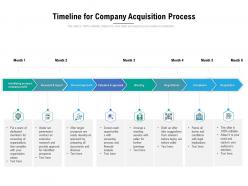
Timeline for company acquisition process





Try Before you Buy Download Free Sample Product
 Impress Your
 Audience
 100%
100% Editable
 Save Hours
 of Time


Our Timeline For Company Acquisition Process are topically designed to provide an attractive backdrop to any subject. Use them to look like a presentation pro.
People who downloaded this PowerPoint presentation also viewed the following :
Timeline for company acquisition process with all 2 slides:
Use our Timeline For Company Acquisition Process to effectively help you save your valuable time. They are readymade to fit into any presentation structure.

FAQs for Timeline for
So there are basically five phases to most deals. You start with finding targets and reaching out, then move into due diligence - which btw always drags on forever, nobody budgets enough time for it. Valuation and negotiation come next. Then you're stuck doing all the legal paperwork and getting regulatory sign-offs. Integration planning and closing wrap things up. Most stages run 2-8 weeks depending on how messy the deal gets. Whole thing's usually 3-6 months start to finish. Honestly though? Pad your timeline for due diligence or you'll be scrambling later when stuff doesn't add up.
Both take about the same time honestly - you're looking at 6-18 months either way. Mergers usually drag on a bit longer though because two companies have to hash out literally everything together. Who's gonna be CEO, what's the new structure gonna look like, all that stuff. Acquisitions move quicker since one side's clearly in charge and making the calls. The regulatory stuff is your biggest wildcard no matter what - I'd start mapping that out first. Oh and the due diligence process is basically identical for both, which most people don't realize.
Dude, so many things can slow this down. Complex deals with sketchy financials? Yeah, those take forever. Some buyers dig super deep during due diligence while others just want to move. Price negotiations are honestly the worst - I've watched deals die over like 2% differences, which is insane. You'll also hit delays with financing stuff and regulatory approvals. Bigger companies need more people to sign off, obviously. Oh and don't forget integration planning - that's a whole nightmare by itself. My advice? Add way more buffer time than you think you need. Trust me on this one.
Honestly, timelines are a game-changer because everyone can see what's happening and when. No more confusion about who's doing what. You'll catch issues early instead of scrambling later, and stakeholders won't bug you constantly asking for updates. Makes you look super organized too (which doesn't hurt). The visual part is clutch - people instantly get how one delay screws up everything else. Oh, and definitely schedule check-ins at each milestone. Keeps the communication flowing without things going radio silent for weeks.
DD is honestly the biggest time sink you'll face - we're talking 60-90 days easy. Your teams will be checking if everything the target told you is legit. Financial records, legal stuff, their tech stack, all of it. Most deals either move forward or crash and burn here. Run everything in parallel though - legal, finance, and tech teams all working at once instead of waiting around. Oh and here's something that helped us: kick off preliminary DD while you're still hammering out the LOI. Saved us like three weeks, maybe more.
Ugh, regulatory stuff is such a pain - can drag your timeline out for months or years, especially if you're dealing with healthcare, finance, or telecom. Deal size matters a lot, plus how concentrated the market is. Antitrust guys always want their say, and then you might need sector-specific approvals on top of that. Honestly the whole thing's super unpredictable depending on which regulators you get stuck with. I learned this the hard way - pad your timeline like crazy from day one. Get your lawyers to figure out every single approval you'll need upfront. Trust me, you don't want to be panicking about permits when you're supposed to be closing.
Due diligence surprises will absolutely wreck your timeline - especially when you dig into their financials and find a mess. Financing always takes longer than you think too. Don't even get me started on regulatory stuff, that's unpredictable as hell. Teams not meshing culturally? Yeah, that'll add months to everything. Oh, and people always underestimate how long legal audits take. Integration planning gets ignored until it's too late, which bites you later. Honestly, whatever timeline you're thinking, add 25% more time. Start working on integration early too, trust me on that one.
Oh man, cultural stuff can totally derail your timeline if you're not careful. Two companies with different work styles? You're looking at months of people just figuring out how to work together. I've watched deals get stretched by like 6-12 months because of this - honestly such a pain. Decision-making, reporting, even how meetings run - it all matters more than you'd think. Start mapping out the cultural differences while you're still doing the deal, not after. Build that integration time into your plan from the beginning or you'll be scrambling later.
So there's a few routes you could go here. Asana and Monday.com are solid if you want those visual boards with deal stages and deadlines. Smartsheet's nice for spreadsheet lovers who want more features. Honestly? I've seen teams crush it with just a really well-organized Google Sheet, though that gets chaotic fast with bigger deals. DealRoom and Midaxo are built specifically for M&A stuff - they've got templates ready to roll. My take is start with whatever your team actually knows how to use already. Best tool is whichever one people will consistently update without you having to nag them about it.
Here's the thing - you gotta pad your timeline big time from the start. I'm talking 25-30% extra for all the regulatory BS and financing headaches that'll pop up. Your integration team needs to stay flexible because deadlines will shift (they always do). Have backup plans ready for stuff that can't wait - like who's running things temporarily or critical vendor deals. Oh, and over-communicate with everyone about realistic timelines upfront. Way better than explaining later why you're behind. The companies that don't lose their minds during delays? They're the ones who saw it coming and planned accordingly.
Work backwards from when you actually need everything done, then add like 40% more time because everything takes forever. Map out all the regulatory stuff, due diligence, and getting everyone to sign off first. Lawyers are basically in their own time zone, so plan accordingly. Your target company probably needs to clean up their books too. Check in every few weeks so you can pivot if things go sideways. Oh, and tell everyone these realistic timelines upfront - saves you from looking like the bad guy later when things inevitably take longer than expected.
Oh man, yeah - big companies are the worst for dragging things out. We're talking 12-18 months easy for major deals vs like 3-6 months for smaller ones. Multinational corps have all these business units and regulatory hoops to jump through. Antitrust people love poking around the bigger mergers too. Honestly, whatever timeline you're thinking? Add at least 50% more time when complex companies are involved. The due diligence alone will kill you - so many stakeholders wanting their say. I learned this the hard way on a project last year. Just plan for delays from day one.
Dude, you absolutely need that acquisition timeline for your financial models. Here's why - cash flows, synergies, integration costs all hit at different points. You can't just throw "Year 1" into everything and hope it works out. Each milestone affects when you'll see money coming and going, from due diligence fees to actual revenue. And honestly? There's always going to be delays (learned this the hard way). Those delays mess with your returns and what you'll need for financing. Different scenarios become way easier to model when you've mapped key dates upfront. Oh, and build in buffer time - you'll thank me later.
Depends on the industry honestly. Tech moves crazy fast - like 3-6 months because they're racing to grab talent before competitors do. Healthcare though? Total opposite. You're looking at 12-18 months with all the regulatory stuff they have to deal with. Financial services sit around 6-12 months since there's still oversight but not as brutal as healthcare. Manufacturing drags too because of all the assets they need to value. My advice? Look up recent deals in whatever sector you're targeting - it'll give you a much better sense of timing than any general rule.
Don't wait until after you sign to think about integration - that's where deals usually blow up. Map out your major milestones during due diligence: IT merges, team changes, process stuff. Run integration prep alongside negotiations, not after. Your timeline needs 100-day phases and quick wins built in. Oh, and cultural integration is huge - people forget that part. Have your integration team work with the deal team from the start. Draft your playbook now before closing. Trust me, parallel workstreams will save you months of headaches later.
No Reviews