

Understanding Human Workplace Behavior Powerpoint Presentation Slides




Try Before you Buy Download Free Sample Product
 Impress Your
 Audience
 100%
100% Editable
 Save Hours
 of Time


Understanding and implementing organizational behaviour, or how people interact among groups, results in more effective business practices. Grab our Understanding Human Workplace Behavior template. It focuses on enhancing productivity, and performance, boosting employee satisfaction, and improving motivation. Our deck also aims to ensure better leadership, managing decision making and facilitating improved cross-team collaboration. Additionally, our PPT covers slides about the scope of organizational behaviour, management and organizational behaviour model, etc. Further, it showcases the essential tools utilized in performance management, critical initiatives employed in behaviour-based safety, and crucial approaches in behaviour system analysis. Moreover, our module emphasizes the manager role in OB management, the organizational behaviour model, the significance of learning in corporate behaviour management, and different learning theories. It also depicts the importance of personality, motivation, and perception. Furthermore, our template exhibits the relevancy of groups in terms of formal and informal groups in OBM, the role of decision-making in OBM, the relevance of leadership, conflict management at the workplace, etc. Get access to this powerful template now.
People who downloaded this PowerPoint presentation also viewed the following :
Content of this Powerpoint Presentation
Slide 1: This slide introduces Understanding Human Workplace Behavior. State your company name and begin.
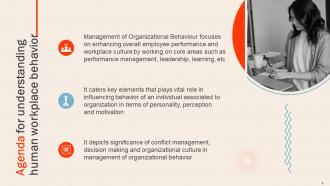
Slide 2: This slide states Agenda of the presentation.
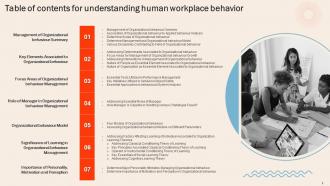
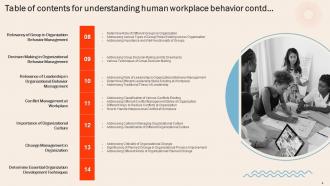
Slide 3: This slide shows Table of Content for the presentation.
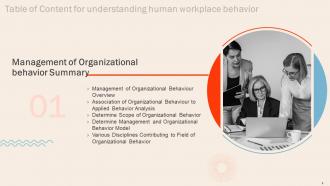
Slide 4: This slide highlights title for topics that are to be covered next in the template.
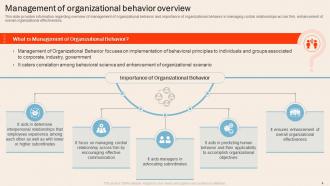
Slide 5: This slide presents Management of organizational behaviour overview.
Slide 6: This slide displays Association of organizational behaviour to applied behaviour analysis.
Slide 7: This slide represents Determine scope of organizational behaviour.
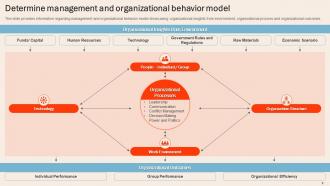
Slide 8: This slide showcases Determine management and organizational behaviour model.
Slide 9: This slide shows Various disciplines contributing to field of organizational behaviour.
Slide 10: This is another slide continuing Various disciplines contributing to field of organizational behaviour.
Slide 11: This slide highlights title for topics that are to be covered next in the template.
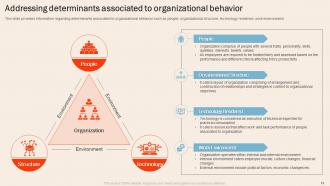
Slide 12: This slide presents Addressing determinants associated to organizational behaviour.
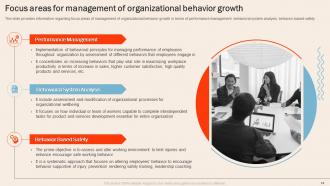
Slide 13: This slide displays Focus areas for management of organizational behaviour growth.
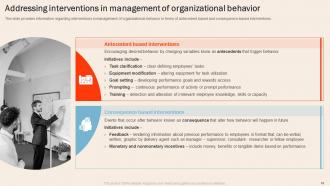
Slide 14: This slide represents Addressing interventions in management of organizational behaviour.
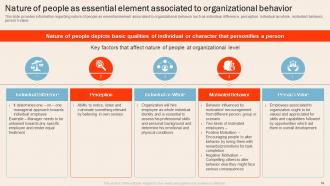
Slide 15: This slide showcases Nature of people as essential element associated to organizational behaviour.
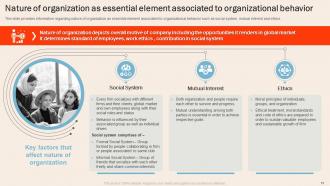
Slide 16: This slide shows Nature of organization as essential element associated to organizational behaviour.
Slide 17: This slide highlights title for topics that are to be covered next in the template.
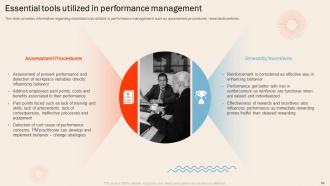
Slide 18: This slide presents Essential tools utilized in performance management.
Slide 19: This is another slide continuing Essential tools utilized in performance management.
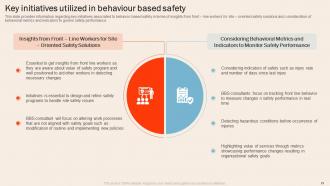
Slide 20: This slide displays Key initiatives utilized in behaviour based safety.
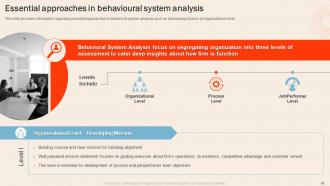
Slide 21: This slide represents Essential approaches in behavioural system analysis.
Slide 22: This is another slide continuing Essential approaches in behavioural system analysis.
Slide 23: This slide highlights title for topics that are to be covered next in the template.
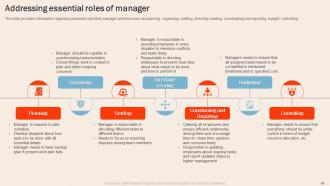
Slide 24: This slide showcases Manager needs to ensure that everything should be under control in terms of budget, resource allocation, etc.
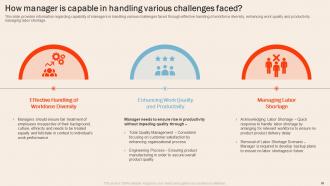
Slide 25: This slide shows How manager is capable in handling various challenges faced.
Slide 26: This slide highlights title for topics that are to be covered next in the template.
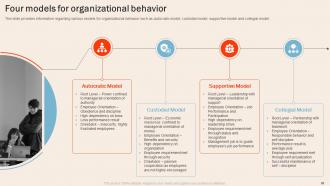
Slide 27: This slide presents Four models for organizational behaviour.
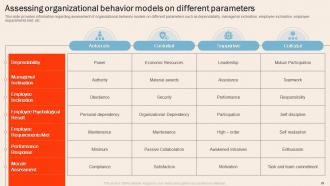
Slide 28: This slide displays Assessing organizational behaviour models on different parameters.
Slide 29: This slide highlights title for topics that are to be covered next in the template.
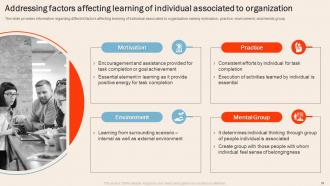
Slide 30: This slide represents Addressing factors affecting learning of individual associated to organization.
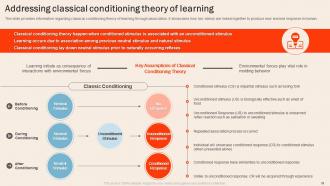
Slide 31: This slide showcases Addressing classical conditioning theory of learning.
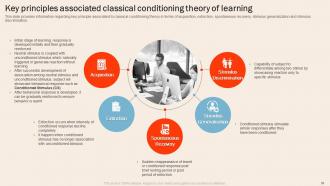
Slide 32: This slide shows Key principles associated classical conditioning theory of learning.
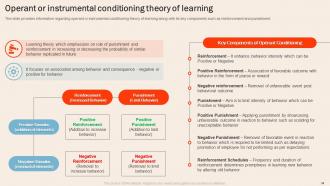
Slide 33: This slide presents Operant or instrumental conditioning theory of learning.
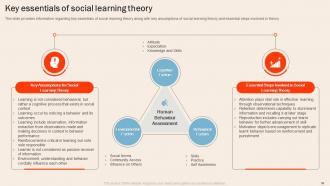
Slide 34: This slide displays Key essentials of social learning theory.
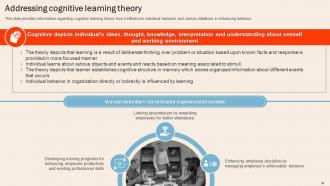
Slide 35: This slide represents Addressing cognitive learning theory.
Slide 36: This slide shows Table of Content for the presentation.
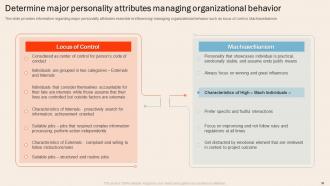
Slide 37: This slide presents Determine major personality attributes managing organizational behaviour.
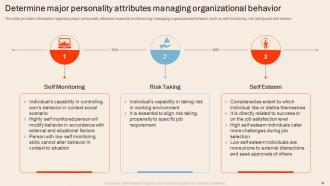
Slide 38: This is another slide continuing Determine major personality attributes managing organizational behaviour.
Slide 39: This slide displays Determine importance of motivation & perception in organizational behaviour.
Slide 40: This slide highlights title for topics that are to be covered next in the template.
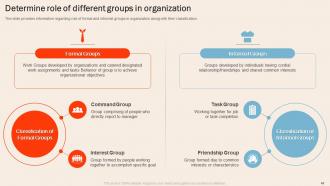
Slide 41: This slide represents Determine role of different groups in organization.
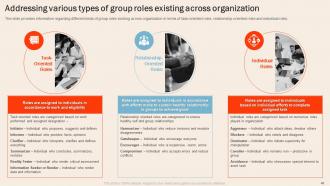
Slide 42: This slide showcases Addressing various types of group roles existing across organization.
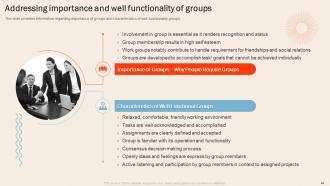
Slide 43: This slide shows Addressing importance and well functionality of groups.
Slide 44: This slide highlights title for topics that are to be covered next in the template.
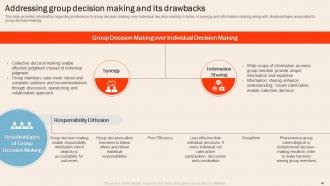
Slide 45: This slide presents Group Decision Making over Individual Decision Making.
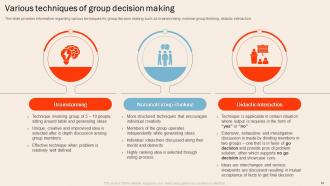
Slide 46: This slide displays Various techniques of group decision making.
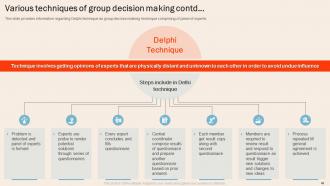
Slide 47: This is another slide continuing Various techniques of group decision making.
Slide 48: This slide highlights title for topics that are to be covered next in the template.
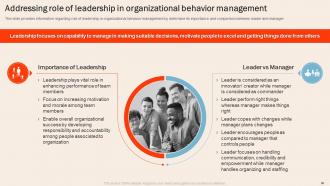
Slide 49: This slide represents Addressing role of leadership in organizational behaviour management.
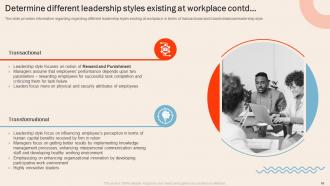
Slide 50: This slide showcases Determine different leadership styles existing at workplace.
Slide 51: This is another slide continuing Determine different leadership styles existing at workplace.
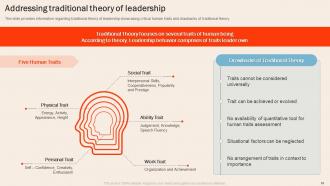
Slide 52: This slide shows Addressing traditional theory of leadership.
Slide 53: This slide highlights title for topics that are to be covered next in the template.
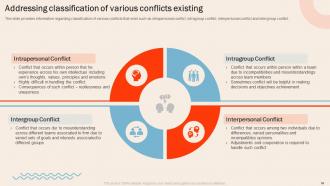
Slide 54: This slide presents Addressing classification of various conflicts existing.
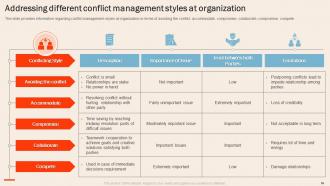
Slide 55: This slide displays Addressing different conflict management styles at organization.
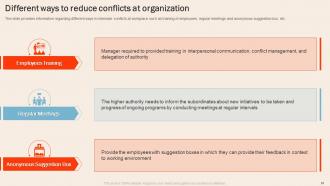
Slide 56: This slide represents Different ways to reduce conflicts at organization.
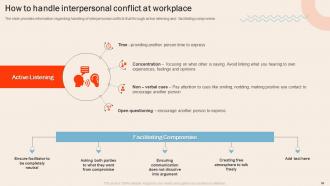
Slide 57: This slide showcases How to handle interpersonal conflict at workplace.
Slide 58: This slide highlights title for topics that are to be covered next in the template.
Slide 59: This slide shows Addressing culture in managing organizational culture.
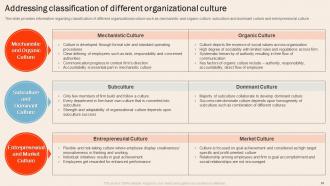
Slide 60: This slide presents Addressing classification of different organizational culture.
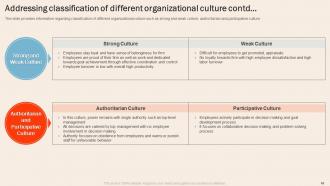
Slide 61: This slide displays Addressing classification of different organizational culture.
Slide 62: This slide highlights title for topics that are to be covered next in the template.
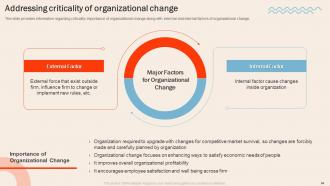
Slide 63: This slide represents Addressing criticality of organizational change.
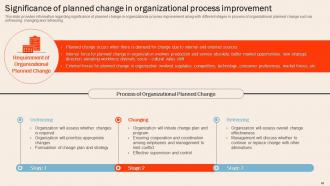
Slide 64: This slide showcases Significance of planned change in organizational process improvement.
Slide 65: This slide shows Addressing different kinds of organizational planned change.
Slide 66: This slide highlights title for topics that are to be covered next in the template.
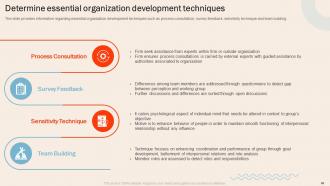
Slide 67: This slide presents Determine essential organization development techniques.
Slide 68: This slide contains all the icons used in this presentation.
Slide 69: This slide is titled as Additional Slides for moving forward.
Slide 70: This slide provides 30 60 90 Days Plan with text boxes.
Slide 71: This is About Us slide to show company specifications etc.
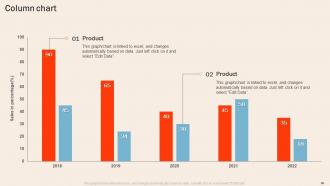
Slide 72: This slide presents Bar chart with two products comparison.
Slide 73: This slide depicts Area chart with two products comparison.
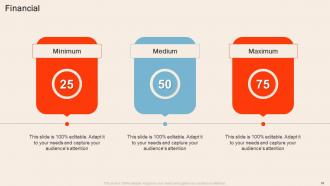
Slide 74: This slide shows Pie Chart with data in percentage.
Slide 75: This is a Comparison slide to state comparison between commodities, entities etc.
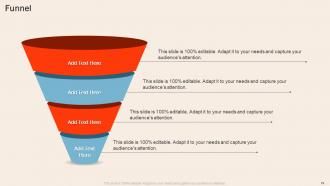
Slide 76: This slide shows Funnel with related icons and text.
Slide 77: This slide contains Puzzle with related icons and text.
Slide 78: This is a Timeline slide. Show data related to time intervals here.
Slide 79: This slide depicts Venn diagram with text boxes.
Slide 80: This is a Thank You slide with address, contact numbers and email address.
Understanding Human Workplace Behavior Powerpoint Presentation Slides with all 89 slides:
Use our Understanding Human Workplace Behavior Powerpoint Presentation Slides to effectively help you save your valuable time. They are readymade to fit into any presentation structure.


























FAQs for Understanding Human Workplace Behavior
Look for people who actually listen in meetings instead of just waiting for their turn to talk. They give real feedback, not just "looks good!" Also watch how they handle conflict - do they address it directly or let things fester? Good teammates share credit and follow through on what they promise. Being on time matters more than people think, honestly. Clear communication is huge too. But here's what really tells you someone's positive: they genuinely want their coworkers to succeed, not just themselves. That energy spreads fast.
Honestly, good communication fixes like 80% of workplace BS. When people actually know what you expect and when you need it, they stop overthinking everything. Clear deadlines and feedback mean less time wasted on "wait, what did they mean by that?" moments. Trust builds up too - your team won't sit on problems until they explode. I've noticed meetings get way better when everyone knows how to actually listen instead of just waiting for their turn to talk. Quick tip: be super specific in emails and always recap next steps after you chat about something.
Dude, emotional intelligence is honestly a game-changer at work. You know when someone walks into a meeting and immediately picks up on the tension? That's EQ. Managing your own emotions plus reading others makes such a difference. I've watched people who weren't the smartest in the room absolutely dominate because they knew how to work with people. Sounds cheesy but it's true. You'll handle conflicts better before they explode into drama. Start noticing how your reactions affect your coworkers - even that small shift in awareness helps tons with collaboration.
Honestly, having a diverse team just makes everything better. Different backgrounds mean people approach problems totally differently - no more echo chamber vibes. Communication gets clearer too since you can't assume everyone thinks like you do. I've noticed people are way more thoughtful about what they say when they're around colleagues from different cultures or whatever. It's actually pretty cool learning from people who've had completely different life experiences than you. Oh, and groupthink becomes less of a thing. Next time you're in a meeting, try asking someone who usually doesn't speak up what they think.
Oh man, remote work totally kills those random moments that actually build relationships. You know those quick hallway chats or dropping by someone's desk? Gone. Everything becomes so scheduled and work-focused now. It's honestly surprising how much those little interactions mattered for getting to know people. My team started doing virtual coffee breaks which sounds cheesy but actually helps. Also just chatting for a few minutes before meetings starts - doesn't have to be fancy. Otherwise you end up barely knowing your coworkers as actual humans, which is weird.
Look, start with being way more transparent about what's happening - people get suspicious and cranky when they're kept in the dark about decisions. Have actual one-on-ones with your team regularly and listen to what they're saying. Don't save recognition for yearly reviews either, that's just lazy management honestly. Build trust by letting people disagree with you without getting weird about it. Oh, and create space where they can ask "dumb" questions without judgment. Communication fixes like 80% of workplace drama anyway. The whole thing really comes down to making people feel heard and valued.
Don't let it drag on - grab them for a quick chat somewhere private instead of suffering through awkward meetings. Honestly, half the time there's some backstory you don't know about that explains their behavior. Stick to what they actually did rather than attacking their personality, and throw in some "I felt..." statements so you don't sound accusatory. Actually listen to their side too. Then figure out something that works for both of you rather than trying to prove you're right. Oh, and write down whatever you agree on so nobody "forgets" later.
Honestly, culture is everything when it comes to team performance. Good vibes = people actually want to collaborate and push themselves harder. Toxic environments though? Total motivation killers. I've watched entire teams just... shut down when the culture sucks. People won't take risks or speak up about real problems if they don't feel safe. Plus it affects who stays vs who bolts for another job. Oh, and customers definitely notice when your team's miserable - that energy carries over. If performance is tanking, I'd look at the culture stuff first before blaming individual people.
People genuinely crave recognition - it's like fuel for motivation. When you call out specific good work (not just "nice job"), employees will repeat those behaviors and push themselves harder. I've seen this work so many times. Public shoutouts, bonuses, growth ops - timing matters though. You want to catch people doing things right pretty quickly after they do them. Honestly, most managers are terrible at this basic stuff. But even small gestures work wonders. Try recognizing someone's effort at your next team meeting and watch what happens.
Oh man, toxic workplaces are the worst. You'll spot the usual suspects: gossip spreading everywhere, micromanagers breathing down your neck, and people stealing credit left and right. Then there's the exclusion thing - being left out of key meetings really stings. Bullying and constant negativity just make everything worse, plus managers who obviously have their favorites. Here's what actually works though - document everything you can and call out bad behavior when you see it. The trick is making people feel safe enough to report this stuff without fear. Seriously, don't sit around waiting for HR to swoop in and save the day. Jump on problems fast before they become "just how things work here."
Honestly, team building works because people stop seeing coworkers as just names in their inbox. You do something silly together - escape rooms, cooking challenges, whatever - and suddenly it's not weird to actually talk to someone from accounting. I've noticed the best activities force people to solve problems together, not just sit around listening to someone talk. Short tasks work better than long ones too. Once you've watched Dave from IT completely fail at mini golf, asking him about database issues feels way more normal. The whole point is breaking down those department walls that make everyone work in their own little bubbles.
Okay so timing is huge - don't wait weeks because then it gets super awkward. Get to them right after whatever happened. Focus on what you actually saw, not their personality. Like say "the presentation went over time" instead of "you always talk too much." Find somewhere private to chat about it. I usually try to start with something good if I can. But here's the thing - make it feel like you're figuring it out together, not just telling them what they did wrong. Ask what they think happened too. Way less defensive that way.
Yeah, work generations are totally a thing. Boomers usually want face-to-face meetings and formal emails. Gen Z craves instant feedback and flexible hours. Millennials are somewhere in the middle but they're big on meaningful work. Gen X? They just want you to leave them alone so they can actually get shit done lol. But honestly, don't assume too much - I know plenty of Boomers who text more than I do. Just ask people what they prefer instead of guessing based on age. Try to mix up your approach when you can.
Look, accountability is honestly what keeps professional standards from falling apart. When you own your screwups and actually do what you say you'll do, other people start doing the same. It's weird how that works - like a chain reaction but positive for once. Without it, standards become these meaningless suggestions people ignore whenever it suits them. People feel safer at work when they know you're reliable. Sounds cheesy but it actually boosts productivity too. My advice? Just start admitting when you mess up first. Others will follow your lead pretty quickly.
Look, start with solid policies that actually get enforced - none of that wishy-washy stuff. Leadership needs to walk the walk every day, not just when cameras are rolling. Training can't be some boring one-off thing either; make it ongoing so it sticks. Set up anonymous reporting so people feel safe calling out problems. Oh, and actually listen when employees tell you what they need to feel included - wild concept, right? Bring diverse voices into real decisions and celebrate what makes everyone different. Maybe audit what you're doing now first though.
-
I discovered this website through a google search, the services matched my needs perfectly and the pricing was very reasonable. I was thrilled with the product and the customer service. I will definitely use their slides again for my presentations and recommend them to other colleagues.
-
Easy to edit slides with easy to understand instructions.