


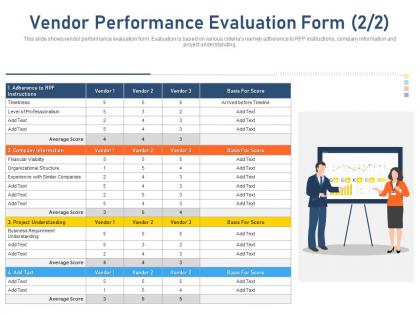
Vendor performance evaluation form average company information ppt grid




Try Before you Buy Download Free Sample Product
 Impress Your
 Audience
 100%
100% Editable
 Save Hours
 of Time


This slide shows vendor performance evaluation form. Evaluation is based on various criterias namely adherence to RFP instructions, company information and project understanding.
People who downloaded this PowerPoint presentation also viewed the following :
Vendor performance evaluation form average company information ppt grid with all 2 slides:
Use our Vendor Performance Evaluation Form Average Company Information Ppt Grid to effectively help you save your valuable time. They are readymade to fit into any presentation structure.
FAQs for Vendor performance evaluation form average company
Honestly, don't overthink this - pick maybe 5-7 KPIs that actually matter for your situation. Quality stuff like defect rates is obvious. Delivery times matter too. Cost-wise, look beyond just price - what's the total ownership cost? Communication is huge though - I've dealt with vendors where getting a simple update felt like pulling teeth. Responsiveness and how they handle issues when things go sideways tells you a lot. Oh, and see if they bring any innovation to the table or just do the bare minimum. Set up a basic scorecard, review it quarterly with them. Keep it simple.
Honestly, start with quarterly check-ins with the people who actually deal with your vendors daily - project managers, procurement folks, end users. Generic surveys are useless, so ask specific stuff about timelines, communication, how they handle problems. I do quick feedback grabs right after projects finish too when everything's still fresh in people's minds. The trick is making it feel safe to be honest without seeming like you're trying to get someone fired. Maybe pilot it with just one vendor first? You can always tweak the process once you see what works.
Honestly, it's a total game-changer for getting rid of all that manual busywork. Dashboards pull your performance data automatically - delivery times, quality scores, costs - so you're not hunting down spreadsheets from five different departments anymore. Some platforms will even handle stakeholder surveys for you and compile everything, which saves me so much time. Real-time alerts pop up when vendors cross certain thresholds too. The main thing is you finally get everything in one spot to compare properly. Way better than making decisions based on whatever you remember from last quarter, you know?
You want to know *how* your vendor actually works, not just if they hit their targets. Sure, the numbers show they met deadlines, but did they scramble last-minute or give you heads up about potential issues? There's a massive difference there. Qualitative stuff reveals their communication style, how they handle problems, whether they mesh with your team culture. When things inevitably go wrong (and they will), you'll know if they adapt well or panic. The metrics tell you what already happened - this gives you a feel for what's coming next. Maybe try doing structured interviews with the people who actually work with them day-to-day.
First thing - check what industry benchmarks look like, plus your own past data. Don't just guess at numbers. Get your vendor involved early since they actually know what they can deliver. Everything needs clear metrics and deadlines, not fuzzy stuff like "good quality." I've watched so many of these deals crash because people set impossible goals from the start. Oh, and definitely pad your timelines - something always goes sideways. Write it all down and revisit every quarter. Your business changes, so should your expectations.
Honestly, quarterly works best for your critical suppliers - the ones that could really mess things up if they screw up. Annual reviews are fine for the smaller vendors. Monthly feels excessive unless something's already going wrong, you know? The real trick is staying consistent with whatever schedule you pick. That's how you'll actually spot patterns and trends developing. High-risk suppliers definitely need that quarterly attention though. Oh, and set those calendar reminders right now - sporadic evaluations are pretty much useless since you can't track anything meaningful. Trust me on this one.
Honestly, skipping vendor evaluations is like driving with your eyes closed. Service quality tanks and you won't even realize it. Costs start climbing too - I've seen companies get hit with surprise price increases they could've caught earlier. Vendors basically phone it in when they know nobody's checking their work (can you blame them?). Contract renewals become a nightmare since you've got zero data to prove they're underperforming. At least do quarterly reviews, even something simple. Trust me on this one.
Honestly, vendor evaluations are game-changers for your procurement strategy. Track stuff like delivery times, quality scores, and how responsive they are - you'll be shocked what the data reveals. I've watched teams completely flip their supplier lineup after running proper evaluations. The numbers don't lie, you know? Use that intel to negotiate better deals and figure out who deserves more business. Some vendors will need improvement plans. Others? Just drop them. Build those scorecards now so you've got solid backup when contract renewal time hits. Makes those negotiations way less awkward when you have actual data.
Honestly, get yourself some standardized rubrics with clear criteria - saves so much headache later. Weight everything the same way across vendors too. Multiple people should evaluate each one because holy shit, I've seen one person's random bias mess up entire assessments. Numbers beat opinions every time, so grab actual data when you can. Oh and document everything with real examples, not just "they were fine" type stuff. Don't fall into the trap of judging based on whatever happened last week. Regular review cycles keep you honest. Boring template work, but it's worth it.
So here's what works really well - send vendors a questionnaire before your review meetings covering delivery, quality, communication, all that stuff. Then compare their self-ratings to what you've been thinking internally. Honestly, the gaps can be pretty shocking sometimes! Those differences become perfect talking points for the actual meeting. Way better than just dumping criticism on them, you know? Makes it feel more like a real conversation. Oh and definitely structure it - don't just wing the questions. I'd start with your next quarterly review and see how it goes.
Don't get trapped just looking at costs - you'll miss so much about actual value. Those friendly account managers can really throw you off track (speaking from experience here). Check in quarterly instead of waiting until renewal time when everything's already gone sideways. Your end users know what's really happening, so ask them! Focus on metrics that actually move the needle for your business. Vanity numbers look pretty but they're useless. Fix problems while they're small instead of letting them explode later.
Don't just fire off an email with their scorecard - that's lazy and pisses people off. Set up actual meetings to walk through the numbers together. Go over what they're crushing and what needs work. Give them space to explain their side or ask questions. I've watched so many vendor relationships blow up because someone got "feedback" that felt like an ambush. Document everything afterward and be clear about what needs to change. The whole point is helping them get better, not just covering your ass on compliance stuff.
Honestly, good feedback can totally transform how your vendors perform. I've watched companies completely redo their reporting after getting specific input about what wasn't working. The trick is being direct about problems but also suggesting fixes - not just complaining. Most vendors actually appreciate this stuff because they'd rather keep you happy than lose the contract. Communication gaps are usually the biggest issue, and half the time they don't even know it's happening. Document what changes over time though, otherwise you'll forget if they're actually improving or just promising to.
Your industry totally changes what you should prioritize. Healthcare? Compliance and patient safety are everything - uptime literally means life or death. Retail needs seasonal flexibility way more than perfect security certs. Manufacturing companies obsess over supply chain reliability and precise delivery timing. Tech firms usually want innovation and integration over just saving money (honestly makes sense). The trick is figuring out which metrics actually matter for your sector, then build your scorecards around those instead of using some random template everyone else uses.
Honestly, performance evals can actually make your vendor relationships way better if you don't treat them like you're grading papers. Most vendors genuinely want to know how they're doing - beats the awkward guessing game, right? I always frame mine as "hey, let's figure out how to make this work better for everyone." Listen to their side too because they'll tell you about constraints you didn't even know existed. That back-and-forth builds real trust. You'll probably find solutions that help both of you out. Don't wait a whole year though - check in regularly.
-
Very unique, user-friendly presentation interface.
-
Very unique and reliable designs.