


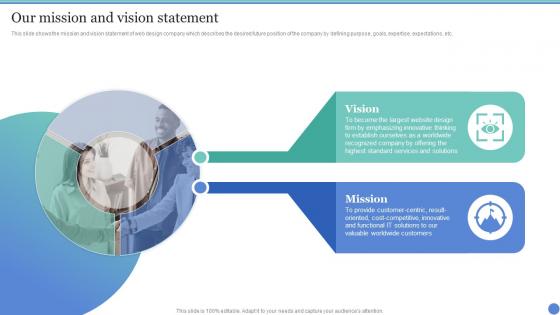
Web Design Agency Company Profile Our Mission And Vision Statement




Try Before you Buy Download Free Sample Product
 Impress Your
 Audience
 100%
100% Editable
 Save Hours
 of Time


This slide shows the services offered by web design company which includes design and branding, website support and hosting, web solutions, app development and marketing and lead generation.
People who downloaded this PowerPoint presentation also viewed the following :
Web Design Agency Company Profile Our Mission And Vision Statement with all 6 slides:
Use our Web Design Agency Company Profile Our Mission And Vision Statement to effectively help you save your valuable time. They are readymade to fit into any presentation structure.





FAQs for Web Design Agency Company Profile Our Mission
Honestly, it totally depends on what industry you're dealing with. Healthcare needs those trust badges and super clean layouts - people get sketchy about messy medical sites. E-commerce is all about gorgeous product photos and checkout that doesn't make you want to throw your phone. B2B folks want clear value propositions and easy lead forms. Creative agencies get to do whatever weird experimental stuff they want (so jealous). But no matter what, you've gotta nail mobile-first design and fast loading. Oh, and definitely stalk 3-5 competitors first to see what users expect.
Honestly, a good web design agency will dig into what makes your brand special and translate that into every piece of your site. Colors, fonts, how pages flow - all of it should feel authentically *you*, not like some template with your logo thrown on. The smart agencies ask a million questions upfront about your values and personality (which can feel annoying but it's worth it). What you don't want is something that looks pretty but feels totally disconnected from who you are. Look for someone who gets excited about your brand story - that's when the magic happens.
Honestly, good UX can make or break your whole project. I've watched beautiful sites tank because nobody could figure out how to actually use them - like this one company that had amazing visuals but their checkout was so confusing people just gave up. Users won't stick around if they can't find stuff or get frustrated trying to complete basic tasks. Your bounce rates and conversions depend on it. Map out how people will actually move through your site first. Then build around that instead of just making something pretty. Trust me, it's way more effective than designing for looks alone.
Dude, responsive design is a game changer - your site automatically adjusts to work on phones, tablets, whatever people are using. More devices working = way more potential customers finding you. Google loves mobile-friendly sites too, so you'll rank better in searches. Oh, and it helps with accessibility stuff like screen readers, which honestly I didn't even think about until recently. You should definitely check how your current site looks on your phone vs computer. I bet you'll find some weird formatting issues that are probably turning people away without you realizing it.
Dude, bold typography is literally everywhere right now - pair it with those smooth scrolling effects and you're golden. Dark mode isn't going anywhere, and clients eat up those little hover animations that make everything feel interactive. White space is your friend - ditch the rigid grids for something more asymmetrical and breathing room. Glass-morphism looks sick if you can swing the budget, same with 3D elements. Oh, and everyone's suddenly caring about sustainability messaging (about time, right?). Mobile-first is obvious at this point. Just weave this stuff into your next pitch deck.
Honestly, you gotta nail the upfront stuff or you're screwed later. Set clear expectations about timelines and revisions right from the start - I've watched so many projects blow up because nobody defined the actual scope. Weekly check-ins work great, or use those shared boards where they can watch progress happen. Don't wait till the end to get feedback either; ask at specific points along the way. Oh, and teach them a bit about why you make certain design choices - clients who get the process are way easier to work with. Always start with a solid brief and actually stick to it.
Oh man, site speed is huge for this stuff. Google's been using it as a ranking thing for ages now, so slow sites basically get buried. The crazy part? If your pages take over 3 seconds, you're losing like 40% of people who just bounce right away. I mean, nobody has patience anymore, right? Your conversions tank too since people bail before they even see your content. Honestly I'd shoot for under 2 seconds load time. Just run it through GTmetrix or whatever and fix the worst problems first - that usually gets you most of the way there.
Colors and fonts literally change how people act on websites - it's wild. Blue makes users trust you (banks figured this out ages ago), red gets them clicking fast. Typography matters too. Serif fonts look traditional and trustworthy, sans-serif feels clean and modern. I've watched conversion rates spike just from changing button colors or making headlines easier to read. Match everything to your client's vibe and who they're targeting. Oh, and definitely A/B test different combos - your analytics will tell you what's actually working vs. what you think should work.
Honestly, you've gotta feed your team fresh inspo constantly. I follow Dribbble and Behance, sure, but the real gold is outside web design - architecture, fashion, even how grocery stores manipulate you (that stuff's wild). Let your designers mess around with personal projects where they can totally break rules. Check what competitors are doing monthly, then do the opposite. Also, block out time for your team to play with new tools they've been eyeing. The key is challenging assumptions about what actually works. Short bursts of exploration beat endless meetings about creativity.
Track the boring technical stuff first - page speeds, mobile performance, uptime. That foundation matters more than people think. Google Analytics will show you the juicy stuff: bounce rates, where users click, how long they stick around. Don't forget conversion rates if they're selling anything. Traffic sources tell you if your SEO work is actually working or just... existing. I usually do monthly reports with clients covering these basics plus whatever weird goals they threw at me initially. Makes it easier to prove you're not just moving numbers around randomly.
Honestly, scope creep will kill you every time. Get everything in writing before you start - what's included, what's not, all of it. Communication is huge too. I always do a proper discovery phase because clients say one thing but actually need something totally different (learned that the hard way). Check in with stakeholders regularly and document changes as they come up. Oh, and set up your feedback process early! You don't want the CEO's random cousin giving design notes at 11pm the night before launch. Trust me on that one.
Dude, most agencies totally suck at this - they vanish for weeks then come back with something awful. Check in with clients way more often! Quick surveys after hitting milestones work great. Brief calls too, just to see how they're feeling about direction. I'd also make a simple feedback form they can use whenever. The patterns you'll spot from their input are gold - document the common complaints and fix them before they happen next time. Honestly, staying connected throughout beats that whole "big reveal" disaster waiting to happen.
So HTML5, CSS3, and JavaScript are your must-haves - can't really get around those. React or Vue are basically expected now if you want any decent dynamic stuff. Vanilla JS just feels so outdated tbh. Bootstrap or Tailwind will save you tons of time on styling. Git's obviously crucial for version control. You'll also want CSS Grid and Flexbox down solid for layouts, plus responsive design skills. Build tools like Webpack or Vite are pretty standard too. My advice? Nail the fundamentals first, then add frameworks once you're comfortable.
Dude, you gotta get way more specific with your niche. Don't just say "web design agency" - be like "the guys who build high-converting sites for SaaS startups." Your portfolio needs real numbers too. "Boosted their leads 200%" sounds way better than just pretty pics. I'd also start sharing your process on LinkedIn, maybe do some free website audits. Oh and those website roasts are kinda popular now if you're into that. The whole point is showing you actually get their business problems, not just making stuff look nice. Honestly, just pick your niche this week and run with it.
Honestly, transparency is huge here. Write privacy policies people can actually understand - none of that legal nightmare stuff. Get explicit consent before grabbing any personal data, and only collect what you really need. GDPR compliance is obviously a must depending on your users. Building trust matters way more than most people think. Users shouldn't feel like you're some sketchy data broker selling their info. I'd start with auditing your current projects first - you might be surprised what you find. The whole "make users feel safe" thing isn't just nice to have anymore, it's basically required.
-
The best and engaging collection of PPTs I’ve seen so far. Great work!
-
The presentations are very helpful. I am always able to get appropriate templates for the different topics related to my profession.