


Digital Marketing Agency Company Profile Powerpoint Presentation Slides CP CD V




Try Before you Buy Download Free Sample Product
 Impress Your
 Audience
 100%
100% Editable
 Save Hours
 of Time


A Company profile is a professional description that aims to inform clients about service offerings, structure, resources, financial performance, etc. Grab our insightfully designed Digital Marketing Company Profile template. It showcases the executive summary, company introduction, business segments, our platforms and solutions, shareholding structure, employee count and diversity, etc. Additionally, our Information technology deck showcases the business model, global presence, company history and milestones, management team, clientele, and strategic acquisitions. Also, it includes awards and recognitions, key statistics and figures, and company financials such as total revenue, net profit, EBITDA, revenue from operations, operational revenue breakdown by business segments, and geography. Moreover, our Ad technology PPT captures normalized profit after tax, operating cash flows, cost per converted user revenue, annual expenses, key financial ratios, and cash flow statements. Lastly, it exhibits the slides covering future growth strategies, SWOT analysis, CSR expenditure split and trend, corporate social responsibility initiatives, and case study. Get access to this powerful template now.
People who downloaded this PowerPoint presentation also viewed the following :
Content of this Powerpoint Presentation
Slide 1: This slide introduces Digital Marketing Company Profile. Commence by stating Your Company Name.
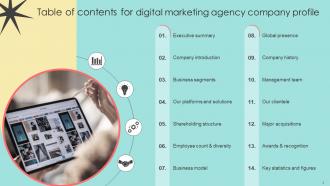
Slide 2: This slide includes the Table of contents.
Slide 3: This is yet another slide continuing the Table of contents.
Slide 4: This slide represents the executive summary of Affle India.
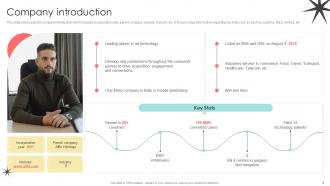
Slide 5: This slide showcases the company introduction.
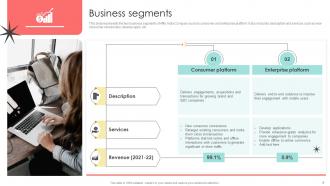
Slide 6: This slide reveals the two business segments of Affle India Company.
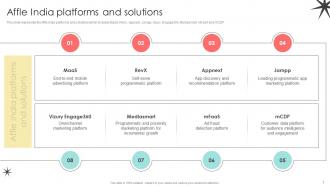
Slide 7: This slide presents the Affle India platforms and solutions which includes MaaS, RevX, Appnext, Jampp,etc.
Slide 8: This slide highlights the shareholding structure of Affle India Company.
Slide 9: This slide focuses on employee count & diversity which shows employee by gender and functions.
Slide 10: This slide portrays the business model of Affle India company
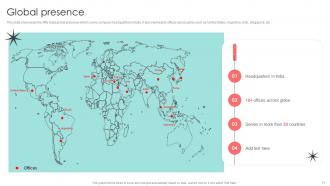
Slide 11: This slide showcases the Affle India global presence which covers company headquarters in India.
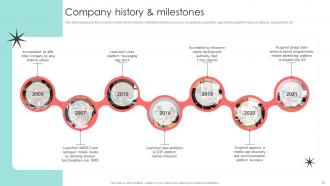
Slide 12: This slide represents the company history which includes milestones achieved.
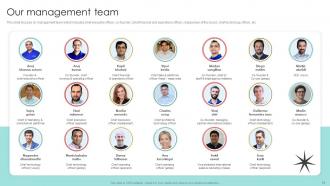
Slide 13: This slide focuses on management team which includes chief executive officer, co-founder, etc.
Slide 14: This slide outlines the clients of Affle India which includes Amazon, Flipkart, Goibibo, etc.
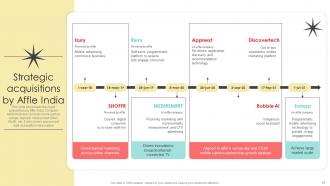
Slide 15: This slide depicts the major acquisitions by Affle India Company.
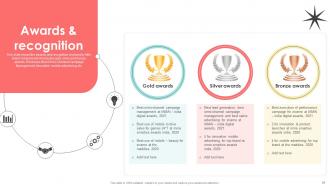
Slide 16: This slide shows the awards and recognition received by Affle India Company which includes gold, silver and bronze awards.
Slide 17: This slide represents the key stats and figures of Affle India.
Slide 18: This slide showcases revenue, net profit and EBIDTA of Affle India Company for last three years from 2020 to 2022.
Slide 19: This slide portrays the revenue generated from operations for last five years.
Slide 20: This slide highlights the operational revenue split on the basis of business segments.
Slide 21: This slide outlines the breakdown of revenue from operations by geography.
Slide 22: This slide presents the normalized profit after tax of Affle India company for last five years from 2018 to 2022.
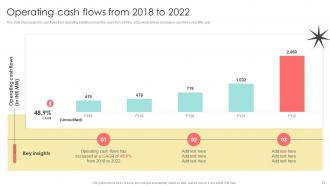
Slide 23: This slide showcases the cash flows from operating activities for last five years from 2018 to 2022.
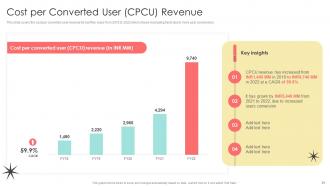
Slide 24: This slide covers the cost per converted user revenue for last five years from 2018 to 2022.
Slide 25: This slide reveals the annual expenses of Affle India Company for 2021.
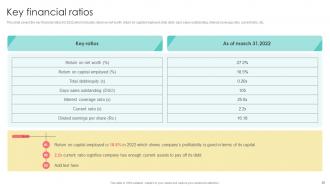
Slide 26: This slide highlights the Key financial ratios.
Slide 27: This slide portrays the cash flow statement of Affle India.
Slide 28: This slide shows the future growth strategies of Affle India.
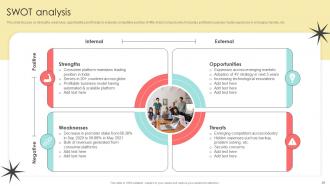
Slide 29: This slide focuses on strengths, weakness, opportunities and threats to evaluate competitive position of Affle India Company.
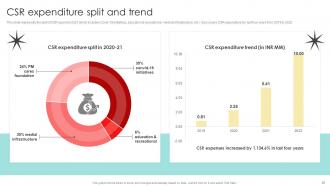
Slide 30: This slide depicts the CSR expenditure split in 2020-21.
Slide 31: This slide showcases the CSR initiatives by Affle India.
Slide 32: This slide covers the case study approach which shows client objective.
Slide 33: This is the Icons slide containing all the Icosn used in the plan.
Slide 34: This slide is used for displaying some Additional information.
Slide 35: This is Meet our team slide. State your team-related information here.
Slide 36: This is the Idea generation slide for encouraging fresh ideas.
Slide 37: This slide elucidates the company's Timeline process.
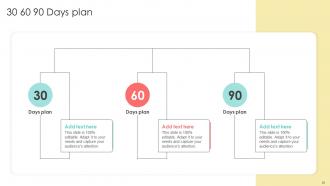
Slide 38: This is the 30 60 90 Days plan slide for effective planning.
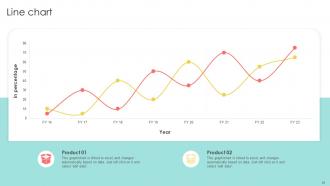
Slide 39: This slide portrays the Line chart.
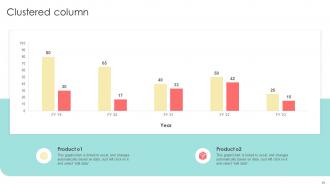
Slide 40: This is the Clustered column slide.
Slide 41: This is the Venn diagram slide.
Slide 42: This is the Thank You slide for acknowledgement.
Digital Marketing Agency Company Profile Powerpoint Presentation Slides CP CD V with all 47 slides:
Use our Digital Marketing Agency Company Profile Powerpoint Presentation Slides CP CD V to effectively help you save your valuable time. They are readymade to fit into any presentation structure.


















FAQs for Digital Marketing Agency Company Profile Powerpoint Presentation Slides
Look, if you're running a digital marketing agency and your SEO sucks, that's just embarrassing. You need to show up when people search "digital marketing agency near me" or whatever service you offer. Target keywords your actual clients use, not what sounds fancy. Build solid backlinks and optimize your content - the usual stuff. Here's the thing though: good SEO brings you people who are already looking for what you do. Makes selling so much easier when they come to you instead of the other way around. Plus honestly, clients won't trust a marketing agency that can't even rank itself well.
Honestly, focus on stuff that actually matters to your client's bottom line - conversion rates, cost per acquisition, ROAS, that kind of thing. Google Analytics is clutch for this. Sure, impressions look pretty in reports but they don't mean much if nobody's buying. Track the whole customer journey from click to purchase. Attribution models help you see which touchpoints are actually doing the work. Oh, and set up proper tracking from day one - trust me on this. If you can't connect your campaigns to real revenue, you're just guessing.
TikTok and Instagram Reels are where it's at right now - seriously, the engagement is crazy compared to regular posts. Your clients need to jump on short-form video ASAP. Also, people are literally buying stuff straight from social posts now (I still can't believe how seamless it's gotten), so get those shopping features set up. One thing that's working really well? Getting actual employees to post instead of just the polished brand stuff. Way more authentic. Oh, and AI tools for personalizing content are everywhere now - might as well use them to target different audience groups. Start with video and shopping integration though. That combo will make the biggest difference fast.
Honestly, content marketing is huge - like the foundation everything else builds on. Your SEO won't work without fresh stuff to index. Social media needs something worth sharing (obvs). Email campaigns fall flat with nothing interesting to say. Here's the thing though - most companies just pump out random blog posts because they think they "should." That's backwards. Start with actual problems your customers complain about, then create content that genuinely helps. Google notices when people actually stick around and read your stuff. Your sales team gets better materials too. It's kind of a win-win situation all around.
Honestly, just don't ghost your clients like half these agencies do - that alone puts you ahead. I always send monthly reports and hit them back within 24 hours max. Setting realistic expectations from day one saves you so much headache later. When they hit their goals, make a big deal about it! Celebrate those wins together. Track your response times this week though - anything over a day and you're probably bleeding clients without realizing it. Oh, and monthly check-ins are clutch. Makes them feel like they actually matter to you, not just another paycheck.
So first thing - set up UTM tracking and Google Analytics goals if you haven't already. That's your foundation. Then dig into customer journey data to spot where people are bailing out. Those drop-off points? That's where you optimize first. A/B test literally everything - I've seen tiny email subject line tweaks bump open rates 20%. Connect all your data sources too, because you need the complete picture. Oh, and attribution modeling is huge for figuring out which touchpoints actually deserve credit. Focus on real conversions, not just vanity metrics that make you feel good but don't pay the bills.
Start with what's killing them right now - their actual problems, not how awesome you are. Then show exactly how you'll fix it. Most agencies just spam the same boring template to everyone, which is why they suck at closing deals. Break it down like this: their current mess, your solution, what they'll get and when, plus realistic numbers on ROI. Throw in a case study that actually matches their industry - not some random example. Keep pricing clear but detailed so nobody freaks out later. Oh, and always end with concrete next steps. Makes the whole thing feel real instead of just another pitch.
Most agencies succeed by picking one thing and becoming ridiculously good at it. Like, some only work with B2B SaaS startups, others are obsessed with TikTok campaigns, or they're the healthcare marketing people. The "jack of all trades" thing doesn't really work anymore - too much competition. Smart ones also develop their own methods or tools that nobody else has. Oh, and killer case studies are huge for proving you actually know what you're doing. Find where your team's natural talents overlap with what the market's missing. That's usually where the magic happens.
Dude, transparency is everything. Get consent before grabbing user data - no exceptions. Be upfront about sponsored posts too. Don't promise results you can't actually deliver because I've watched agencies crash and burn doing that. Honestly, being too aggressive with targeting feels slimy anyway. Stick to platform rules and respect privacy settings. Your whole rep depends on trust with clients AND their audiences. When in doubt? Always go more transparent, not less. It's way better to under-promise and over-deliver than the other way around.
Don't spread yourself too thin right off the bat - pick 2-3 channels and actually get good at them first. Content marketing, social ads, email, SEO landing pages... whatever feels right for your business. But here's the thing - track what actually converts, not just clicks. Vanity metrics are such a trap. Your landing pages need to be dead simple with one obvious call-to-action. Oh, and set up proper attribution so you can tell which channels bring real leads vs. people just browsing around. Once you've nailed a couple channels, then think about expanding.
Honestly, start with Google Analytics 4 for tracking everything - it's free and does the job. Buffer or Hootsuite will save your life when managing social posts. I swear by Mailchimp for email campaigns, though Klaviyo's pretty solid too if you're feeling fancy. HubSpot's CRM is clutch for organizing leads. SEMrush changed my whole SEO game, but Ahrefs works just as well for keyword stuff. Oh, and grab Asana or Monday.com so you don't lose track of campaigns - learned that one the hard way! Start with free versions first, then upgrade once you figure out what you actually need.
Honestly, most client drama stems from crappy communication. Start with super clear project scopes and realistic timelines - none of that vague "we'll handle your marketing" stuff. Set up regular check-ins so they're not left wondering if you've vanished into thin air. When clients go quiet, they're usually panicking about something totally fixable. Always explain the why behind your strategies, and if deadlines are slipping? Tell them immediately instead of scrambling to catch up later. I swear, a simple weekly progress report showing actual results against their goals will save you so many headaches.
Honestly, video is where it's at for engagement - crushes regular posts every time. People remember 95% of what they watch vs like 10% from text, which is wild when you think about it. Works everywhere too: social feeds, emails, your website, ads. Search engines eat it up for SEO. Just match the vibe to each platform - Instagram wants quick punchy stuff, YouTube's better for longer tutorials. Oh and don't stress about fancy equipment starting out. Your phone's probably fine if you're just testing the waters.
So basically you team up with influencers who already have your client's audience hooked. People trust the creators they follow way more than regular ads - it just feels more real, you know? There's tons of options: sponsored posts, reviews, takeovers, collabs. I'd start with micro-influencers in your niche since they're cheaper and usually get better engagement than the big celebrities. The trick is finding someone whose followers actually match your client's vibe and values. Oh, and definitely track your reach and conversions so you can show the results actually worked.
Start with AI and automation - that's honestly where everything's going. Your team also needs to get solid at data analysis since clients want way better reporting now. Video's still huge (I swear every platform is obsessed with it), so find people who can actually shoot and edit decent stuff. Oh, and privacy compliance is becoming a real thing with all these cookie changes. Super boring but necessary. I'd probably train your current people first instead of hiring - way cheaper and they already know your processes.
-
The service is fast, and I could access any presentation after buying the subscription. I don’t think I’ll ever have to worry about a presentation in my life.
-
Unique design & color.