


Workplace Safety Dashboard To Monitor Incidents Maintaining Health And Safety




Try Before you Buy Download Free Sample Product
 Impress Your
 Audience
 100%
100% Editable
 Save Hours
 of Time


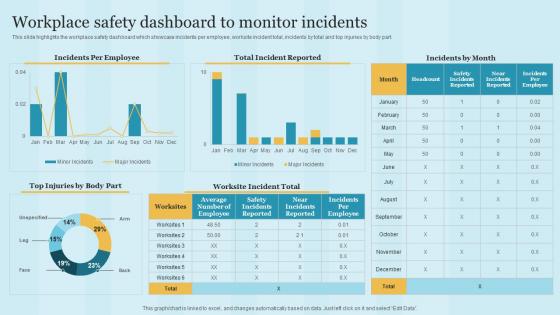
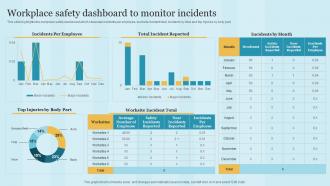
This slide highlights the workplace safety dashboard which showcase incidents per employee, worksite incident total, incidents by total and top injuries by body part.
People who downloaded this PowerPoint presentation also viewed the following :
Workplace Safety Dashboard To Monitor Incidents Maintaining Health And Safety with all 7 slides:
Use our Workplace Safety Dashboard To Monitor Incidents Maintaining Health And Safety to effectively help you save your valuable time. They are readymade to fit into any presentation structure.





FAQs for Workplace Safety Dashboard To Monitor Incidents Maintaining
Hey! So you'll want five main things. First, policies that people can actually read without falling asleep. Training that's not just those awful annual videos everyone zones out during. Set up ways for people to report hazards without feeling like snitches. Have a real process for investigating incidents when they happen. Oh, and this is key - leadership has to actually care, not just say they do. If your boss cuts safety corners, everyone will too. Regular audits help, plus actually ask your workers what they think since they know the job better than anyone. I'd start by figuring out what you're missing right now and tackle the worst stuff first.
Honestly, just walk through your place regularly and look for the obvious stuff - loose wires, messy walkways, broken equipment. Your employees are gonna spot things you miss since they're there every day doing the actual work. I'd definitely get them involved in monthly safety chats or whatever. Document the hazards you find and tackle the worst ones first. Train everyone on your safety rules, but here's the thing - you can't just do this once and forget about it. Make it a regular thing, maybe monthly meetings? Otherwise people get lazy and accidents happen. Oh, and prioritize based on what could actually hurt someone badly.
Training your people is huge for safety - seriously can't stress this enough. Your accident rates will drop like crazy when everyone knows how to handle equipment properly and spot hazards before they become problems. Plus workers start watching each other's backs more. I've watched places skip this stuff and it's always a disaster waiting to happen. Don't just do it once during orientation though - you gotta keep refreshing skills regularly. New equipment means new training sessions too. It's honestly one of those things that pays for itself pretty quickly.
Look, regulations are just your baseline - the bare minimum you've got to hit. But here's the thing: they're actually useful for structuring your safety program. Take OSHA stuff - it makes you do hazard assessments and training that you should already be doing anyway. I've worked with companies that just check boxes and totally miss the point though. You want to use those standards as your starting point, then add whatever makes sense for your specific risks. Oh, and definitely audit what you're doing now against the requirements. You'll probably find some holes you didn't even realize were there.
Most workplace accidents are slips, falls, cuts, burns, and repetitive strain stuff. Keep walkways clear and don't skip protective gear - I know it's annoying but trust me. Proper lifting technique actually matters too. People usually get hurt when they're rushing or not paying attention, which honestly makes sense. Take breaks if you're doing the same motions over and over. Your hands and back will thank you later. Quick tip - just scan your work area real quick today. Shortcuts when you're tired are basically asking for trouble.
So there's actually tons of cool tech for workplace safety now. Wearable sensors track air quality and if someone's getting too tired. AI cameras catch unsafe stuff happening live. Those old boring safety videos? Digital training programs are way better - people actually pay attention. Drones inspect sketchy areas so humans don't have to risk it. Apps let workers report incidents instantly. My favorite part though - predictive analytics spot accident patterns before they become real problems. I'd start with just a safety reporting app first. See how your team likes it, then build from there.
So first thing - map out your evacuation routes and pick meeting spots. Someone needs to be in charge of each floor or area when stuff hits the fan. I swear, half the people at my old job didn't even know where the fire extinguisher was until we had that kitchen incident. Run drills regularly (yeah, they're annoying but whatever). Keep your emergency contacts current and somewhere everyone can grab them quickly. Oh, and practice this whole thing at least once a year so people don't just stand there looking confused if something actually happens.
Honestly, it all comes down to whether your team actually trusts leadership cares about safety or if they think it's just lip service. People pick up on that stuff immediately. If someone can report a hazard without worrying they'll get blamed or written up, you're already ahead of most places. But when safety feels like just another corporate checkbox? Yeah, everyone zones out. Your managers need to actually do what they preach, not just mention safety in the weekly meeting then rush everyone through tasks. I'd start by asking your people what's actually getting in their way safety-wise day to day.
Honestly, safety audits are a game-changer - they catch problems before someone gets hurt or you're dealing with expensive accidents. OSHA fines are brutal too, so staying compliant is huge. What I really like about them is how they shift the whole workplace vibe. Instead of people just checking boxes, everyone starts actually caring about safety. The data you get is solid gold for figuring out what's broken and what's working. I'd start simple - maybe monthly walks through your riskiest spots first, then expand once you get the hang of it.
Honestly, it all comes down to whether your bosses actually give a damn about safety or just pretend to. Good leaders won't sacrifice worker safety just to meet some crazy deadline. They do the safe thing themselves, get people proper training, and - this is huge - they don't punish you for speaking up about dangerous stuff. I've worked places where management talks a big game about safety but then pressures you to cut corners. Those places? Way more accidents. You need leaders who actually show they care, not just mention it in boring meetings. If yours don't, keep pushing them on it.
Dude, stress totally screws with your head when it comes to safety stuff. You'll miss obvious hazards or skip steps you'd normally catch. I've watched people hurt themselves because they were rushing through things while stressed out. Your brain just doesn't process danger the same way when you're overwhelmed - reaction times get sluggish, communication gets weird with your team. Honestly, half the accidents I've seen could've been avoided if someone had just said "hey, I'm not thinking straight today." Take a step back when your mental state is off, especially before doing anything risky.
Dude, report everything right away - even the small stuff that almost happened. Your safety team actually wants to hear about near-misses too. Write down all the details while you still remember: what went down, when, where, who was there, what might've caused it. Yeah, it's annoying paperwork but honestly these reports do help stop bigger accidents later. Snap some pics if you can do it safely. Don't try to point fingers in the report though - just write what actually happened. Oh, and definitely check back later to see if they actually did anything with your report.
So basically, ergonomics is about making your workspace work for YOU instead of the other way around. Get your chair height right so your feet sit flat. Your screen should be at eye level - I swear a cheap monitor stand changed my life lol. Poor setups cause all that repetitive strain stuff like carpal tunnel and back pain. The trick is fixing little aches before they turn into real problems. Honestly, most people's desks are set up terribly and they don't even realize it's why their neck hurts every day.
Dude, you don't want to mess around with this stuff. OSHA will come down hard with fines that can hit millions depending on how bad things are. Workers can sue for damages, and juries absolutely hate companies that cut corners on safety. If someone gets seriously injured? You're looking at potential criminal charges too. Executives can even face personal liability when there's gross negligence - which honestly happens more than you'd think. Just document everything and report hazards right away. Trust me, it's way cheaper to follow safety protocols now than deal with lawyers later.
Look at your incident rates and near-miss reports first - that's the obvious stuff. But honestly? The real data comes from watching people actually work afterwards. Are they following what you taught them or just going through the motions? I'd also do some quick knowledge checks before and after training. Employee feedback is huge too - they'll tell you straight up what was useful and what was garbage. Workers' comp claims are another good metric if you can track them easily. Start small with maybe 2-3 things you can actually measure consistently. The numbers don't tell the whole story though.
-
Amazing product with appealing content and design.
-
I was confident and well prepared for my presentation for the first time ever. With SlideTeam’s templates, I could deliver one of my best presentations. Will be coming back for more!