

Organizations Safety And Incident Management Dashboard With Key Metrics




Try Before you Buy Download Free Sample Product
 Impress Your
 Audience
 100%
100% Editable
 Save Hours
 of Time


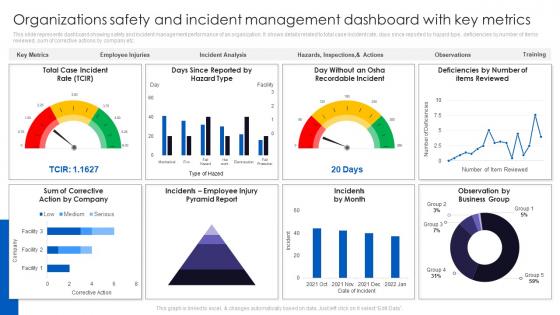
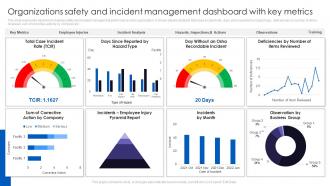
This slide represents dashboard showing safety and incident management performance of an organization. It shows details related to total case incident rate, days since reported by hazard type, deficiencies by number of items reviewed, sum of corrective actions by company etc.
People who downloaded this PowerPoint presentation also viewed the following :
Organizations Safety And Incident Management Dashboard With Key Metrics with all 7 slides:
Use our Organizations Safety And Incident Management Dashboard With Key Metrics to effectively help you save your valuable time. They are readymade to fit into any presentation structure.





FAQs for Organizations Safety And Incident Management Dashboard
Honestly, start with getting your leadership actually invested - not just hanging up those cheesy safety posters everywhere. You need solid hazard identification and risk assessment processes first. Training's obviously crucial, but the reporting system is where most places screw up. People clam up if they think they'll get thrown under the bus for reporting stuff. Create an environment where folks feel safe talking about near-misses and concerns. Oh, and track your metrics so you know what's working. I'd audit what you've got now and tackle the biggest gaps first - no point fixing small stuff while major issues are still lurking.
Honestly, leadership has to walk the talk - literally walk around and ask people about safety stuff, not just mention it in boring meetings. Open communication is huge too. People need to feel safe reporting close calls without getting blamed for it. I've noticed places with just safety posters everywhere usually suck at actual safety lol. Celebrate wins publicly when you can. Give employees real say in procedures since they're the ones actually doing the work. Don't cheap out on training and equipment either. Consistency matters most though - your daily actions have to back up whatever safety message you're pushing.
Honestly, leadership makes or breaks safety culture. When bosses actually care about safety instead of just talking about it, everyone notices. I've worked places where management clearly didn't give a damn - the accident rates were terrible. Your team watches what you do, not your fancy safety speeches. People need to feel safe reporting problems without getting blamed for it. That's huge. You gotta walk the walk first, then actually listen when someone brings up concerns. Oh, and make sure you're giving them the resources they need - can't expect miracles on a shoestring budget.
Honestly, most people treat risk assessments like homework - do it once and forget about it. Bad move. You've gotta weave them into everything: project kickoffs, when you swap out equipment, after incidents happen. The frontline guys always know the real dangers better than management does. Here's what actually works: pick your sketchiest area and walk through it with the team this week. Ask "what could screw us over here?" Then - and this is crucial - actually change your procedures based on what you find. Otherwise you're just making paperwork. Keep updating them too.
Falls are nuts - they cause a third of all workplace injuries. Your main culprits are slips/trips, repetitive strain stuff from bad posture, chemical exposure, and equipment accidents. Do a quick walkthrough this week and mark the obvious hazards first. Most injuries you can prevent with decent safety training and proper gear. Oh, and fix your incident reporting if it's broken - can't solve problems you don't hear about. Honestly, ergonomic workstation checks help more than people think. Sometimes the stupidly simple fixes prevent the worst accidents.
Real-time monitoring is a game changer for safety stuff. IoT sensors can track air quality, equipment vibrations, all that - then AI spots patterns to catch problems early. Wearable tech monitors worker health and exposure levels too. Way better than those awful paper incident reports we used to deal with (ugh, remember those?). You'll get so much useful data it's honestly crazy. Digital systems make tracking incidents super smooth now. Just don't go overboard buying every shiny gadget - pick what actually matches your specific hazards and you'll be golden.
You need both types of metrics - the stuff that already happened and the warning signs. Injury rates and workers' comp claims tell you what went wrong. But honestly, the predictive stuff is way more useful. Track near-miss reports, safety training completion, how many hazards people spot. That's gold right there. Don't forget the culture side either - meeting participation, feedback scores, how fast you fix problems. I learned this the hard way at my last job. The whole point is catching issues before someone gets hurt instead of just counting accidents after the fact.
Look, training is what actually makes your safety policies work instead of just sitting in a binder somewhere. Your team needs to get the "why" behind rules, not just memorize steps like robots. I've seen too many places where people are scared to report problems - good training fixes that by building the right culture. Keep everyone updated on new risks and tech as things change. Short sessions work better than those marathon training days nobody pays attention to anyway. Focus on your biggest problem areas first, then branch out from there.
Honestly, the requirements are all over the place depending where you are. US has OSHA plus industry stuff - like aviation gets hit with FAA's SMS rules. Europe's got EU directives but then each country adds their own twist, which is annoying. Australia does their thing through Safe Work Australia, Canada has federal plus provincial layers. First figure out which jurisdictions actually apply to you - that's half the battle right there. Most want risk assessments, incident reporting, management being held accountable, but the specifics? Totally different everywhere. Your regulatory team should know your exact scope, I'd bug them first.
Honestly, those boring annual trainings nobody pays attention to won't cut it. Mix it up with visual stuff during onboarding, then hit them with regular reminders in team meetings and around the workspace. Quick safety chats before shifts work too - keeps it fresh. Your supervisors better know WHY rules exist, not just what they are. I've seen too many managers fumble basic explanations. Digital updates are solid for refreshers. The real trick? Make policies connect to what people actually do daily, not some vague corporate nonsense that sounds like it came from headquarters.
Honestly, start with figuring out what could actually go wrong at your place - like fires, medical stuff, whatever. Then map out how people get out fast and who does what. Quarterly drills are a must because I've seen people completely blank when things get crazy. Stock your emergency kit and don't forget about it in some random closet. Oh, and have backup ways to reach everyone - cell towers go down more than you'd think. Review everything once a year since workplaces change. Seriously though, schedule your next drill right now or you'll forget.
Look, your workers are literally the best source for safety intel you'll get. They're out there every day spotting hazards and near-misses that you'd never see from an office. Plus they know when procedures are total BS - like who else can tell you if a safety rule actually works in practice? Set up surveys, safety committees, whatever works. The key thing is acting on what they tell you. I've seen places where people stop giving feedback because management just ignores it. Don't be that company. When someone suggests something, let them know what happened with their idea. Even if you can't implement it, explain why. Trust me, they'll keep the good suggestions coming.
Honestly, the main thing that kills safety plans is nobody updates them. Your team changes, equipment gets swapped out, rules shift - then your plan's basically useless. Once that initial push dies down, it's like everyone forgets it exists. Management stops caring when money gets tight too, which is super frustrating. I'd say do quarterly check-ins and give different people ownership of specific parts. That way someone's actually watching each section. Otherwise stuff just gets ignored and you're back to square one pretty quick.
Make safety part of how you already work instead of tacking it on later. Really drill your team on the basics until it's automatic - that's when things click. Honestly, half the "safety protocols" out there are just paperwork nobody reads anyway. Figure out which ones actually prevent accidents vs. which ones just cover someone's ass legally. Once people aren't thinking about safety as extra work, productivity goes up because you're not dealing with injuries or equipment breaking down. Start with whatever will have the biggest impact first. It's weird but when safety flows naturally, everything runs smoother.
Honestly, audits are like getting a reality check on your safety stuff. You think everything's running smooth, then boom - they show you what's actually going down. They'll catch those blind spots you missed and give you real numbers on what's working (or totally isn't). I used to dread them, but now I see audit findings as free consulting basically. Short bursts work better than marathon sessions too. Use those results to figure out what needs fixing first, then track how you're doing over time. That's where you actually start seeing improvements stick.
-
Wide collection of templates available. SlideTeam has made it easier to create presentations in just a few minutes.
-
I was able to find the right choice of PPT template for my thesis with SlideTeam. Thank you for existing.