


Zomato investor funding elevator pitch deck ppt template




Try Before you Buy Download Free Sample Product
 Impress Your
 Audience
 100%
100% Editable
 Save Hours
 of Time


Zomato is an Indian multinational restaurant aggregator and food delivery startup created in 2008 by Deepinder Goyal and Pankaj Chaddah. Zomato offers restaurant information, menus, and user ratings, as well as food delivery services from partner restaurants in various cities. Pitch deck is specifically designed to present short summary of Zomato showing general overview of the company and company outline, what does company do and some statistics related to the company. Also, this powerpoint presentation provides information about Zomatos core competency, value proposition, business model of the Zomato, history and customer experience details of Zomato. Additionally, this pitch deck provides details on social media following of the company, valuable customers of the company, competitor analysis, SWOT analysis and best practices that are followed by the company.
People who downloaded this PowerPoint presentation also viewed the following :
Content of this Powerpoint Presentation
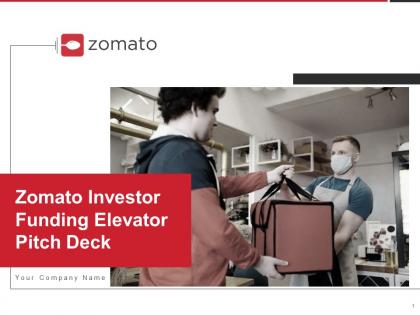
Slide 1: This slide introduces Zomato Investor Funding Elevator Pitch Deck State Your Company Name and begin.
Slide 2: This slide shows Table of Content for the presentation.
Slide 3: This slide presents General Overview of the Company.
Slide 4: This slide displays detailed information about the company such as company initiation date, category and sector, segment and target group, USP and positioning etc.
Slide 5: The following slide provides information about the vision and mission of the company along with its geographical existence.
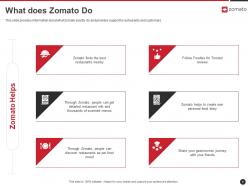
Slide 6: This slide represents information about what Zomato exactly do and provides support to restaurants and customers.
Slide 7: This slide provides information about some of the general statistics of Zomato Food Delivery Platform.
Slide 8: This slide displays information about the core competencies of Zomato with respect to its key resources and key activities.
Slide 9: This slide shows some of the valuable customers who seek and prefer services offered by Zomato.
Slide 10: This slide presents information about the business model of Zomato and how it generates revenue.
Slide 11: This slide displays information about the business model of Zomato and how it generates revenue.
Slide 12: The following slide shows the history timeline of Zomato along with years and events.
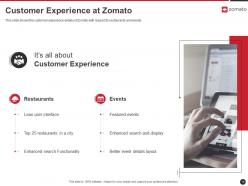
Slide 13: This slide represents the customer experience details of Zomato with respect to restaurants and events.
Slide 14: This slide provides information about the challenges that are faced by Zomato such as challenges related to spam control, expansion of operation into tier2/tier 3 cities etc. This slide also shows a graph that represents how Zomato started from scratch.
Slide 15: The following slide presents information about the social media following of Zomato across various media platforms such as Facebook, Twitter, Instagram etc.
Slide 16: This slide displays some of the valuable customers who seek and prefer services offered by Zomato.
Slide 17: This slide shows some of the competitors of Zomato across various regions and Zomato’s competitive edge over its competitors.
Slide 18: The following slide shows how the various brands in the market use Zomato to their benefit.
Slide 19: This slide represents the strengths, weakness, opportunities and threats of Zomato company that helps to develop competitive position and strategic planning.
Slide 20: The following slide presents some of the best practices that are followed by Zomato in order to streamline its operations and increase user satisfaction.
Slide 21: This slide displays Zomato Investor Funding Elevator Pitch Deck Icons.
Slide 22: This slide is titled as Additional Slides for moving forward.
Slide 23: This slide shows Contact Information with address, contact numbers and email address.
Slide 24: This is About Us slide to show company specifications etc.
Slide 25: This is Our Team slide with names and designation.
Slide 26: This slide shows Puzzle diagram with text boxes.
Slide 27: This slide presents Post It Notes. Post your important notes here.
Slide 28: This slide displays 30 60 90 Days Plan with text boxes.
Slide 29: This slide shows Venn diagram with text boxes.
Slide 30: This is a Financial slide. Show your finance related stuff here.
Slide 31: This is a Location slide with maps to show data related with different locations.
Slide 32: This is a Timeline slide. Show data related to time intervals here.
Slide 33: This is a Thank You slide with address, contact numbers and email address.
Zomato investor funding elevator pitch deck ppt template with all 33 slides:
Use our Zomato Investor Funding Elevator Pitch Deck Ppt Template to effectively help you save your valuable time. They are readymade to fit into any presentation structure.






FAQs for Zomato investor funding elevator pitch
So Zomato basically hammered three big numbers. First was their $150+ billion global food market - sounds impressive but the restaurant world is crazy fragmented anyway. Their user base looked solid too, like 120+ million active users across 24 countries. Plus they'd mapped out 1.4 million restaurants worldwide, which shows decent coverage. Honestly though? Check out their visual presentations - those geographic expansion maps were pretty slick and probably what really got investors excited. The way they showed growth spreading across regions was smart marketing.
Zomato basically called itself the "Google for food discovery" - super smart move. They made restaurant search crazy simple while building this massive data goldmine. Both sides won: hungry people found great spots nearby, restaurants got better visibility and customer insights. What I found clever was how they played up their local expertise - like, we actually get regional food preferences better than those big global players. They didn't just want to be another listing site either. Instead, they positioned themselves as the backbone of the whole food ecosystem. Oh, and they backed everything up with solid local market data.
So Zomato wanted $150 million for their global takeover plan - pretty ballsy move. They were gonna use it for expanding into major cities, buying out local competitors, and scaling up their delivery network. The deck broke down spending on tech development, marketing blitzes, and building those cloud kitchen things (which honestly seemed smart at the time). What's cool is how they connected specific dollar amounts to actual growth targets with real deadlines. If you're putting together your own pitch, that's the move - concrete numbers tied to measurable results. They knew they had to move fast before other players locked down those markets.
So Zomato's pitch deck hit investors with three solid advantages. Their massive user base across tons of countries was huge - showed they had scale that'd be brutal for competitors to copy. The data angle was smart too, proving they understood customer habits better than anyone else. But honestly? Their delivery network was the real winner. Building that logistics infrastructure takes forever and tons of cash. Random thought - I always wonder how much of that "data advantage" stuff is actually true or just good marketing. Anyway, if you're pitching something similar, focus on the stuff that takes years to build, not features someone can rip off next month.
So Zomato's got three ways they make money. Most of it comes from taking a cut of delivery orders - restaurants pay them commission on each sale. They also get ad revenue when restaurants pay for better placement on the app, which is pretty clever tbh. Then there's their subscription thing, Zomato Pro/Gold, where users pay for discounts and perks. The commission model is definitely their biggest money maker though. If you're studying food delivery startups, pay attention to how they don't piss off restaurants with crazy high fees - that's honestly the hardest balancing act in this whole industry.
So Zomato basically didn't put all their eggs in one basket - they expanded way beyond just helping people find restaurants. Food delivery became huge for them, plus they got into cloud kitchens and even grocery delivery when COVID hit. Pretty genius timing honestly. They leaned hard into their data advantage and local expertise, especially in India where they already had solid ground. When different countries had weird regulations, they just adapted or partnered with local companies instead of fighting it. The pandemic could've killed them, but they flipped it around and used it to grab more delivery market share.
So Zomato was pretty clever about this - they built their whole pitch around viral growth and word-of-mouth. The idea was that people sharing food reviews would basically do all the marketing for them. Smart move, especially since they didn't have tons of cash for ads back then. Restaurant partnerships were huge too. Owners would push the platform to get more eyeballs on their spots. I remember thinking when I first saw their deck - they really bet everything on organic growth instead of paid channels. Honestly? If you're building something people naturally want to share, totally copy this playbook.
So Zomato basically conquered India's big cities first - Delhi, Mumbai, Bangalore, you know the usual suspects. Then they got pretty smart about international expansion. They targeted places like UAE, Philippines, Indonesia where there wasn't much competition yet but people were getting into smartphones and food delivery. Honestly, it was a solid move - find markets with similar food cultures but way fewer players already established. They'd just copy what worked in India and paste it elsewhere. Oh and if you're thinking about expansion stuff, definitely look up their actual timeline - shows how they timed everything.
So Zomato basically tracked the usual stuff - MAUs, retention rates, how often people used the app. Smart though, they showed cohort analysis to prove users actually stuck around instead of just downloading and bouncing. Order frequency and time spent in-app were key since that's literally their money maker. They also threw in geographic expansion data across cities. Honestly? If you're building something similar, ditch vanity metrics like total downloads. Investors don't care about that fluff - they want to see sticky users who'll actually generate revenue. Retention is everything.
So Zomato basically built their whole thing around being a tech company first, food second. Smart move tbh. They used data analytics to figure out what users actually wanted, had solid mobile apps, and their algorithms made finding restaurants way easier. The scaling pitch worked great with investors too - you don't need huge infrastructure investments when it's all software-based. I mean, compare that to opening physical restaurants everywhere, right? Their tech could just roll out to new markets without breaking the bank. VCs ate it up because tech scales so much better than traditional restaurant stuff.
So Zomato basically wanted to blow that money on going global and upgrading their tech stack. They had this whole plan to jump into Asia, Middle East, wherever looked promising. The tech side was about making their apps less garbage and actually work smoothly - you know how these food delivery apps can be. Pretty standard playbook tbh: get funding, expand like crazy, crush the competition before they know what hit them. Oh and definitely check out how they mapped out which countries got priority in their pitch deck. That'll show you who they thought would actually make them money vs just wishful thinking.
So Zomato basically flexed their partnerships with huge chains - McDonald's, KFC, Pizza Hut - to prove they could land major clients. Smart honestly. They also talked up their payment integrations with Paytm and credit card companies since nobody wants to deal with checkout hassles (I mean, I've literally abandoned orders over that). The delivery network partnerships were huge too for solving logistics. Quick tangent - this was back when last-mile delivery was still being figured out by everyone. Anyway, they used all these partnerships to basically tell investors "look, we're validated and we can actually scale this thing."
So Zomato did this really clever thing - they started with restaurant discovery and reviews instead of jumping straight into delivery like everyone else. Built up this huge database of restaurants, menus, and reviews across tons of countries first. Honestly, kind of genius when you think about it. By the time they actually started delivering food, they already had way better relationships with restaurants and knew the market inside out. Most delivery apps were just... I don't know, throwing drivers at the problem? Zomato figured out the "what should I order" question before worrying about getting it to your door.
Dude, Zomato nailed some major predictions in their pitch deck. Online ordering went from nice-to-have to absolutely essential - they saw that coming. The whole cloud kitchen thing seemed bizarre back then but now it's everywhere. Data insights for restaurants? Total game changer they called early. Honestly, their timing was incredible. If you're thinking food tech, focus on making things stupid convenient for customers and giving restaurants better data tools. Oh, and flexible kitchen models - that's huge now. They basically wrote the playbook before anyone knew what game we'd be playing.
Zomato nailed this by showing repeat orders and engagement stats - like how many times per month people were actually ordering. Smart move focusing on their review system too, since it kept users coming back to rate places and see what everyone else was eating (total food FOMO lol). They backed it up with cohort data proving users who stuck around past month one had way higher lifetime values. Don't just show download numbers in your pitch - investors want proof people are staying AND spending. Usage patterns are everything.
-
I discovered this website through a google search, the services matched my needs perfectly and the pricing was very reasonable. I was thrilled with the product and the customer service. I will definitely use their slides again for my presentations and recommend them to other colleagues.
-
Nice and innovative design.