


0714 insulin action and diabetes type 1 and type 2 medical images for powerpoint




Try Before you Buy Download Free Sample Product
 Impress Your
 Audience
 100%
100% Editable
 Save Hours
 of Time


Let our 0714 Insulin action and diabetes type 1 and type 2 Medical Images For PowerPoint be the electrodes. Charge the batteries of your team with your thoughts.
People who downloaded this PowerPoint presentation also viewed the following :
Content of this Powerpoint Presentation
Description:
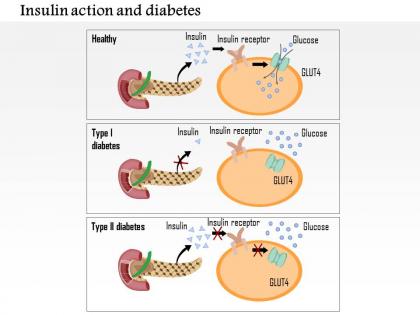
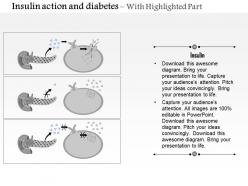
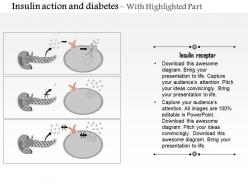
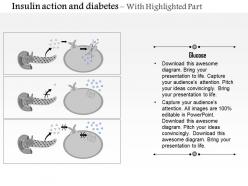
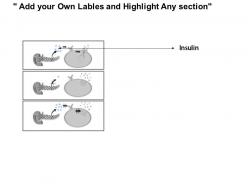
The image provides a simplified illustration of insulin action in a healthy state compared to its dysfunction in Type I and Type II diabetes. The illustration shows how insulin interacts with its receptor to facilitate the transport of glucose into cells through a glucose transporter (GLUT4).
In a healthy state, insulin binds to the insulin receptor on the cell surface, prompting the GLUT4 transporter to move to the cell surface and allow glucose to enter the cell. In Type I diabetes, insulin is not produced, denoted by the red cross, preventing the normal uptake of glucose into cells. In Type II diabetes, despite the presence of insulin, the insulin receptor is unresponsive (as depicted by the red 'X' on the receptor), leading to inadequate glucose uptake.
Use Cases:
This image can be applied in various industries for educational and explanatory purposes:
1. Healthcare:
Use: To educate patients and healthcare professionals about the pathophysiology of diabetes.
Presenter: Healthcare educator or doctor.
Audience: Patients, nurses, medical students.
2. Biotechnology:
Use: Explaining the mechanism of drug action for insulin analogs or therapies targeting glucose metabolism.
Presenter: Biotech researcher or product developer.
Audience: Investors, biotech professionals, scientists.
3. Pharmaceutical:
Use: Training sales representatives on how diabetes medications work.
Presenter: Pharmaceutical trainer.
Audience: Sales representatives, marketing teams.
4. Education:
Use: Teaching biology students about metabolic diseases and cellular mechanisms of hormone action.
Presenter: Educator or professor.
Audience: Students, academic researchers.
5. Public Health:
Use: Informing policy makers and public health officials about diabetes for the development of health interventions.
Presenter: Public health advocate or epidemiologist.
Audience: Health policy makers, community health workers.
6. Medical Devices:
Use: Demonstrating how glucose monitoring devices are important for diabetes management.
Presenter: Medical device company representative.
Audience: Patients, caregivers, healthcare providers.
7. Nutrition and Dietetics:
Use: Illustrating the importance of dietary management in maintaining insulin sensitivity.
Presenter: Dietitian or nutritionist.
Audience: Clients with or at risk of diabetes, dietetics students.
0714 insulin action and diabetes type 1 and type 2 medical images for powerpoint with all 10 slides:
Encourage clinical assessment with our 0714 Insulin action and diabetes type 1 and type 2 Medical Images For PowerPoint. Closely examine every detail.




FAQs for 0714 insulin action and diabetes type 1 and type 2 medical
So basically insulin tells your cells "hey, grab that glucose from your blood and store it!" When you eat something, it binds to receptors on your muscle, fat, and liver cells. This triggers glucose transporters to pop up on the cell surface - like opening doors for glucose to get in. Your liver and muscles start making glycogen while shutting down glucose production. It's honestly such a smart system. Insulin also boosts protein-making in muscles and fat storage in adipose tissue. Bottom line: it's your "I just ate" hormone that flips your metabolism from breaking stuff down to storing it away.
So basically your cells start ignoring insulin when it tries to tell them to absorb glucose. Happens when you've had high blood sugar for a while - it's like your cells get tired of being told what to do and just stop listening. Your pancreas freaks out and pumps out even more insulin to try harder. Which honestly just makes everything worse because now you need crazy amounts of insulin just to keep blood sugar normal. Your muscles, fat, and liver are the main troublemakers here. Good news though - catching it early means you can actually fix it with better eating and moving around more.
Okay so here's the deal with insulin - it's like a key that opens up your muscle and fat cells so glucose can actually get inside. When you eat something, your blood sugar spikes and insulin kicks in. It binds to cell receptors and basically tells them to move these glucose transporters (GLUT4 things) to the surface. More doors = more glucose getting absorbed. Without insulin doing its thing, all that sugar just hangs out in your blood instead of powering your cells. That's literally why diabetics have such a hard time with blood sugar levels - the glucose can't get where it needs to go.
So there's a bunch of stuff that affects how well insulin works in patients. Exercise is huge - more muscle just soaks up glucose better. Belly fat is the worst culprit though, creates all this inflammation that blocks insulin. Sleep matters way more than people think (I swear nobody talks about this enough). Bad sleep screws with your cortisol and growth hormone. Stress does the same thing long-term. Age naturally makes things worse too, but you can't really fix that one. Focus on what you can change first - getting them moving, losing weight, and sleeping better. Those three will give you the most results.
So basically, type 1 diabetics don't make any insulin because their immune system attacked those cells. Type 2s still produce it, but their body just ignores it - like having a key that won't turn in the lock anymore. Type 1s need insulin shots right away since their pancreas is totally out of commission. With type 2, you can usually start with diet changes and meds that help their cells actually use the insulin better. Though honestly, a lot of type 2 patients end up needing insulin eventually anyway as things get worse. It's more of a gradual treatment approach versus the immediate insulin dependency you see with type 1.
So basically when you're carrying extra weight, your fat cells start pumping out these inflammatory chemicals that mess with how insulin works. Think of it like - your cells can't "hear" the insulin signal anymore because there's too much noise in the system. The fat tissue releases stuff like TNF-α and IL-6 (yeah, science names are weird) that block insulin receptors. Free fatty acids floating around don't help either. Honestly, this is why losing weight isn't just about looking good - you're literally fixing your body's internal messaging system. Pretty wild how connected everything is.
Oh definitely! Exercise is probably your biggest win here - both cardio and lifting weights help your muscles grab glucose way better. Losing even like 5-10% of your weight makes a huge difference too. Sleep is seriously underrated though, bad sleep totally messes with your insulin. Diet-wise, cut back on the refined carb stuff and load up on fiber and whole foods. Managing stress helps too - meditation or whatever works for you. Honestly I'd just pick whatever feels doable right now and start there. You don't have to do everything at once.
So metformin's your best bet - it cuts down glucose production in the liver and helps muscles use insulin better. Doctors usually start there for type 2 diabetes. There's also these drugs called TZDs like pioglitazone that work on some receptors to boost glucose uptake, but honestly most docs avoid them now because they make you gain weight and retain fluid. Not fun. Some of the newer GLP-1 drugs have insulin-sensitizing effects too, which is cool. But yeah, metformin's still the gold standard most of the time.
So basically when you've got chronic inflammation going on, it messes with how your cells respond to insulin. Your immune system starts pumping out these proteins that literally block insulin from working properly - like TNF-alpha and IL-6 if you want the nerdy names. Think of it as your cells becoming stubborn and refusing to let glucose in, even when insulin's knocking on the door. That's why diabetics often have high inflammation markers too. The good news? If you can tackle the inflammation through better diet, exercise, or even anti-inflammatory meds, you might actually see your blood sugar control improve. Pretty cool how connected everything is.
So the main stuff to watch for: heart disease, kidney damage, nerve issues, and eye problems. When insulin stops working right, your blood vessels get hammered - heart attacks, strokes, that whole mess. Kidneys are really vulnerable too, which is why so many diabetics end up with kidney disease. Plus you get neuropathy in your hands and feet, and retinopathy that can mess up your vision. It's honestly pretty overwhelming how much gets affected. But here's the thing - if you catch it early and keep your blood sugar controlled, you can prevent most of this or at least slow it way down.
Honestly, lifestyle changes can be crazy effective - sometimes even better than meds for the right people. Exercise and losing weight can improve insulin sensitivity by 20-40%, which is actually pretty solid. Cutting back on refined carbs makes a huge difference too. Metformin works faster, sure, but lifestyle stuff tackles the real problem without side effects. Though I always forget how hard it is to stick with diet changes long-term. Best approach? Start with lifestyle if their numbers aren't too scary, then add meds if needed. The combo usually works best.
So basically your gut bacteria mess with how well insulin works in your body. The good bacteria make these compounds that help your muscles and liver respond better to insulin. But when you've got too many bad bugs in there, it creates inflammation and makes your cells ignore insulin signals. Wild how much those little microbes run the show, right? Fermented stuff like yogurt or kimchi can help, plus eating more fiber feeds the beneficial bacteria. I've been trying to eat more sauerkraut lately - honestly wasn't expecting to like it but it's growing on me.
Working out makes your body way better at using insulin - like, your cells actually respond to it properly for up to 48 hours afterward. Pretty wild that just moving around helps glucose get into your cells even without insulin doing all the work. Both cardio and lifting weights help with this. Your muscles literally develop more glucose transporters when you exercise regularly, which is honestly kind of amazing how our bodies adapt. Even just a 20-30 minute walk after eating can make a huge difference in your blood sugar. I always tell people it's one of those things that sounds too simple to work, but it really does.
Your genes definitely matter here - stuff like PPARG and IRS1 variants affect how your cells handle insulin. Some lucky people can eat garbage and stay fine (honestly so jealous). But here's the thing: genetics aren't destiny. Most of us fall somewhere in the middle where family history gives you clues about your risk, but lifestyle still makes a huge difference. Diet and exercise can overcome a lot of genetic disadvantages. So yeah, check if diabetes runs in your family, but don't let that become an excuse to give up on taking care of yourself.
Honestly, there's way more options now than just throwing metformin at everyone. GLP-1 agonists are killing it for insulin sensitivity - like, really impressive results. SGLT-2 inhibitors work through completely different pathways which is cool. The research on targeted insulin sensitizers is getting wild too, focusing on specific cellular stuff. Oh, and there's experimental dual-hormone therapies that could change everything for patient response. Even the delivery systems are getting fancy. I swear the whole pipeline looks nothing like it did five years ago - check out clinical trial databases if you're curious about what's coming.
-
Enough space for editing and adding your own content.
-
Editable templates with innovative design and color combination.