


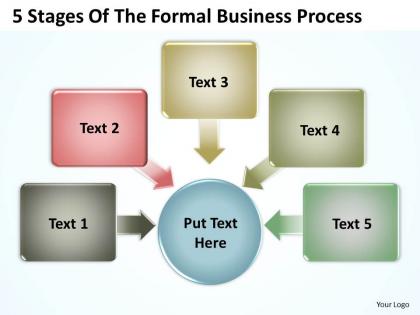
5 stages of the formal business process powerpoint templates ppt presentation slides 812
You must be logged in to download this presentation.




Try Before you Buy Download Free Sample Product
 Impress Your
 Audience
 100%
100% Editable
 Save Hours
 of Time


Hold your audience captive toyour thoughts. Our 5 Stages Of The Formal Business Process Powerpoint Templates ppt presentation slides 812 will ensure undivided attention.
People who downloaded this PowerPoint presentation also viewed the following :
5 stages of the formal business process powerpoint templates ppt presentation slides 812 with all 11 slides:
The harder the test the better we get. Our 5 Stages Of The Formal Business Process Powerpoint Templates ppt presentation slides 812 will rise to any challenge.
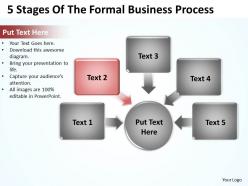
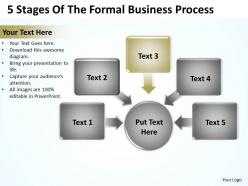
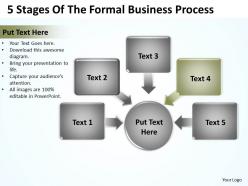
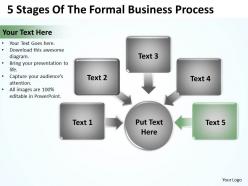
FAQs for 5 stages of the formal business process powerpoint templates ppt
So breaking it down: **Planning** is where you define objectives, set timelines, and figure out your resources. During **Analysis**, you'll gather data and stakeholder input - honestly this part gets messy fast if you skip details. **Design** covers workflows, process mapping, and specs. Then **Implementation** - that's executing everything, training people, managing rollout chaos. **Evaluation** wraps it up by measuring results and finding what needs tweaking. Don't rush analysis and evaluation though, they're basically the foundation for everything else working properly.
Honestly, just map out what's actually happening right now - not what you think should be happening. Walk around and talk to people doing the work. They'll tell you where stuff gets weird or bottlenecks happen. Most companies are way more informal than they realize (which isn't necessarily bad). Figure out what triggers each process and who passes work to who. Maybe shadow someone for a day? Sounds a bit stalker-ish but you'll see things you'd never catch otherwise. Once you document the real workflows, you can tell if you're totally ad-hoc or more structured.
Honestly, scope creep will kill you every time - people get excited and keep adding "just one more thing" until your timeline's completely shot. Getting realistic estimates from teams is brutal too. Half the time technical folks and business people aren't even speaking the same language, which creates these weird communication gaps. Stakeholder buy-in sounds easy but it's not. Oh, and spotting all the risks upfront? Good luck with that. My best advice is nail down your scope early and don't budge on it. Build in buffer time because something always goes wrong. Get everything documented before you start or people will conveniently "forget" what they agreed to.
Dude, you HAVE to keep stakeholders involved during execution - seriously can't stress this enough. They're the ones who'll catch problems before they blow up and give you feedback that actually matters. I've watched so many "flawless" processes crash and burn because people ignored stakeholders during rollout. Plus they're your secret weapon for getting their teams on board. Regular check-ins are key - don't just loop them in at the start and ghost them until the end. Trust me on this one.
Lucidchart's probably your best bet - super easy to use and everyone can jump in to edit. Visio's solid too but feels more corporate-y. There's also draw.io which is completely free and honestly works just as well for most stuff. I mean, you could even use PowerPoint if you're desperate, though that gets messy fast with complex workflows. Oh, and if you're thinking bigger picture down the line, Bizagi can actually automate processes after you map them out. But yeah, start with Lucidchart - I've used it for years and it just works.
Honestly, the best approach is mixing different feedback sources. Start with your team - they're dealing with the actual process every day and will spot issues you'd never see from the outside. Customer surveys are obvious but don't skip them. Also grab some hard numbers like how long stuff takes, error rates, that kind of thing. Employee interviews work great too, though they take more time. The trick is being consistent about it rather than just collecting feedback randomly when problems pop up. Oh, and stakeholder reviews help if you've got multiple departments involved. Set up regular check-ins so you're always catching what's broken and what's actually working smoothly.
KPIs are honestly like your process report card - they show what's actually working vs what you thought would. Without them, you're just guessing if changes moved the needle at all. I learned this the hard way on a project last year. Use them to track efficiency, costs, quality improvements - whatever matters for your goals. The data helps you make real decisions instead of going with gut feelings about what to keep or scrap. Set up regular dashboard reviews so you can catch trends early. Way better than flying blind and hoping for the best.
Think of documentation as your "CYA" policy - it keeps everything transparent across your whole business process. You're creating breadcrumbs so anyone can follow what happened and why. Stakeholders can actually track progress without playing detective or bothering people for answers. Your processes won't just live in Bob's head anymore (we all know how that goes). Focus on documenting the decision points and handoffs first. That's usually where things get murky. Good docs mean you can audit compliance and fix problems way faster. It's honestly a lifesaver when stuff hits the fan.
Honestly, most delays happen because people don't even know when it's their turn to jump in. Set up automated notifications in whatever project management tool you're using - saves so much back and forth. Each stage needs an "owner" who's actually responsible for passing things along on time. Templates help too since everyone gets the same info format. But here's the thing - you really need to map out what each team actually needs before they can start their part. I swear, half the problems disappear once people aren't guessing what they're supposed to receive. The automation piece is clutch though.
Honestly? Culture trumps everything when it comes to business processes. You can design the most amazing workflow, but if your team hates change or works in silos, it's dead in the water. I've watched companies spend months on process design only to have nobody use it. People will either see your new process as actually helpful or just more bureaucratic BS - and that attitude comes straight from your workplace culture. The technical side is usually pretty straightforward. It's getting humans to buy in that's tricky. Before you even start mapping out processes, figure out if your culture will support them. Otherwise you're just wasting time.
Yeah, just layer your industry stuff on top of the basic 5 stages. Healthcare? Throw HIPAA checks into planning. Manufacturing needs safety audits during implementation - that kind of thing. Finance companies I know add risk assessments at literally every stage, which honestly feels like overkill but whatever works for them. The framework itself doesn't change though. Just figure out what you're legally required to do first, then slot those requirements wherever they make sense in your process. Works pretty well once you get the hang of it.
Build feedback loops into each stage - collect data on what's working and what isn't. Have regular team meetings to check performance metrics and spot bottlenecks. The best insights usually come from people actually doing the work, so listen to them. Document what you learn and make improvement suggestions feel normal, not like complaints (learned this the hard way at my last job). Start small though. Test one change at a time so you can measure if it actually helped before moving to the next thing. Don't try to fix everything at once.
Yeah totally! Break those business process stages into smaller pieces and cycle through them in sprints. Planning and analysis become ongoing things instead of just happening at the start. You get feedback way earlier too, which honestly saves so much headache later. Those five stages - planning, analysis, design, implementation, maintenance - they're all still there. You're just moving through them faster with your team. I'd start by figuring out what stage stuff fits into your current sprints. Way less stressful than waterfall, trust me on that one.
Honestly, the right tech makes such a huge difference here. Start with project management tools for planning - they'll map out your workflows and send those annoying reminder notifications (which you'll actually appreciate later). Workflow automation is where things get interesting though - it handles all the boring approval stuff and data entry so people stop making dumb mistakes. Real-time dashboards show you exactly where things are getting stuck. Analytics tools will crunch your performance numbers automatically instead of you doing it manually like some kind of masochist. Just make sure whatever you pick actually talks to each other, otherwise you're back to moving data around by hand.
Skip any stage and you'll create bottlenecks everywhere - costs go up, timelines drag. Without proper planning, you're always putting out fires. Your team gets confused about who does what when organizing gets skipped. Implementation is where I've honestly seen the most spectacular failures, especially if the groundwork sucks. Problems snowball into disasters when monitoring isn't happening. Then there's evaluation - skip it and you just keep making the same stupid mistakes over and over. Here's what I'd do: figure out which stage you think matters least, then focus extra attention there. That's probably where you're blind.
-
Excelent templares
-
Excellent template with unique design.
-
Unique design & color.