


Agile Project Management Sprint For Deployment




Try Before you Buy Download Free Sample Product
 Impress Your
 Audience
 100%
100% Editable
 Save Hours
 of Time


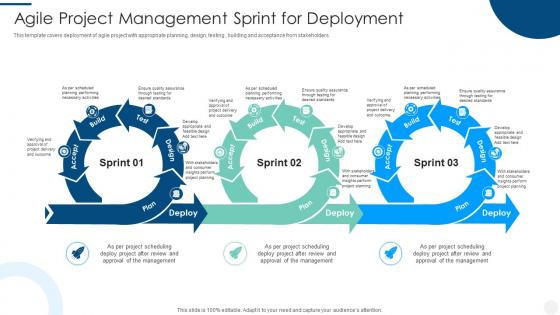
This template covers deployment of agile project with appropriate planning, design, testing , building and acceptance from stakeholders.
People who downloaded this PowerPoint presentation also viewed the following :
Agile Project Management Sprint For Deployment with all 6 slides:
Use our Agile Project Management Sprint For Deployment to effectively help you save your valuable time. They are readymade to fit into any presentation structure.





FAQs for Agile Project Management
Honestly, start with nailing your sprint goal - everything else builds from there. You'll need a solid backlog with story points, plus the usual ceremonies (planning, standups, review, retro). But here's what trips people up - make sure everyone agrees on what "done" actually means first. I've watched entire sprints crash over that simple thing. During planning, get a realistic commitment the team feels good about. Daily standups should focus on blockers, not boring status updates. Review shows stakeholders your work, retro helps you improve next time. Pretty straightforward once you get the rhythm down.
Honestly, sprint planning is a game changer for getting your team on the same page. Everyone knows what they're working on and why it matters. Breaking stuff down into smaller pieces makes everything feel less overwhelming, and you'll spot problems early instead of scrambling later. The best part? When the whole team weighs in on estimates, people actually care about hitting deadlines. I learned this the hard way - don't cram too much in though. Always leave wiggle room because random stuff will come up. Trust me on that one.
Focus on velocity (story points done), whether you're actually hitting sprint goals, and how happy your team is. Velocity's useful for planning but don't obsess over numbers at first - honestly took our team forever to get that right. Sprint goal achievement matters way more since it shows you can deliver real value. Team satisfaction keeps people from burning out. Burndown charts are decent too for catching scope creep early. Track this stuff for 3-4 sprints before making any big changes though.
Honestly, you gotta push back on those mid-sprint changes. Your team needs to stay focused. When something "urgent" pops up (and it always does), make your product owner choose what gets cut to make room. Sprints aren't magic - you can't just cram more stuff in. Document everything so you can hash it out later in retro. I get it, saying no to "just one tiny thing" feels harsh, but that's literally how scope creep murders your velocity. Make those trade-offs super obvious to everyone when changes are actually necessary.
Hey! So the big thing is creating spaces where people actually feel safe to speak up. Daily standups should be real conversations, not just boring status updates - honestly, most teams just phone it in there. Ask good follow-up questions and actually listen when impediments come up. Don't wait until retro to fix communication problems, jump on them right away. Also try setting up casual chat channels or quick check-ins between meetings. Oh, and model the behavior yourself by being open about your own struggles when it makes sense.
Ugh, the usual suspects: scope creep, vague requirements, people getting stuck waiting on other teams. Oh and those "simple" 2-point stories that somehow devour your entire sprint - happens every damn time. Here's what actually works: nail down your definition of done before anything starts. Groom stories properly so you're not scrambling during planning. Daily standups should catch blockers fast, not just be status updates. Honestly though? Don't hesitate to yank stories mid-sprint when things get messy. Way better to ship fewer things that actually work than deliver a bunch of half-baked garbage.
Go with 2 weeks - works for most teams I've seen. Gives you enough time to actually ship something meaningful without dragging on forever. One week sprints? Total chaos unless you're putting out fires. Think about your team's skill level and how gnarly your projects get. Stakeholders also need regular updates, so factor that in. Running over constantly or finishing super early? Time to adjust. Stick with whatever length you pick for at least 2-3 sprints though. Your team needs consistency to get better at estimating stuff.
So basically it's when your team stops to look at what just happened in the sprint - like what went well and what sucked. You identify stuff to start doing, stop doing, or change up next time. It's not just complaining (okay, sometimes it is lol) but you should actually come out with specific things to try. Honestly the hardest part is following through instead of just talking about the same problems every two weeks. Don't try to fix everything at once though. Pick like one or two realistic changes and see if they actually help.
Start your sprint planning by pulling up the project roadmap first. Make sure your product owner explains the "why" behind each story - honestly, this step gets skipped way too often and then everyone's confused later. Don't just focus on what you're building, connect it to actual project wins. Your sprint goal should be specific and tie to something measurable. We always do this quick check at the end: "if we crush this sprint goal, what milestone do we unlock?" Sounds obvious but you'd be surprised how often teams skip this reality check.
Jira and Azure DevOps are probably your safest picks - most companies use them for a reason. Monday.com is solid too. If you want something dead simple, Trello works but honestly gets limiting once your team hits like 5+ people. Linear is what all the cool startups are using now and it's actually pretty slick. Way faster than Jira's clunky interface. Truth is, whatever tool your team will consistently use beats the "perfect" solution that sits empty. I'd grab free trials of 2-3 options and see what clicks with everyone before you commit.
Honestly, daily standups are just the start - you gotta get people actually talking about blockers, not just rattling off what they did yesterday. I've watched so many teams where devs and designers might as well be on different planets until crunch time hits. Pair up your developers with QA during stories. Get your product owner in the room for refinement sessions. Those random Slack pings or quick conversations by someone's desk? That's where the magic happens. Oh, and try one cross-functional working session per sprint. See what breaks loose - usually it's more than you'd expect.
Honestly, aim for about 10% of your sprint time on backlog refinement - like a full day if you're doing 2-week sprints. Break those user stories into bite-sized pieces and nail down acceptance criteria before planning meetings. Trust me, I've watched teams wing it and then panic when stories are half-baked nonsense during planning. Don't just loop in your PO and scrum master either. Developers and testers catch things you'll miss every time. Try to stay 2-3 sprints ahead with refined stories so you're not constantly scrambling.
So Scrum does these fixed sprints - usually 2-4 weeks with all the ceremonies and stuff. Kanban's totally different though, no sprints at all, just continuous work with limits on how much you can have going at once. Then you've got things like SAFe which has these longer "Program Increments" that fit multiple sprints inside them. XP goes the other way with super short cycles but they're obsessed with the technical side. Real talk though? Most teams just mix whatever works for them anyway. I'd say start with basic 2-week Scrum sprints - gives you structure and clear endpoints. You can always tweak it later once you figure out your team's vibe.
Remote sprints need way more structure, honestly. Daily standups with cameras on are non-negotiable - async updates kill team energy. Tools like Miro work great for planning sessions so nobody gets left out. You'll want overlapping hours, especially for key ceremonies. Communication becomes everything since you can't just walk over to someone's desk. Track velocity closer than you normally would. Most teams I've seen need tighter, smaller sprints at first - the remote thing throws off估mation pretty badly initially. Oh, and over-communicate your goals constantly.
Honestly, PowerPoints are the worst for these things. What's worked for me is setting up little "demo marketplaces" where team members have booths showing off features - stakeholders just walk around and actually interact with stuff. Way better engagement. You could also do those "day in the life" walkthroughs, showing how real users would experience your sprint work from beginning to end. Story mapping sessions are solid too. Oh, and "bug hunt" sessions where stakeholders try breaking things? People love those for some reason. Even just async video demos work if folks can't make meetings. Pick one and try it next sprint - you'll see the difference immediately.
-
Very unique, user-friendly presentation interface.
-
Great experience, I would definitely use your services further.