


Agile Project Management Frameworks Scaled Agile Framework




Try Before you Buy Download Free Sample Product
 Impress Your
 Audience
 100%
100% Editable
 Save Hours
 of Time


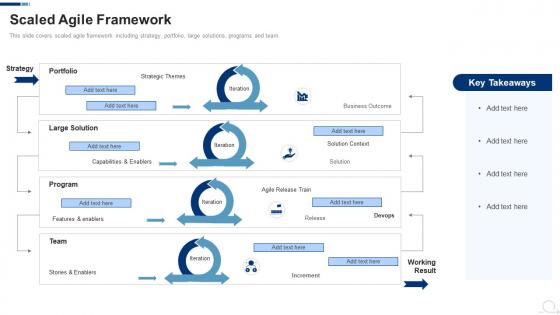
This slide covers scaled agile framework including strategy, portfolio, large solutions, programs and team.
People who downloaded this PowerPoint presentation also viewed the following :
Agile Project Management Frameworks Scaled Agile Framework with all 6 slides:
Use our Agile Project Management Frameworks Scaled Agile Framework to effectively help you save your valuable time. They are readymade to fit into any presentation structure.





FAQs for Agile Project Management Frameworks
So there are four main values in the Agile Manifesto - people over processes, working software over documentation, customer collaboration over contracts, and responding to change instead of rigid plans. Yeah, there's technically 12 principles too but nobody really memorizes those lol. The whole point isn't that documentation sucks or anything. It's more like - what actually gets value to your customers faster? You'll see this stuff come up in standups and sprint planning all the time. My advice? Just keep asking yourself if whatever you're doing helps deliver working software more effectively.
So traditional project management is super linear - you plan everything upfront, then execute step by step like you're following a recipe. Agile throws that out the window. Instead you work in short bursts, constantly get feedback, and actually expect things to change (weird concept, right?). Think blueprints vs. sculpting clay. With Agile, your customers aren't just involved at the start and finish - they're part of the whole journey. If your requirements might shift or you need stuff delivered faster, definitely look into Scrum or other Agile methods.
So there are three key roles you need to know about. Product Owner handles what gets built - they're managing the backlog and making those brutal "yes/no" decisions on features. Scrum Master is more like a coach than a boss, removing roadblocks and keeping meetings on track. Development Team does the actual building, and honestly they work best when they self-organize without traditional management breathing down their necks. Oh, and define these roles super clearly from the start - I've seen teams struggle for months because nobody knew who was supposed to do what.
Get your leadership on board first and train your teams properly - you can't just wing this stuff. Make sure your Product Owner and Scrum Master actually know what they're doing (seriously, half-assed Agile is painful to watch). Kanban's easier to start with honestly - just map out how you currently work, then improve it. The hardest part? Getting everyone to actually collaborate and be transparent about problems. Pick one team to test it out. You'll mess up at first, that's normal. Don't cherry-pick the fun parts though - either commit to the whole framework or try something else.
Start with velocity and burn-downs - they're super easy to track and show you right away how your team's doing. Story points per sprint, basic burn-down charts for progress tracking. Cycle time's good too (how long stuff takes start to finish). Here's the thing though - definitely track team happiness scores. I know it sounds weird but miserable developers write crappy code, trust me. Sprint goal success rate tells you if you're actually shipping what stakeholders want vs just staying busy. Oh and obviously customer satisfaction plus defect rates matter since, you know, working software is kinda the whole point. Those first two will get you started though.
So daily standups are honestly game-changers - everyone knows what's happening and can actually ask for help when they're stuck. Sprint planning gets the whole team debating priorities instead of working in isolation for weeks. Plus you're sitting with developers, designers, product people who talk to each other constantly. The retrospectives are where teams figure out what's actually broken (which is surprisingly useful). If you're not doing standups yet, just try 15-minute ones first. Way easier than overhauling everything at once. It's wild how much miscommunication disappears when people check in daily.
Honestly, the biggest pain points are usually people hating change and crappy training. Everyone's so used to waterfall that switching feels weird. Most companies just throw teams into "Agile" without actually teaching the fundamentals - so you end up with this fake version that doesn't work. Daily standups turn into awkward status meetings, sprint planning drags on forever, and executives still want those detailed project timelines from six months out. Oh, and finding a decent Scrum Master is harder than you'd think. Start with just one team that's actually excited about it, nail the basics first, then expand from there.
Yeah totally doable! Just gotta be way more deliberate about staying connected. Move your standups and retros to Zoom - honestly the hardest part is getting everyone to actually show up consistently. Digital boards like Jira become your lifeline since nobody can just glance over at the physical board anymore. Time zones will mess with you though, so record important meetings. I'd rather over-communicate than have people feel left out. Oh and invest in decent collaboration tools from the start - trust me on that one. Map out what meetings actually need to happen live versus what can be async.
Jira's probably your best bet for sprint planning, though honestly my last team used Trello and it worked fine too. Azure DevOps is solid if you're already in the Microsoft ecosystem. Slack keeps everyone in the loop for standups - way better than endless email chains. You definitely want your project tool talking to GitHub or whatever you use for code. My biggest mistake was trying to set up this perfect workflow from day one... just pick something simple that integrates well and build from there. Half the battle is just getting your team to actually use whatever you choose!
So basically, you're shipping working software every 1-2 weeks instead of waiting months to see if anything actually works. Problems get caught early, which is huge. User feedback comes in constantly, so you can pivot before you've wasted tons of time. Way better than waterfall where you build everything then cross your fingers - that approach is honestly terrifying. Each sprint builds on the last one. You start small, test fast, and avoid those horror stories where teams spend half a year building something users hate. It's pretty straightforward but makes all the difference.
Honestly, you gotta be ruthless about sprint boundaries. Make your product owner the bad guy - they filter what's actually urgent vs nice-to-have stuff. Those "quick additions" are never quick, trust me on that one. Regular backlog grooming sessions help since everyone can hash out changes together. But here's the key: show stakeholders exactly what adding features costs. Like, "sure we can build that, but here's what gets pushed back." Say no more often and spell out the trade-offs. It's uncomfortable at first but saves you tons of headaches later.
Build feedback loops straight into your sprints instead of waiting forever for release. Show real users working software during sprint reviews - honestly, too many teams just talk in circles without including actual customers. Set up user interviews, beta groups, or basic feedback forms. Whatever works for your situation. Treat customer input like regular backlog items. Prioritize and estimate that stuff, then act on it during sprint planning. The trick is making feedback a routine part of your process, not an afterthought when you're scrambling to fix things.
So backlog refinement is just constantly reviewing and breaking down your user stories before they hit a sprint. The whole team should jump in - not just the product owner doing everything alone. You're basically estimating story points, cleaning up acceptance criteria, and making sure nothing's a complete mess when planning time rolls around. Honestly? It's kind of tedious but saves your butt later when you're not scrambling to figure out what a story actually means. I usually tell teams to spend like 10% of their sprint on this stuff. Otherwise your planning meetings turn into these brutal 4-hour sessions where nobody knows what's going on.
Totally! Agile isn't just for tech nerds. The whole thing is basically about working in small chunks and getting feedback before you go too far down the wrong path. Marketing teams do campaign sprints, construction breaks projects into phases - even HR uses it for hiring. Those daily check-ins feel super awkward at first but honestly they keep everyone on the same page. Just focus on the main stuff: talk to people constantly, pivot when shit changes (and it will), and tackle whatever gives your users the biggest win first. Works pretty much anywhere if you think about it.
Startups get way more out of Agile, honestly. You're already used to everything being chaotic, so pivoting when your idea sucks isn't a big deal. Plus you can test stuff fast without wasting money you don't have. Big companies? They struggle with it more because there's all this bureaucracy to fight through first. Don't get me wrong - they still benefit from breaking down those weird department walls and staying competitive. But getting everyone on board takes forever. My advice? If you're startup life, just go all-in on the quick iterations. Corporate world needs leadership buying in before anything actually happens.
-
Really like the color and design of the presentation.
-
I have just started downloading templates for my presentations and I must say this is a great design. It helped accelerate my presentation design process and made it more visually appealing.