


Ai pitch deck ppt template




Try Before you Buy Download Free Sample Product
 Impress Your
 Audience
 100%
100% Editable
 Save Hours
 of Time


Our AI Pitch Deck Ppt Template are topically designed to provide an attractive backdrop to any subject. Use them to look like a presentation pro.
People who downloaded this PowerPoint presentation also viewed the following :
Ai pitch deck ppt template with all 31 slides:
Use our AI Pitch Deck Ppt Template to effectively help you save your valuable time. They are readymade to fit into any presentation structure.


FAQs for Ai pitch
So for your AI pitch deck, you'll want the standard startup stuff but with AI-specific details. Problem/solution is obvious, but really dig into what data you're using and how your AI works - investors get annoyed by black box explanations. Show your team's ML background, market size (AI is hot right now), and what makes you different. The demo part is crucial - actual AI performance, not just pretty mockups. Also cover your unit economics and scaling plans for data/models. I'd tackle any bias or ethics stuff head-on too, honestly investors expect that now. Wrap up with exactly what funding you need and when.
Dude, visuals are everything for AI pitches. Flowcharts showing your data process? Yes. Before/after shots proving impact? Essential. Clean infographics beat walls of text every time. Skip the cheesy stock photos though - seriously, we've all seen enough robot handshakes to last a lifetime. Screenshots of your actual product hit way harder. Interactive demos are incredible if you can swing them technically. Here's the thing: your AI might be genius, but if investors can't picture what it does or why they should care, you're toast. Make the abstract stuff concrete and you'll nail it.
Honestly, the biggest thing I see people mess up is diving into the technical stuff way too fast. Like, nobody cares about your neural network on slide 3 - they want to know what problem you're actually solving first. Focus on the business side, then show how AI fits in. Don't oversell it either (those cringe demos always backfire). Keep it simple, use real data to show results, and just be upfront about what doesn't work yet. Problem first, value second, then stick all the nerdy details in an appendix or something.
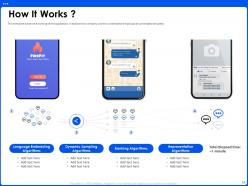
Dude, skip the technical stuff - nobody cares how your algorithms work. Talk about what problems you're actually solving instead. I like using simple comparisons, like how machine learning is basically just learning from mistakes the way we do. Visual before/after examples work really well too. Honestly? The second you start nerding out on code, you've lost them. Show real results with actual numbers instead. Maybe throw in one slide about "how it works" but keep it super high-level. Spend way more time on why this matters for their business. That's what they're really there for anyway.
Go visual for sure. Investors want to see your AI in action - tons of diagrams, flowcharts, screenshots of the actual interface. Complex AI stuff needs to be instantly clear, you know? Keep text super minimal, just bullet points and key metrics that back up what they're seeing. Honestly, cramming paragraphs into slides is presentation suicide anyway. Show the workflow, demo the results, make it visual. Brief headlines are fine but the graphics should do most of the talking. It's way easier to grasp AI concepts when you can actually watch them work.
Dude, treat your pitch deck like you're telling a story. Start with the problem - that's your villain. Then your AI solution swoops in as the hero. I know it sounds cheesy, but it actually works. Open with pain points they'll recognize, show real customer examples (those are your supporting characters), then paint what life looks like after. Each slide should build tension toward your ask - that's your climax moment. Oh, and definitely end with solid metrics or testimonials. Nothing kills a good story faster than people thinking you made it all up.
Start with your data quality stuff - accuracy, precision/recall, all that technical performance data. Investors always dig into training data volume too, so have those numbers ready. Usage metrics matter just as much though. Active users, API calls, how well you're retaining people. Revenue per user is clutch for the business side. Also compute efficiency if you've got it - honestly, AI costs scare the hell out of investors lately. The real trick? You need both sides working. Technical performance shows your AI isn't garbage, but you also gotta prove people will actually pay for it. That's the combo they're looking for.
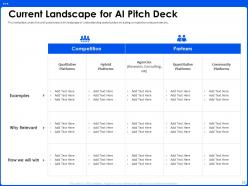
Put your competitive analysis around slides 4-6, right after explaining your solution. Show investors you actually know the market - I've watched so many founders bomb this part by throwing together some lazy comparison table. Don't be that person. Break down your specific technical edges - maybe it's better accuracy, speed, or you've got data nobody else has. Map out direct competitors (other AI tools) plus indirect ones (whatever manual stuff you're replacing). A positioning chart works great if you can swing it. End by hammering home why your approach wins.
Honestly, market research is what makes or breaks your AI pitch deck. It proves there's real demand for your solution and shows you actually get your customers. Without it? You're just another startup throwing around AI buzzwords. The research helps you nail down market size, justify your pricing, and explain why your approach crushes the competition. Plus it makes your problem statement way more convincing when you've got actual data backing it up. Oh and definitely start collecting this stuff early - trying to scramble for research right before presenting is a nightmare. Trust me on that one.
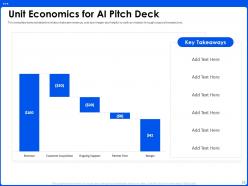
So for your AI pitch deck, you'll want to hit three main things investors care about: data architecture, unit economics, and your tech infrastructure roadmap. Most AI startups totally bomb on the cost scaling part - like their expenses just explode when data volumes grow. You need to show them concrete numbers on how performance gets better with scale, your cloud strategy, and how adding users actually makes things cheaper per unit. The holy grail? Network effects where more users literally make your AI smarter. Oh and definitely include specific milestones with real numbers - investors hate vague promises.
Talk about what your AI actually does differently - like your specific training methods, unique data sources, or how accurate it is compared to others. Everyone's doing "machine learning" now, so that won't impress anyone. Maybe yours learns in real-time or works with messy, limited data? Those details matter. Honestly, I've seen too many pitches that just throw around buzzwords. Connect these technical bits back to real business results though - investors need to see the money angle. Your proprietary algorithms mean nothing if you can't show they solve actual problems better than the competition.
Dude, your team slide can make or break everything in AI - way more than regular startups. Investors are skeptical about whether you can actually deliver on all those technical promises you're making. Skip the generic "10 years experience" fluff and get specific about which models you've built or what AI problems you've tackled. Advanced degrees help, plus any exits or big wins at tech companies. I've seen solid ideas die because the team looked weak on paper (brutal but true). Really focus on proving your technical chops and domain knowledge - that's what they're hunting for.
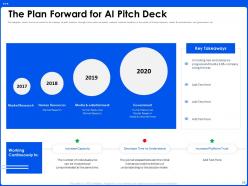
Dude, be super specific with your ask. Don't do that weak "let's chat sometime" nonsense - I've watched so many good decks die that way. Say exactly what you want: "$2M Series A by Q2" or "30-day pilot starting next month." Match it to who you're talking to too. Investors want numbers and timelines, clients want to see demos. Oh and honestly? Always throw in your contact info with a timeframe. People are lazy - if you don't tell them exactly how to move forward, they won't. Make saying yes feel obvious and easy.
Don't just dump all your testimonials on one slide - that's amateur hour. Sprinkle them throughout instead. Right after you present the problem, hit them with a killer quote that backs up the pain point. When you get to your solution slides, throw in some case study numbers. Honestly, metrics crush vague praise every time - "boosted efficiency 40%" destroys "customers love us." Drop a logo slide early if you've got big names. Makes you look legit instantly. Keep quotes super tight and relevant to whatever you're explaining on that specific slide. The whole thing should feel seamless, not like you remembered testimonials existed five minutes before presenting.
Definitely focus on generative AI and multimodal stuff - like how ChatGPT can handle text, images, voice, all that. AI agents are big right now too, ones that actually do things instead of just chat. Edge AI is getting crazy investment attention because of the privacy angle and speed improvements. Everyone's paranoid about AI safety now so mention your responsible practices (even if it feels obvious). The trick is showing real use cases, not just buzzword soup. I swear half the decks I see are just "AI will revolutionize everything" with zero substance. What problems are you actually solving? That's what they want to hear.
-
Presentation Design is very nice, good work with the content as well.
-
Really like the color and design of the presentation.
-
Enough space for editing and adding your own content.
-
Easily Understandable slides.
-
Great quality slides in rapid time.
-
Graphics are very appealing to eyes.
-
Informative presentations that are easily editable.
-
Excellent Designs.