


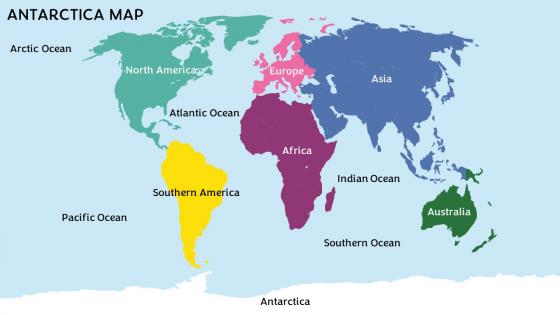
Antarctica Map Powerpoint Maps Slide




Try Before you Buy Download Free Sample Product
 Impress Your
 Audience
 100%
100% Editable
 Save Hours
 of Time


Highlight your global presence and market coverage with our Antarctica Map Powerpoint Maps. This template showcases your statistics, global strategies, and adaptability to different countries. It also aids in demonstrating global marketing reach and identifying international market opportunities. Trust our Antarctica Map Powerpoint Maps to support your business.
People who downloaded this PowerPoint presentation also viewed the following :
Antarctica Map Powerpoint Maps Slide with all 6 slides:
Use our Antarctica Map Powerpoint Maps Slide to effectively help you save your valuable time. They are readymade to fit into any presentation structure.





FAQs for Antarctica Map
Antarctica's getting hit hard by climate change - all that ice melting is crazy to watch on the news. Global temps are causing massive ice loss, which jacks up sea levels everywhere and messes with ocean currents that control our weather. More research stations and tourists are showing up too, which isn't great for the untouched ecosystems there. Ocean acidification from CO2 is destroying marine life. Honestly, it's pretty depressing how fast it's happening. NASA has these ice monitoring reports if you want to see the actual data - kind of a rabbit hole though.
Dude, Antarctica's getting hammered right now. Ice sheets are melting way faster, especially on the western side where temps have shot up like crazy. All that melting ice? It's raising sea levels everywhere - including wherever you live probably. The wildlife situation is honestly heartbreaking though. Penguin colonies are shrinking because their sea ice is disappearing, and krill numbers are dropping (which screws over basically every animal down there since they all eat krill). Even seals can't find proper spots to breed anymore. Oh, and if you're into data like I am, NASA posts all their ice monitoring stuff online - the year-to-year comparisons will blow your mind.
So basically Antarctica is like the world's giant water pump. When seawater freezes there, all the salt gets left behind making this super dense, cold water that just sinks straight down. Then it flows along the ocean floor all the way to other continents - honestly crazy that ice in Antarctica affects currents near like, Africa or whatever. This Antarctic water carries oxygen and nutrients everywhere, feeding sea life and keeping global temps in check. Oh and if you're looking at climate stuff, definitely check how Antarctic ice changes mess with this whole system.
So the big ones are emperor penguins, Weddell seals, krill, and icefish. Penguins do that whole huddling thing and have crazy thick feathers. Seals can literally hold their breath for over an hour under ice - which sounds terrifying to me honestly. But here's the coolest part: some fish have actual antifreeze proteins in their blood. Like, nature just said "let's make biological antifreeze" and did it. Krill are everywhere and basically feed everything else down there. You should definitely look into those antifreeze adaptations though - they're genuinely mind-blowing.
Oh totally, human activity is messing with Antarctica way more than you'd think. Climate change from our emissions is melting ice sheets and screwing with penguin colonies - it's crazy how something happening here affects wildlife thousands of miles away. Research stations and tourism leave their mark too. The fishing industry has basically wiped out tons of krill and toothfish. Plus there's microplastics everywhere now, even down there. Fuel spills don't help either. Check out the Antarctic Treaty reports if you want the full picture - they're actually pretty good at tracking all this stuff.
Okay so if ALL of Antarctica melted, we're talking 200 feet of sea level rise - but that's like worst case over centuries, don't panic yet. The sketchy part is West Antarctica, which is already unstable and could add several feet just this century. Miami and Manhattan would be pretty screwed tbh. What's wild is how much it's accelerating compared to what scientists thought even 10 years ago. I mean, even partial melting hits coastal cities hard. If you're buying property near water or whatever, maybe check the IPCC reports first? The rate of change is honestly the scariest part.
So basically Antarctica is like this huge frozen library of climate history. Ice cores there go back hundreds of thousands of years - you can literally see ancient CO2 levels and temps. The stations track current ice melt too, which is kinda terrifying when you think about sea levels. What's cool is Antarctica doesn't have much local pollution, so the atmospheric readings are super clean. I saw some visualizations recently comparing today's melt rates to historical data and honestly? It's pretty sobering stuff. These stations are basically our best window into how fast everything's changing.
So you're looking at the Antarctic Treaty System - it's this whole collection of agreements that keeps Antarctica peaceful. The main 1959 Antarctic Treaty banned military stuff and nuclear testing there. Pretty wild that 54 countries actually managed to agree on this. There's also the 1991 Environmental Protocol that turned Antarctica into a "natural reserve." Oh, and if you're dealing with ocean stuff, check out the Convention for Antarctic Marine Living Resources too. Honestly depends what your project's about, but those are the big ones you'll probably need.
Antarctica's basically this huge natural lab where everything's frozen and untouched. The ice cores are insane - they hold climate data going back like 800,000 years. It's literally Earth's diary just sitting there waiting to be read. The organisms down there have adapted in ways you won't see anywhere else, which is pretty wild when you think about it. NASA even tests Mars equipment in the dry valleys because they're so similar! Honestly, if you're into climate science or astrobiology, Antarctic research is where it's at. They're figuring out both our planet's history and what life might look like elsewhere.
Antarctica's basically this insane story of people being stupidly brave in the worst conditions ever. The "Heroic Age" (1897-1922) had Scott's doomed South Pole race and Amundsen actually making it there first in 1911. Shackleton's Endurance thing is legendary - those photos will blow your mind, honestly. Later it became this Cold War research battleground until the 1959 Antarctic Treaty turned it into a peaceful science zone. Pretty cool how countries that hated each other could agree on that. For your work thing, definitely highlight how the international cooperation model there influenced other global treaties.
So Antarctic animals are actually crazy tough because they've had millions of years to adapt to that hellscape. Fish there have literal antifreeze proteins in their blood - like, how wild is that? Algae can somehow photosynthesize under thick ice too. The whole food web basically runs on krill feeding everything from tiny penguins to massive whales. During the worst storms, these species just dial their metabolism way down to almost zero, then snap right back when things get better. Honestly, it's a perfect example of how being super specialized beats trying to do everything okay-ish when your environment wants to kill you.
Dude, Antarctica's brutal. Temps hit -80°F and storms come out of nowhere - total whiteouts that'll strand you for days. The altitude at some stations will wreck you too. Getting supplies is a joke since you've only got those short summer windows, and everything breaks constantly in the cold. Medical emergency? Good luck waiting for evacuation. Honestly, the isolation might be the worst part - I've heard it really gets to people after a while. If you're serious about this, triple your budget and have backups for your backups. Trust me on that one.
Oh man, microplastics are absolutely wrecking Antarctica's food chain right now. Krill eat them, fish eat the krill, seabirds eat the fish - classic bioaccumulation nightmare. The particles mess with how animals feed and carry nasty chemicals too. Here's what's crazy though: researchers are finding this stuff in the most remote spots imaginable. Ocean currents just carry pollution from literally thousands of miles away. Since Antarctic food webs are pretty simple, contamination spreads fast through everything. Honestly if you're doing any marine work there, you should definitely sample for microplastics. We need way more data.
Oh nice question! The Antarctic Treaty System basically turns the whole continent into this massive science and peace reserve. Marine Protected Areas handle the coastal stuff - they limit fishing and shipping around there. Environmental protocols are crazy strict though, like you literally can't get within 5 meters of penguins (which honestly seems reasonable). There's a Committee for Environmental Protection that watches over everything. One thing that might matter for you - any research activity down there needs an environmental impact assessment first. No wiggle room on that one, from what I've heard.
So krill are literally what keeps the whole Antarctic food web running. These tiny shrimp-looking things swarm together in huge groups that whales, seals, and penguins all depend on for food. Blue whales can scarf down millions at once - which honestly blows my mind every time I think about it. They're like the middleman between tiny plankton and bigger animals that can't catch something that small. If krill populations start crashing, you'll see the entire ecosystem fall apart pretty fast. That's why scientists watch krill numbers so closely.
-
Wow! The design and quality of templates on SlideTeam are simply the best.
-
Love how there are no boring templates here! The design is fresh and creative, just the way I like it. Can't wait to edit and use them for my extended projects!