

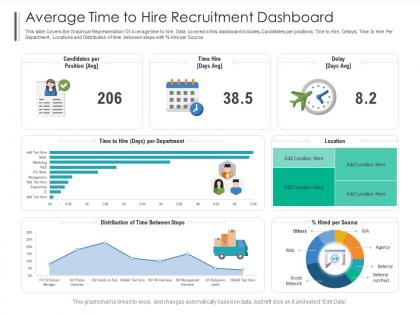
Average time to hire recruitment dashboard powerpoint template




Try Before you Buy Download Free Sample Product
 Impress Your
 Audience
 100%
100% Editable
 Save Hours
 of Time


Our Average Time To Hire Recruitment Dashboard Powerpoint Template are topically designed to provide an attractive backdrop to any subject. Use them to look like a presentation pro.
People who downloaded this PowerPoint presentation also viewed the following :
Average time to hire recruitment dashboard powerpoint template with all 2 slides:
Use our Average Time To Hire Recruitment Dashboard Powerpoint Template to effectively help you save your valuable time. They are readymade to fit into any presentation structure.
FAQs for Average time to hire recruitment
Honestly, it comes down to a few main things. Role complexity is huge - some positions just take longer to evaluate. Then you've got industry stuff - tech companies move super fast since they've got their processes down, but finance and healthcare? They're stuck doing endless compliance checks and background screenings. Company size plays into it too. Startups can literally hire someone in a few days while big corporations need weeks just for internal approvals (so annoying). But here's the thing - if you're hiring for an in-demand skill, candidates disappear fast. You'll lose good people if you drag your feet. I'd check what similar companies in your space are doing timeline-wise.
Track from job posting to offer acceptance - that's your real time to hire metric. Companies screw this up all the time by only measuring from application date, which is pretty useless tbh. Your ATS can handle the tracking, or honestly just use a spreadsheet. Break it down by department and seniority level because obviously a VP hire takes forever compared to junior roles. Calculate monthly and watch for trends instead of obsessing over weird outliers. Oh and start tracking now if you haven't already - can't fix what you don't measure, right?
Honestly, good employer branding is a game-changer for cutting down hire time. People already want to work for you before jobs even open up. They apply faster, and you get better candidates who've basically pre-screened themselves - they know what you're about. Interview processes move quicker too since candidates aren't wasting time figuring out if you're a legit company or some sketchy operation. Get your culture out there on LinkedIn and Glassdoor. I mean, everyone checks those anyway. It's like having candidates come to you instead of hunting them down.
Dude, time to hire is way more important than most companies realize. Top candidates will literally bounce if you take forever - I've watched great people accept other offers because some company couldn't get their act together. When you drag things out for weeks, it screams disorganization. Plus candidates definitely gossip about bad hiring experiences, so your reputation takes a hit too. Quick decisions show you respect people's time and actually know what you want. Set realistic timelines from day one and stick to them. Trust me, the good candidates notice this stuff.
Dude, the biggest time-saver is actually sticking to your timelines - tell candidates you'll respond in 3 days, then actually do it. Most companies drag things out because nobody's really in charge, so pick one person to own each hire completely. Phone screens first to filter out obvious nos before wasting time on full interviews. Also, this sounds basic but have your hiring managers nail down exactly what they want BEFORE posting the job - I swear half the delays happen because they're figuring it out mid-process. Structured scorecards help too. Look at your slowest hire from last year and see where it got stuck.
Oh totally, company size makes a huge difference. Startups? Maybe 2-3 weeks max. Big corporations though - you're looking at like 6-8 weeks, sometimes longer if they're really bureaucratic. It's honestly kind of ridiculous how slow some places are. Basically the more people who need to sign off, the longer it drags out. Plus bigger companies have all these compliance hoops to jump through. Startups can just be like "cool, you're hired" after one interview. If you want things to move faster, I'd streamline who needs to approve what and actually stick to deadlines.
Definitely grab an ATS first - Greenhouse or BambooHR are solid picks that'll automatically track your hiring metrics. Calendly is a game-changer for scheduling (honestly saves so much sanity). For initial screenings, HireVue speeds things up since you don't need to coordinate live calls right away. Oh, and LinkedIn Recruiter or Seekout are pretty good for finding candidates faster than manual searches. Just don't go overboard - I'd stick with maybe 3 tools max that actually play nice together. Otherwise you'll spend more time managing software than actually hiring people.
Honestly, your company culture is probably the biggest factor here. I've noticed streamlined cultures hire like 30-40% faster than places drowning in red tape. Does your team love consensus-building? Yeah, that'll slow things down - everyone and their mom needs to weigh in. Some companies are just stuck in "we've always done it this way" mode, which is frustrating. Risk-tolerant cultures let managers actually make decisions quickly. Remote companies usually move faster too since they skip the whole in-person coordination dance. Take a hard look at your approval process and cut the unnecessary BS steps.
Honestly, you want that sweet spot between rushing and dragging things out forever. Rush through in a few days and you'll miss all the red flags - then wonder why people quit after two weeks. But take months? Good candidates will bail because they think you're disorganized (and they're probably right). Around 2-3 weeks works for most jobs. Gives you time to actually figure out if someone's a good fit without losing their interest. I'd track your hiring speed against how many people quit in their first 90 days - that'll tell you if you're moving too fast or slow.
Oh totally, location makes a huge difference in hiring timelines. Cities are usually faster - bigger talent pools, you know? Rural spots take way longer since there's fewer people around and candidates might need to move. I've noticed different countries have their own weird employment laws that slow things down too. Plus salary negotiations get tricky when cost of living varies so much between places. Honestly, I'd just plan for extra time if you're hiring somewhere challenging. Better to overestimate than get stuck waiting around for the right person to apply.
Honestly? Most companies shoot themselves in the foot with vague job posts. Then they're shocked when hundreds of random people apply. The approval process is usually a nightmare too - like, why do you need six different people interviewing for one role? I've watched great candidates walk away because some company took three weeks just to schedule a second interview. Communication is terrible across the board. You want good people? Write clear job descriptions, stick to 3-4 interviews max, and actually respond to candidates within a few days. Otherwise you're just wasting everyone's time, including your own.
Honestly, hiring managers can be your biggest bottleneck if they're not on board from day one. I've seen it happen so many times - they'll drag their feet reviewing resumes or suddenly change what they want mid-process. Total nightmare. But flip side? When they actually show up and define requirements clearly upfront, everything moves way faster. They need to commit early, not just when it's convenient. Set hard deadlines for feedback and stick to regular check-ins. Otherwise you're just spinning your wheels waiting for them to get back to you.
Ugh, yeah - dragging out hiring is basically sabotage. Your current team gets slammed covering extra work, which leads to burnout and crappy quality. I've seen good people bounce because they're constantly drowning. You're also losing out on whatever skills that new person would've brought in. The whole thing snowballs fast - stressed teams screw up more, projects drag on forever. Honestly? I'd rather hire someone who's like 80% perfect than let a role sit empty for months. Set deadlines for yourself and actually stick to them, even if you have to bend on some requirements.
Honestly, just pull your last 6 months of hiring data and see where things slow down. Track stuff like time-to-interview and response rates - boring but super helpful. I watched one team realize their third interview round was totally pointless and they cut their whole process in half! Look at conversion rates between each stage too. Seasonal patterns are weird but worth checking. Maybe you're losing people during certain months for reasons you haven't thought of. Map out how many days each stage actually takes vs what you think it takes. The numbers usually tell a different story than what's in your head.
Look, the fastest companies I've seen don't actually rush - they just cut out all the BS waiting around. They get budget approved upfront, know exactly what they want, and don't sit on decisions between rounds. Structured interviews are huge too, not those weird "casual chats" that go nowhere. Oh, and they let hiring managers actually hire instead of requiring seventeen approvals from people who've never met the candidate. Honestly, just map out where candidates are sitting around doing nothing - that's where you're bleeding time.
-
Thanks for all your great templates they have saved me lots of time and accelerate my presentations. Great product, keep them up!
-
Content of slide is easy to understand and edit.
-
Designs have enough space to add content.
-
Best Representation of topics, really appreciable.
-
Thanks for all your great templates they have saved me lots of time and accelerate my presentations. Great product, keep them up!