


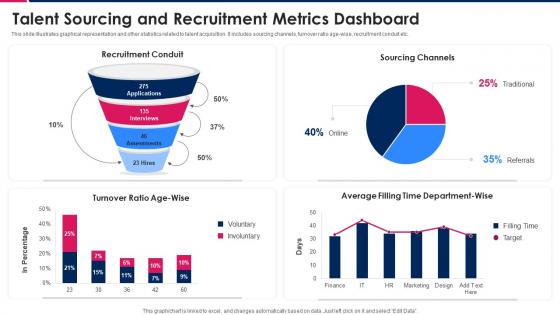
Talent Sourcing And Recruitment Metrics Dashboard




Try Before you Buy Download Free Sample Product
 Impress Your
 Audience
 100%
100% Editable
 Save Hours
 of Time


This slide illustrates graphical representation and other statistics related to talent acquisition. It includes sourcing channels, turnover ratio age-wise, recruitment conduit etc.
People who downloaded this PowerPoint presentation also viewed the following :
Talent Sourcing And Recruitment Metrics Dashboard with all 2 slides:

FAQs for Talent Sourcing And
Honestly, the whole landscape's shifted big time. Remote work isn't going anywhere - people expect that flexibility now. Companies are finally ditching the "must have degree" thing and focusing on actual skills instead. AI recruiting tools are everywhere, which is kinda wild if you think about it. But here's the thing - candidate experience matters more than ever because good people have choices. Nobody's putting up with those nightmare application processes anymore. Oh, and diversity hiring is huge right now. Benefits packages are getting creative too since salary alone doesn't cut it. My take? Map out the skills you really need and don't limit yourself geographically.
Honestly, tech can fix most of your recruiting headaches if you use it right. AI chatbots give instant responses so candidates aren't left wondering. Automated scheduling stops that annoying back-and-forth email dance - seriously, nobody has time for that anymore. Video interviews save everyone from unnecessary commute stress. Make sure applications work on phones since that's where most people apply anyway. The trick is keeping things human while speeding up the boring stuff. I'd start with whatever's causing your biggest complaints. Usually it's slow communication or scheduling nightmares.
So yeah, employer branding is huge these days. Good candidates actually do their homework before applying - they're checking out your Glassdoor reviews and stalking your LinkedIn page. You want them to see what working there is really like, not just the boring job description stuff. It's kinda like online dating honestly - people want to know what they're signing up for! Strong branding means better candidates who already get excited about your company culture. Makes your job way easier when they're already sold on you. I'd start with getting real employees to share their stories online.
Honestly, start with your employer brand before anything else. Post real stuff about your company culture and employee stories on LinkedIn, Instagram, Twitter - people can smell fake corporate BS from a mile away. Behind-the-scenes content works way better than those sterile job postings everyone ignores. Oh, and don't just blast job ads everywhere. Engage with industry people's posts, build actual relationships even when you're not hiring. Your current employees sharing their genuine experiences? That's pure gold - way more valuable than any paid campaign. Consistency beats perfection every time, but you've gotta keep it real or nobody will care.
Honestly, start with time-to-fill and cost-per-hire - those numbers don't lie. Quality of hire is where it gets interesting though, and I'm obsessed with tracking 90-day retention for this. Your offer acceptance rate matters more than people think. Source effectiveness shows you which recruiting channels actually work vs the ones just burning money (spoiler: it's usually not the expensive job boards). Oh, and don't skip candidate experience scores. The real game-changer? Track everything consistently so you can see patterns develop. That's when you'll start making smarter moves instead of just throwing stuff at the wall.
Honestly, start by posting jobs in different places - you're probably hitting the same pools every time. Clean up your job descriptions too because they're often loaded with biased language without you realizing it. Make your interviews structured so you're not all over the place comparing people. Diverse interview panels are clutch - different people notice different red flags. Your hiring managers need bias training whether they think they do or not (spoiler: they do). Oh, and track where candidates drop off in your process. Those metrics will show you exactly where things go sideways so you can actually fix the problems.
Honestly, most job posts are boring AF. Lead with the cool stuff they'll actually get to do, not a laundry list of demands. Be super specific about daily tasks - people hate wondering what they're signing up for. Don't ask for 5 years experience when you mean 2 (we've all seen those "entry-level" posts requiring a decade). Throw in salary if you can swing it, plus real culture details. Make it scannable with bullets. Oh, and definitely have someone outside your department read it first - you guys probably use way more insider language than you think.
Honestly, AI has been a game-changer for hiring at our company. Resume screening used to take forever - now we blast through hundreds in minutes. The chatbot thing is clutch too, handles all those repetitive candidate questions so I'm not stuck answering "what's your PTO policy" for the millionth time. Interview scheduling automates itself, which is nice because that back-and-forth email dance gets old fast. Best part? You'll actually have time to do the fun stuff - connecting with people and showing them why they'd want to work here. I'd start with just basic resume tools first though.
Honestly, the biggest pain points are building rapport through a screen and figuring out if someone's actually a culture fit. Timezone juggling is annoying too. Virtual processes feel super impersonal - like, nobody wants to sit through endless video calls, you know? Structure your interviews with multiple check-ins instead of one marathon session. Use collaborative tools for technical stuff, maybe virtual whiteboards or whatever works. Train your team on remote interviewing because it's different than in-person. You really have to overcommunicate since people can't read the room virtually. Set clear timelines upfront and stick to them.
Honestly, assessments are game-changers because resumes and interviews only tell you so much. You get to see people's actual skills and how they think, not just how well they can talk about themselves. The standardized format cuts down on bias too - everyone jumps through the same hoops. What I love most is they help you dodge those nightmare hires who interview amazingly but totally flop once they start working. Just make sure you pick tests that actually match what they'll be doing day-to-day, not some random personality quiz.
Pre-screen people with quick phone calls and skills tests right away - saves you from wasting time on bad fits later. Batch all your interviews together instead of dragging it out over weeks. Panel interviews work better than doing five separate rounds (learned that the hard way). Make sure you actually know what you're looking for before you start, otherwise you'll just keep changing the goalposts. The real killer though? When hiring managers disappear and don't give feedback for days. Set deadlines for decisions and actually stick to them. Your candidates will appreciate the faster process too.
Honestly, data analysis and tech skills are blowing up everywhere right now. You'll need to master applicant tracking systems and Boolean search - that stuff isn't optional anymore. Social media sourcing is massive too. LinkedIn Recruiter obviously, but also GitHub, Twitter, even TikTok if you're recruiting younger roles (which still feels weird to me lol). Basic data interpretation, candidate experience design, employment law basics, DEI principles - the list keeps growing. Oh, and everyone expects you to be some kind of sourcing wizard now. I'd pick one tool you're terrible at and just focus on that for the next few months.
Honestly, you gotta start way before you actually need people. I'm always on LinkedIn building relationships and going to those industry meetups (even the boring ones lol). Keep a list of solid candidates from old interviews - maybe they weren't right then, but could be perfect later. Set up some kind of newsletter or community to stay connected. It's basically like nurturing sales leads but for hiring. The trick is being proactive instead of panicking when roles open up. Start reaching out to your dream candidates like 3-6 months early. Way easier than scrambling last minute.
Dude, referrals are seriously the best way to hire. Your employees won't recommend trash candidates because it makes them look bad, so quality goes way up. Retention is like 25% better with referred people, and they get hired 3-4x more often than randos from job boards. The whole process moves faster too since there's already trust there. I swear, companies that don't have a decent referral program with some kind of bonus are just making hiring harder for themselves. It's literally your easiest recruiting win - oh, and way cheaper than agencies obviously.
Dude, good onboarding is like retention insurance - it can bump up new hire retention by 82%. You want a real plan that shows them company culture and clarifies what their role actually is. Plus connecting them with teammates early on. I've watched so many solid hires bail in the first three months because they felt completely abandoned. Don't just dump paperwork and boring policy videos on them. Give them a buddy, schedule regular check-ins, and honestly? Let them win at something small right away so they feel useful. When people feel supported instead of lost, they stick around.
-
Wide collection of templates available. SlideTeam has made it easier to create presentations in just a few minutes.
-
One-stop solution for all presentation needs. Great products with easy customization.