


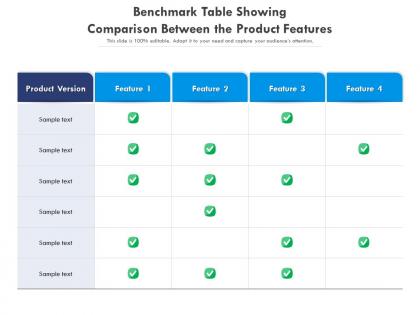
Benchmark table showing comparison between the product features




Try Before you Buy Download Free Sample Product
 Impress Your
 Audience
 100%
100% Editable
 Save Hours
 of Time


Our Benchmark Table Showing Comparison Between The Product Features are topically designed to provide an attractive backdrop to any subject. Use them to look like a presentation pro.
People who downloaded this PowerPoint presentation also viewed the following :
Benchmark table showing comparison between the product features with all 2 slides:
Use our Benchmark Table Showing Comparison Between The Product Features to effectively help you save your valuable time. They are readymade to fit into any presentation structure.
FAQs for Benchmark table showing comparison between
It really comes down to your industry, but some patterns pop up everywhere. Tech folks obsess over response times and error rates. Finance cares about ROI and transaction costs. Manufacturing? They're measuring cycle times and defect rates all day. Healthcare looks at patient outcomes and procedure costs - makes sense. Retail tracks conversion rates and how much people actually spend. Honestly though, don't go crazy tracking everything. Pick maybe 3-5 things that actually tell you if you're winning or not. I learned this the hard way - too many dashboards just create noise. Figure out what success looks like first, then find the numbers that prove it.
Start with your main goals - what are you actually trying to achieve? Then pick benchmarks that show if you're getting there. Honestly, most people just copy whatever metrics are trendy, which is pretty useless. You want the stuff that predicts what's coming, not just reports on what already went down. Keep it simple though - like 3-5 max or you'll drown in data. Make sure you can realistically track whatever you choose. The real test? If improving that metric would actually matter for your strategy, then it's worth measuring.
Look, you really can't mess around with bad data when you're doing benchmarks. Wrong or inconsistent info will completely throw off your comparisons - like you'll think you're crushing it when you're actually behind. I learned this the hard way once. Small mistakes snowball into terrible strategic decisions pretty fast. Short sentences work better here: validate your sources first. Don't dive into analysis until you're confident the underlying data is solid. Otherwise you're just building conclusions on quicksand, and that never ends well for anyone involved.
Yeah, external factors totally change benchmark standards. Market trends shift all the time - new tech pops up, regulations change, and suddenly your old benchmarks are useless. AI this year is a perfect example of how everything got flipped upside down. Economic conditions mess with things too, plus competitive changes and how consumers act differently now. Honestly, sticking with three-year-old standards is just asking for trouble. You should probably check your benchmarks against current market data every quarter or so. Static numbers become pretty meaningless fast when the world keeps moving.
Honestly, most people mess this up by comparing totally different setups - like different hardware or software versions - without even realizing it. Room temperature can literally change your results, which is wild. Single metrics are basically useless though. I've watched people make awful choices because they trusted some random synthetic benchmark that had zero connection to what they actually needed. You gotta check what's actually being measured first. Does it even relate to your situation? Run multiple tests if you can. But here's the real thing - benchmark your own specific stuff instead of just trusting generic comparisons online.
Honestly, benchmarking is pretty clutch for finding where you're getting beaten (or where you're actually winning for once). Pick 2-3 competitors and compare your numbers against theirs - sales, customer retention, whatever matters most to your goals. You'll spot gaps in your performance and maybe catch opportunities they're sleeping on. Just don't get caught up measuring pointless stuff that looks good on paper but doesn't move the needle. Focus on benchmarking their best strategies first. Then figure out which processes need work and where to throw your resources.
So for load testing, Apache Benchmark (ab) and wrk are your best bet. JMeter's pretty decent too if you want something with a GUI - honestly makes complex scenarios way less of a headache. Grafana or New Relic work well for monitoring and visualizing everything. Database stuff? Sysbench is solid. Infrastructure comparisons are where Phoronix Test Suite really shines - covers CPU, storage, the whole deal. Oh and consistency matters more than fancy features, so pick something that gives you repeatable results. Start with just one tool though, don't go crazy buying everything at once.
So basically it depends on what each industry actually gives a shit about. Healthcare obsesses over patient outcomes and safety stuff - makes sense since people's lives are on the line. Tech companies? They're all about user engagement and how fast they can scale things. Finance is weird though - they're super into risk management and regulatory stuff, but honestly they're getting pretty tech-obsessed too lately. The regulatory environment totally shapes what matters most. I'd just pick like 3-5 metrics that your industry is completely neurotic about and build everything around those.
Look, first thing - don't name companies unless they said it's cool. Anonymize that stuff. Your benchmark could totally screw over competitors or reveal things they never agreed to share. Make your methodology super clear so people can actually check your work. Here's the thing though - these studies really do shape what people think about the market, which is kinda wild when you think about it. So double-check your accuracy because misleading metrics can give someone an unfair edge. Honestly? Show it to a coworker first, maybe even reach out to the companies before you publish.
Honestly, you've gotta refresh those benchmarks way more than most people think - at least once a year, but probably every quarter if you're in tech or something that moves crazy fast. I made the mistake of setting mine up and then ignoring them for like 18 months... total waste. Your competitors change, your company grows, so your comparison points need to shift too. Drop the metrics that aren't helping anymore. Add new ones that actually matter. The whole point is getting insights you'll actually use to make decisions, not just pretty charts that sit in a folder somewhere.
Lead with your biggest findings - don't make people dig through methodology to find the good stuff. Charts and dashboards are your best friend here since nobody wants to read walls of text. Always explain the "why" behind performance gaps, not just raw numbers. Pick 3-5 solid recommendations max (trust me on this one - more and people's eyes glaze over). You'll want to briefly explain how you got your data so they know you're comparing the right things. Oh, and end each part with specific next steps. Otherwise people walk away thinking "cool presentation" but have no clue what to actually do.
So those benchmark numbers only tell you what's happening, not why. Like if competitor A is crushing you by 15%, you need the qualitative stuff to figure out what they're actually doing differently. Maybe they've got some weird onboarding trick that keeps customers around longer - who knows? Numbers can totally mislead you without that context. I'd honestly just start calling a few customers and asking about their experience with other companies. The stories you'll hear are way more interesting than whatever's in your spreadsheet, and they'll show you the real reasons behind those performance gaps.
Yeah, cultural stuff totally throws off benchmark comparisons. Work styles are completely different between regions - some places care way more about team results than individual numbers. Others rush through everything while some cultures take their sweet time being thorough. Communication styles mess with engagement scores too. Like, cultures that give direct feedback will look totally different from places where people are more indirect about criticism. Oh and vacation norms vary wildly, which obviously affects productivity data. Honestly, you've gotta factor in local cultural context when you're looking at benchmarks. Don't just assume the same standards work everywhere.
Skip the yearly reviews - you need constant tracking instead. Pick your top 3-5 competitors and check their earnings calls, product drops, and metrics every month. LinkedIn stalking industry leaders is honestly my guilty pleasure, but you get so much intel that way! Google alerts are clutch for key terms, plus industry newsletters help. Your customers and suppliers? They're goldmines for real-time market shifts if you stay close to them. Build a simple dashboard that alerts you when competitors jump 15-20% past your benchmarks. Way better than scrambling to catch up once a year.
Honestly, customer expectations mess up benchmark comparisons big time. You can't just compare numbers straight across anymore. Think about it - your customers might want premium service while your competitor's are cool with basic help. Both companies hit 90% satisfaction, but those numbers mean completely different things. It's kinda like comparing Yelp reviews for McDonald's versus some fancy steakhouse, right? Survey your own customers first to see what they actually want. Then segment your benchmarks by expectation level. Don't freak out about competitors until you know if you're even serving the same type of people.
-
Very well designed and informative templates.
-
Unique research projects to present in meeting.
-
Thanks for all your great templates they have saved me lots of time and accelerate my presentations. Great product, keep them up!
-
Great quality product.
-
Easy to edit slides with easy to understand instructions.
-
Out of the box and creative design.
-
Content of slide is easy to understand and edit.
-
Use of different colors is good. It's simple and attractive.
-
Out of the box and creative design.