


Blockchain Security Powerpoint PPT Template Bundles




Try Before you Buy Download Free Sample Product
 Impress Your
 Audience
 100%
100% Editable
 Save Hours
 of Time


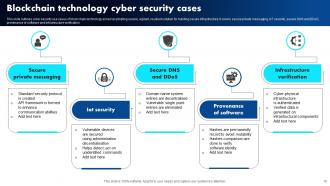
Introducing our cutting-edge PPT on Blockchain Security, a comprehensive guide to safeguarding your blockchain network. Dive into the realm of encryption blockchain technology and discover the robust security measures necessary for a secure ecosystem. With a focus on Blockchain Network Security, this presentation delves into the intricate details of protecting your valuable digital assets against unauthorized access and malicious attacks. Explore the world of secure key management, secure consensus algorithms, and tamper-proof transaction records. Gain insights into the latest advancements in Blockchain Access Control, ensuring only authorized entities have the appropriate permissions. Arm yourself with the knowledge to fortify your blockchain infrastructure and build a trust-based system. Stay ahead in the race for secure, transparent, and immutable transactions with our Blockchain PPT.
People who downloaded this PowerPoint presentation also viewed the following :
Blockchain Security Powerpoint PPT Template Bundles with all 25 slides:
Use our Blockchain Security Powerpoint PPT Template Bundles to effectively help you save your valuable time. They are readymade to fit into any presentation structure.
-
Blockchain Security Powerpoint PPT Template Bundles
-
Blockchain Security Powerpoint PPT Template Bundles
-
Blockchain Security Powerpoint PPT Template Bundles
-
Blockchain Security Powerpoint PPT Template Bundles
-
Blockchain Security Powerpoint PPT Template Bundles
-
Blockchain Security Powerpoint PPT Template Bundles
-
Blockchain Security Powerpoint PPT Template Bundles
-
Blockchain Security Powerpoint PPT Template Bundles
-
Blockchain Security Powerpoint PPT Template Bundles
-
Blockchain Security Powerpoint PPT Template Bundles
-
Blockchain Security Powerpoint PPT Template Bundles
-
Blockchain Security Powerpoint PPT Template Bundles
-
Blockchain Security Powerpoint PPT Template Bundles
-
Blockchain Security Powerpoint PPT Template Bundles
-
Blockchain Security Powerpoint PPT Template Bundles
-
Blockchain Security Powerpoint PPT Template Bundles
-

Blockchain Security Powerpoint PPT Template Bundles
-

Blockchain Security Powerpoint PPT Template Bundles
-
Blockchain Security Powerpoint PPT Template Bundles
-

Blockchain Security Powerpoint PPT Template Bundles
-

Blockchain Security Powerpoint PPT Template Bundles
-

Blockchain Security Powerpoint PPT Template Bundles
-

Blockchain Security Powerpoint PPT Template Bundles
-

Blockchain Security Powerpoint PPT Template Bundles
-

Blockchain Security Powerpoint PPT Template Bundles
FAQs for Blockchain Security Powerpoint
So basically it's cryptographic hashing, decentralization, and consensus mechanisms. Hash functions create these unique fingerprints for each block - mess with even one letter and the whole thing changes. Pretty clever actually. The network runs on thousands of nodes instead of one central server, so if some go down, no big deal. Then you've got consensus algorithms like Proof of Work that make sure everyone agrees before adding new blocks. I mean, it's wild that we're trusting math over banks now, but here we are. Bottom line: distributed networks keep your stuff secure.
Think of consensus mechanisms like your blockchain's security system. With Proof of Work, attackers would need 51% of all computing power - gets ridiculously expensive fast. Proof of Stake? You'd need to own 51% of tokens, but honestly who's gonna attack something they're that invested in? Makes no sense. Different mechanisms have their own weak spots and costs though. Bottom line - stronger consensus makes attacks so pricey they're just not worth it. Always check what consensus mechanism you're dealing with before putting anything important on there.
So blockchain security is all about cryptography - that's what makes it actually work. Each block gets this unique "fingerprint" through hashing, and if someone messes with the data, boom - the whole fingerprint changes. Your private key is like your secret password that nobody else can use to spend your crypto (which honestly saved my butt once when I thought my wallet was compromised). Digital signatures make sure transactions are legit. The math is so complex that faking records is basically impossible once they're on the chain. Always check what crypto standards a project uses though - it's super important.
So basically a 51% attack is when someone gets control of more than half the computing power on a blockchain network. Once they have that, they can mess with transactions however they want - approving fake ones, blocking real ones, double-spending coins. It's like rigging every vote because you're always the majority. Pretty terrifying stuff tbh. Bitcoin and Ethereum are way too big for this to happen though - it'd cost billions to pull off. That's actually why I only mess with the major networks. Smaller cryptos? Yeah, they're more vulnerable to this kind of thing.
So smart contracts are kinda tricky - they're great because there's no middleman and everything runs automatically based on preset rules. Way less chance for human screwups or shady stuff. But here's where it gets messy: if there's a bug in the code, you're basically screwed since you can't just fix it later. Remember that DAO hack? Cost people millions. Honestly, I'd never deploy one without getting at least two or three security audits done first. The testing phase is where you'll save yourself major headaches down the road.
Never store private keys in plain text - that's crypto security 101. Get a hardware wallet or use something like AWS KMS for production stuff. GitHub's scanning bots are scary good at finding exposed keys, so encrypt them and keep that shit out of your code. Multi-sig setups are clutch when you can swing it. Set up proper access controls and think about rotating keys periodically. Oh, and back up everything securely - I can't tell you how many people I know who've locked themselves out of testnet funds because they didn't. Start by checking where your keys are sitting right now, then move the important ones to hardware storage first.
So basically it's about who's in charge of validating stuff. Public blockchains have thousands of nodes worldwide checking everything - way harder to hack but slower. Private ones? Your company or a small group controls it all. Yeah, private is definitely faster and more efficient, but honestly you're putting a lot of trust in fewer people. It's kinda like comparing a public library where anyone can double-check the books versus your company's locked filing cabinet. Really depends what you need - bulletproof security or speed for internal stuff. Oh, and private blockchains can get political if people disagree about changes.
Look, multi-sig wallets are your best friend here. Cold storage for private keys, obviously. Always check smart contract code before you deploy anything - I learned that one the hard way lol. Most people get wrecked because they skip the basics honestly. Set up proper access controls and watch for weird transaction patterns. Keep everything updated too. Oh and audit regularly if you're running nodes or holding serious amounts. The real killer though? Phishing attacks still work way too well, so make sure your team knows what to look for.
So regulators basically want proof your blockchain won't blow up before they give you the green light. You've gotta show solid risk management, data protection, all that security stuff. Here's the annoying part though - there's no standard playbook since everything's still pretty new. Most focus on results over specific tech requirements, so they care way more about actually protecting user funds than whatever consensus algorithm you picked. Honestly, your best move is mapping blockchain risks to existing financial regs. It's not perfect but it'll get you in the ballpark for compliance.
Yeah so quantum computers could theoretically crack the crypto that protects most blockchains right now - like the elliptic curve stuff that secures your wallet. Basically they'd be able to figure out your private keys and boom, your crypto's gone. But honestly? We're still like 10-15 years out from quantum computers being that scary powerful. The good news is blockchain devs aren't just sitting around waiting for disaster. They're already building quantum-resistant tech into newer networks. I'd definitely check which projects you're invested in have post-quantum protection, especially if you're hodling long-term.
Start with a thorough code review - that's where most bugs hide anyway. Get an external security firm to audit your smart contracts because honestly, auditing your own stuff is like trying to proofread your own essay. You're just too close to it. Run penetration tests on your network and consensus mechanisms too. Don't forget about connected APIs or applications either - test everything, not just the blockchain itself. Multiple expert opinions are worth their weight in gold before launch.
So basically, blockchain's security comes from having no single weak spot. Hackers would need to hit thousands of computers at once - good luck with that lol. Your data lives across this huge network instead of sitting in one place like a traditional bank. Think of it as having a ton of security guards vs one guy who might be scrolling Instagram. The whole system only changes stuff when most nodes agree. Pro tip though - actually check how decentralized any blockchain really is before you commit. More nodes scattered around = way better protection for whatever you're doing.
Look, security issues are killing blockchain adoption faster than anything else. People see those exchange hacks on the news and think "nope, not risking my money." Can't really blame them tbh. Each big exploit just makes everyone more paranoid about the whole space. Mainstream users won't touch it, which means fewer real use cases and less institutional money flowing in. It's this nasty cycle that keeps repeating. My take? Companies need to actually invest in proper security audits and be upfront about the risks instead of pretending everything's bulletproof.
Oh man, yeah there've been some brutal ones. You've got the DAO hack from 2016 - $60 million just gone from Ethereum. Then that Ronin bridge thing with Axie Infinity? Over $600 million, absolutely insane. Mt. Gox and Coincheck got hit too, though those were more about crappy exchange security than actual blockchain problems. It's usually smart contract bugs that screw people over, not the blockchain itself failing. Honestly, if you're building anything with real money involved, just pay for a proper security audit first. Trust me on that one - way cheaper than getting rekt later.
Honestly, skip the boring presentations and go straight to hands-on stuff. Get people practicing with test wallets and spotting fake transactions - they'll actually remember it that way. Focus on the basics first: private key security, smart contract risks, those crypto phishing scams that seem to fool everyone. Monthly security chats work way better than dumping everything in one giant training session. Oh, and definitely use real breach examples from companies similar to yours - generic blockchain theory puts people to sleep. Maybe set up a monthly Q&A where teams can ask questions without feeling dumb about it.
-
I want to express my gratitude to SlideTeam’s presentation design services team for helping me create the best presentation of my life!
-
“Superb. What a great finding. Thankful for SlideTeam. We were paying people to make slides which went all in vain. We are so happy to have found you.”