


Build a scrum team structure scrum agile project management organization chart




Try Before you Buy Download Free Sample Product
 Impress Your
 Audience
 100%
100% Editable
 Save Hours
 of Time


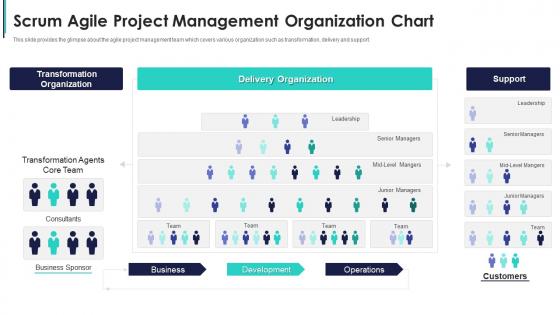
This slide provides the glimpse about the agile project management team which covers various organization such as transformation, delivery and support.
People who downloaded this PowerPoint presentation also viewed the following :
Build a scrum team structure scrum agile project management organization chart with all 6 slides:
Use our Build A Scrum Team Structure Scrum Agile Project Management Organization Chart to effectively help you save your valuable time. They are readymade to fit into any presentation structure.





FAQs for Build a scrum team structure scrum agile project
So there's three main roles in Scrum. Product Owner handles what gets built and ranks everything in priority order. Development Team does the actual coding and figures out how long stuff will take. Then you've got the Scrum Master - they run meetings and clear roadblocks (not your boss though, which confuses people constantly). What's neat is nobody reports to anyone else really. Everyone just holds each other accountable. Oh and don't let people do multiple roles when you're starting out - I've seen that mess up teams pretty quickly since it kills the whole collaborative vibe.
So you're basically clearing roadblocks that mess up team communication and setting up chances for people to actually talk to each other. Daily standups, retros, sprint planning - that's where everyone shares what's going on and what's bugging them. More coach than boss, you know? Don't tell people what to do, just keep info flowing. Also gotta handle team drama when it pops up and make sure the quiet people speak up in meetings. Honestly, the trick is catching communication issues early before they totally wreck your sprint. Pretty straightforward once you get the hang of it.
So basically, start with business value - put your highest-impact stuff at the top. Talk to stakeholders constantly because priorities shift like crazy based on customer feedback and market changes. User story mapping is a game changer (honestly can't recommend it enough). Dependencies matter too though - sometimes you gotta tackle boring foundational work first. During sprint planning, factor in what your team can actually handle. The whole thing needs to stay flexible. Oh, and rank everything by ROI and user impact to start - gives you a decent baseline. Just don't get too attached to any order because you'll be shuffling things around constantly anyway.
Honestly, your team can totally make or break the whole thing. Get a Product Owner who actually knows the business inside out - someone who won't hem and haw when decisions need to happen. Your Scrum Master should be amazing at clearing roadblocks, not just another meeting scheduler (we've all been there, right?). Keep the dev team between 5-9 people with different skills that mesh well together. Any smaller and you're missing key expertise. Bigger than that? Good luck getting everyone on the same page. Trust me, psychological safety is huge - people need to feel comfortable calling out problems.
Dude, cross-functional teams are where it's at. You don't have to wait around for other departments to get their shit together. Your frontend person can handle some backend stuff, your tester actually gets the business side - boom, no more bottlenecks killing your sprints. I've seen teams move so much faster when people have overlapping skills. Obviously you can't expect everyone to master everything right away, but if your team gradually picks up adjacent skills? Total game changer. Way better than having specialists who can only do one narrow thing.
So when people start butting heads during sprint planning, dig into the actual reasons behind their beef instead of just the surface stuff. Most of the time it's assumptions about how long things take, what's more important, or how to tackle problems - honestly pretty standard when you get passionate people in a room. Get your PO to spell out the business value clearly. Let the devs duke out the technical stuff openly. Stuck? Set a timer for like 10 minutes max, then either park it for research later or just go with whatever won't blow up. Focus stays on shipping value, not being right.
So velocity's probably your best starting point - just track story points completed per sprint and you'll have something to plan with. Burndown charts are solid for seeing if you're gonna hit your sprint goals. Cycle time's useful too, shows how long stuff actually takes from kickoff to done. Sprint goal achievement is honestly underrated - most teams say they track it but don't really. Oh and check if you're actually doing those retrospective improvements you keep promising to tackle. Stick to maybe 3-4 metrics tops. Any more than that and you'll just drown in data instead of spotting the patterns that matter.
So basically your team gets to decide HOW to do the work while the Product Owner tells you WHAT needs doing. You guys figure out who tackles which tasks, solve problems together, pick your own processes - no boss breathing down your necks. The Scrum Master's there to help but won't micromanage (thank god). During sprint planning and daily standups, it's all on you as a team. Makes sense since you're the ones actually doing the work, right? This whole approach means people are way more invested and can pivot faster when issues pop up. I'd start by letting your team own the sprint commitments first.
Honestly, the biggest thing is getting everyone on the same digital board - Jira, Trello, whatever works for your team. Daily standups and sprint planning move to video calls, which isn't rocket science but you need shared screens so everyone can actually see what's happening. Your Definition of Done probably needs updating too since you can't just walk over and ask questions anymore. Time zones are annoying if your team's spread out, so figure out some core hours when everyone's online. Oh, and documentation becomes way more important - took us a while to realize that one.
Honestly, go with a dedicated Scrum Master if you can swing it. The focus is just so much better when one person owns it full-time. They'll actually dig into those annoying blockers instead of letting them sit around forever. Rotating the role sounds nice in theory, but usually nobody feels truly responsible - classic case of everyone's job being nobody's job. A dedicated SM gets good at reading team dynamics too. Plus they can build real relationships with stakeholders and keep distractions away from your dev team. Trust me, if your sprint ceremonies feel inconsistent or impediments drag on, push for someone dedicated. Worth the investment.
Retrospectives are your best friend here - run them after every sprint to figure out what sucked and what didn't. But here's the thing: you actually have to DO something with what you learn, otherwise it's just complaining session
-
Awesome presentation, really professional and easy to edit.
-
Really like the color and design of the presentation.