


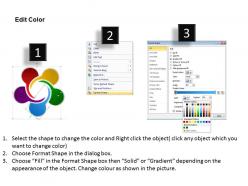
Business circular flow 5 stages powerpoint templates graphics slides 0712





Try Before you Buy Download Free Sample Product
 Impress Your
 Audience
 100%
100% Editable
 Save Hours
 of Time


Our business circular flow 5 stages powerpoint templates graphics slides 0712 team are a daring lot. They never hasitate to break new ground.
People who downloaded this PowerPoint presentation also viewed the following :
Business circular flow 5 stages powerpoint templates graphics slides 0712 with all 9 slides:
Make your presentations look as good as your ideas. Our excellent business circular flow 5 stages powerpoint templates graphics slides 0712 are waiting to dress up your next project.
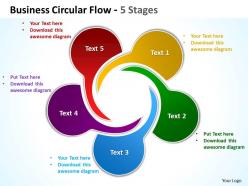
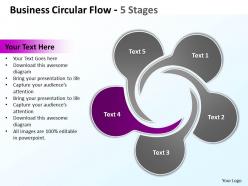
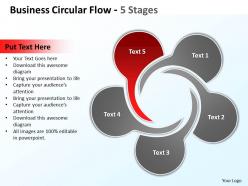
FAQs for Business circular flow 5 stages powerpoint templates
So there's three main pieces: households, businesses, and markets. Households work for businesses and get paid, then turn around and spend that money on stuff. Businesses take that revenue and use it to hire more people or buy resources. Pretty straightforward cycle, right? Financial markets are where the savings and investment stuff happens - kinda forgot about that part initially. But yeah, when you're looking at business decisions, consumer spending directly hits your revenue and hiring choices. It's actually cooler than it sounds once you see how everything connects. The whole thing just keeps flowing in this loop.
So basically the circular flow is like households and businesses being totally dependent on each other. Households give businesses their labor and stuff, then businesses pay them wages and profits. That money gets spent right back on products and services. It's actually pretty cool how it all connects - though my econ prof made it sound way more boring than it is. Businesses need workers and customers. Households need jobs and things to buy. When you're looking at any policy, just trace how it hits both sides of the loop and you'll get it.
So many things can mess with your business flow that you probably haven't even thought about. Tax changes and government spending shifts hit first. Then inflation or a recession makes people spend differently - businesses too. Natural disasters? They wreck supply chains instantly. I've seen companies get blindsided by social trends that suddenly kill demand for their stuff. Tech changes are brutal - they'll make your whole model irrelevant basically overnight. Don't even get me started on trade policies and currency swings. The trick is staying flexible enough to pivot when these curveballs inevitably come your way.
So banks are basically middlemen moving money around between regular people and businesses. You deposit cash, but they don't just store it - they loan it to companies for new equipment, expansions, whatever. Pretty smart system honestly. Your savings become someone else's startup capital or business loan. They also process payments and handle all the boring transaction stuff companies need daily. Banks essentially connect your unused money to businesses that can actually do something productive with it. Kind of wild that your checking account is probably funding someone's coffee shop right now.
So basically when people spend more money, businesses get busier and hire more workers. Those workers now have paychecks to spend, which keeps the whole thing going. It's like this endless cycle that can really boost the economy. But flip it around - if everyone stops spending, companies start laying people off and cutting back. Then those unemployed folks can't buy stuff either. Honestly crazy how your random Target run connects to the bigger picture, right? Oh and pro tip - consumer confidence reports are actually decent predictors of where things are heading economically.
So basically the government jumps in when markets start acting weird - recessions, inequality, that kind of mess. They use spending and taxes to move money around where it actually needs to be. It's like having someone direct traffic, honestly pretty chaotic but whatever works. Markets would just crash and boom constantly without it, plus you'd get insane wealth gaps. Oh and for your business stuff - definitely watch for policy changes since they'll hit your costs and how much people spend. Those shifts can sneak up on you fast.
So imports are basically money leaving your country to buy stuff from other places - that's a leakage. Exports work the opposite way, bringing foreign cash in. Think of it like your economy's bank account, you know? The whole thing comes down to your trade balance. More exports than imports? You're getting a net boost. Import more than you export? Money's flowing out overall. I mean, most countries do a mix of both anyway. Just watch which direction the net flow goes if you want to see how trade affects your economic growth.
So taxes pull money out of the economy when people and businesses pay them - it's like a drain in your bathtub. But here's the thing: when government spends that money on roads, employee salaries, whatever, it flows back in. The real question is whether spending matches what they collect. If taxes are way higher than spending, that slows everything down. You've gotta look at both sides though - what's coming out AND what's going back in. It's honestly pretty straightforward once you think about it that way.
So basically when productivity goes up, you're squeezing more output from the same stuff - labor, equipment, whatever. That extra profit has to go somewhere, right? Usually it's higher wages, more investment, or shareholders getting fatter dividends. The cool part is how it multiplies through the economy. More productive companies pump more cash around, which honestly can snowball pretty quickly. But watch out - when productivity tanks, everything reverses and it gets ugly fast. Even tiny shifts can create way bigger ripples than you'd think. I'd definitely track your productivity numbers against cash flow patterns to catch these trends early.
So closed economy is just households and firms trading back and forth - pretty basic stuff. Open economy? Way messier because you've got imports, exports, foreign investment, all that international money moving around. It's like the difference between water circulating in a closed loop vs having pipes connecting to other systems. Honestly, closed economy models are kinda useless in real life since literally every country trades globally these days. You'll always want to use the open model when you're actually analyzing anything - the closed version is just what they teach first to keep things simple.
Yeah totally! Think of it like dominoes falling - when one part breaks down, everything else follows. Households stop spending, businesses panic and cut jobs, banks get stingy with loans. Then it spirals: less spending means companies earn less, so they fire more people, who obviously can't spend money they don't have. It's actually pretty predictable once you know what to look for. Watch for multiple sectors going south at once - that's usually when things get messy. The circular flow basically shows you where the cracks are forming before everything falls apart.
Hey! So business investments are like the growth engine of the economy - they don't just move money around, they actually make the whole system bigger. Companies buy new equipment or tech, which boosts what we can produce overall. Then you get this multiplier thing where that investment creates jobs, people earn more, they spend more. It's pretty cool how it feeds itself. Oh and here's what matters most when you're looking at any investment - focus on how it expands long-term capacity, not just quick profits. That's where the real magic happens.
So there's these feedback loops that basically make everything snowball - good or bad. Like when companies invest more, they hire people, those people spend money, then companies invest even more. It's wild how fast it spirals. Confidence is honestly everything though. People feel good about the economy? They spend. Businesses expand, unemployment drops, and everyone gets more optimistic. Works the opposite way too during recessions - fear spreads fast. Interest rates play into this since lower rates get people borrowing and spending more. I'd keep an eye on confidence surveys if you're trying to predict what's coming next.
Honestly, the circular flow model still works great for digital stuff. Money and goods keep moving between people and companies, just online now. So instead of cash at Target, you're doing digital payments on Amazon. Data's become this whole new product flowing back to businesses too - we're basically giving them info every time we shop online, which is kinda crazy when you think about it. The basics haven't changed though. People still work and buy things, companies still make products and hire workers. Big difference is platforms like Amazon sit in the middle and make money off multiple flows at once. Just track your digital spending the same way you would regular purchases.
Big companies are crazy disciplined about timing - they know exactly when money flows in and out. Multiple revenue streams that actually work together? That's their secret sauce. Honestly, the forecasting thing is huge - they prep for slow seasons while small businesses just get blindsided. Map out your cash flow on paper first. Track every dollar for a month, see where it's coming from and going. You'll probably find some patterns you didn't notice before. The smart move is creating those interconnected income sources instead of putting all your eggs in one basket. Seasonal planning can literally make or break you.
-
Great quality product.
-
Very well designed and informative templates.