


Business Operational Framework Powerpoint Presentation Slides





Try Before you Buy Download Free Sample Product
 Impress Your
 Audience
 100%
100% Editable
 Save Hours
 of Time


People who downloaded this PowerPoint presentation also viewed the following :
Content of this Powerpoint Presentation
Slide 1: This is the introductory slide to Business Operational Framework. State Your Company Name and get started.
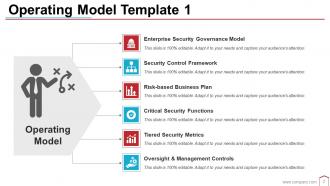
Slide 2: This slide presents an Operating Model with the following sub headings: Risk-based Business Plan, Oversight & Management Controls, Critical Security Functions, Tiered Security Metrics, Security Control Framework, Enterprise Security Governance Model.
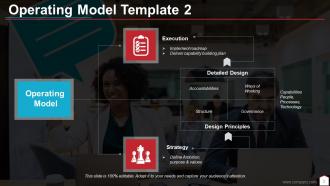
Slide 3: This slide presents an Operating Model with main sub headings of a: Execution (Implement roadmap Deliver capability building plan) and b: Strategy (Define Ambition, purpose & values).
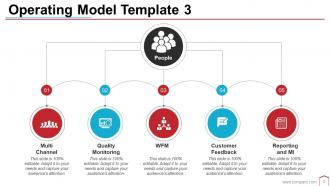
Slide 4: This slide presents an Operating Model with the following sub headings- Quality Monitoring, Customer Feedback, Multi Channel, WFM, Reporting and MI, People.
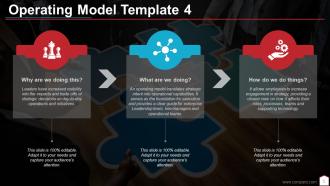
Slide 5: This slide presents an Operating Model with the following content- 1-Why are we doing this? (Leaders have increased visibility into the impacts and trade offs of strategic decisions on day-to-day operations and initiatives). 2- How do we do things? (It allows employees to increase engagement in strategy, providing a clearer view on how it affects their roles, processes, teams and supporting technology). 3-What are we doing? (An operating model translates strategic intent into operational capabilities. It serves as the foundation for execution and provides a clear guide for enterprise Leadership team, line managers and operational teams).
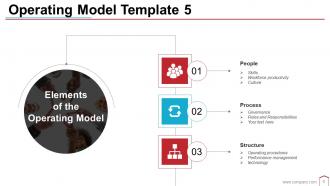
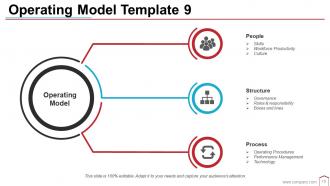
Slide 6: This slide presents Elements of an Operating Model in terms of: 1- People (Skills Workforce productivity Culture) 2- Process Governance Roles and Responsibilities 3- Structure (Operating procedures Performance management technology).
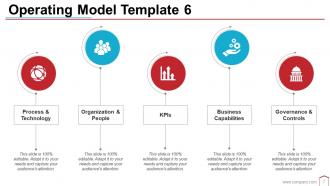
Slide 7: This slide showcases Operating Model with the following constituents- Process & Technology, Organization & People, KPIs, Business Capabilities, Governance & Controls.
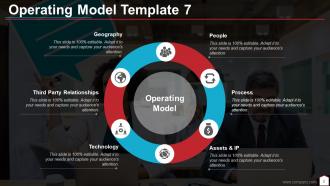
Slide 8: This slide presents an Operating Model with the following sub headings- People, Process, Assets & IP, Technology, Third Party Relationships, Geography.
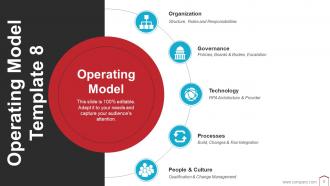
Slide 9: This slide presents an Operating Model with the following constituents- Organization, Structure, Roles and Responsibilities, Governance, Policies, Boards & Bodies, Escalation, Technology, RPA Architecture & Provider, Processes, Build, Changes & Run Integration, People & Culture, Qualification & Change Management, Operating Model.
Slide 10: This slide is another variation of slide 6.
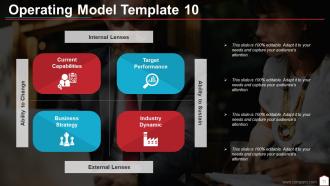
Slide 11: This slides showcases Operating Model matrix with the following consitituents- Target Performance, Current Capabilities, Business Strategy, Industry Dynamic, in parameters of Internal Lenses, External Lenses, Ability to Change, Ability to Sustain.
Slide 12: This is a Business Operational Framework Icon Slide.
Slide 13 This is a Coffee Break slide to halt.
Slide 14: This slide is titled Graphs and Charts to proceed forward.
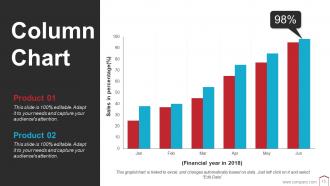
Slide 15: This slide shows a Column Chart for product comparison.
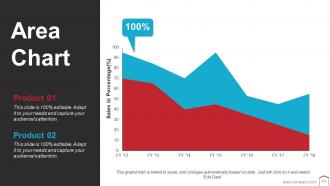
Slide 16: This slide shows an Area Chart for product comparison.
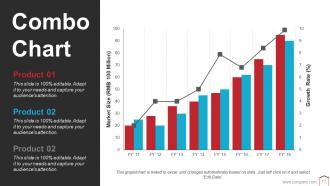
Slide 17: This slide shows a Combo Chart for product comparison etc.
Slide 18: This slide is titled Additional Slides for heading forward.
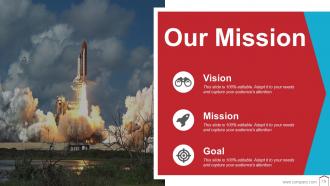
Slide 19: This is Our Mission slide with Vision, Mission, Goal. State them here.
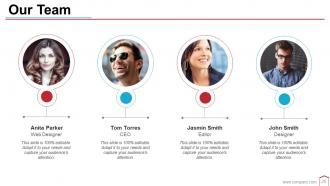
Slide 20: This slide presents Our Team with name, designation and image boxes.
Slide 21: This is an Idea/Bulb image slide to show creative, innovative aspects etc.
Slide 22: This is a Target slide. State your targets here.
Slide 23: This is a Thank You slide with Address# street number, city, state, Contact Numbers, Email Address.
Business Operational Framework Powerpoint Presentation Slides with all 23 slides:
Our Business Operational Framework Powerpoint Presentation Slides contain the best food for thought. Allow your brains to have a good feed.



FAQs for Business Operational Framework
Honestly, you'll want to nail down clear processes first - like, how does work actually flow through your team (not the fantasy version). Define who owns what so there's no confusion when things go sideways. Set up metrics that actually matter to your revenue, not vanity numbers. Oh, and communication channels are huge - people need ways to flag problems before they become disasters. I'd pick one main process and map it out completely before trying to tackle everything else. Way less overwhelming that way, plus you'll learn what works as you go.
Honestly, having clear processes just saves everyone's sanity. Your team stops wasting time on those "wait, what's the next step again?" moments that happen like 50 times a day. You'll actually see where stuff gets stuck instead of just wondering why everything takes forever. New hires won't bug you constantly either – they can just follow the workflow you already mapped out. I'd start with whatever three things you do most often and document those first. The rest you can figure out as you go, but those core processes will make the biggest difference right away.
So here's the thing - tech is what actually makes modernization happen. It automates all that tedious manual stuff and gives you real-time data instead of guessing. Plus everything finally connects properly instead of living in silos. Honestly, ditching spreadsheets alone makes it worth it. Cloud tools and AI can eliminate those annoying bottlenecks while making everything faster and more accurate. But don't just grab whatever's trendy right now. Map out what you're doing currently, figure out your biggest pain points, then pick tech that actually solves those specific problems. That's where you'll see the real impact.
Honestly, you've gotta track both the quick wins and the long-term stuff. Efficiency metrics like cycle times and cost per unit will show you what's happening right now. But don't forget the bigger picture - customer satisfaction, employee engagement, financial performance. Quality metrics are obviously huge too. Here's the thing though: most people create these fancy dashboards that nobody actually looks at. Total waste of time. Pick maybe 3-5 metrics that actually matter to your business goals first, then build everything around those. Keep it simple or you'll end up drowning in data that doesn't tell you anything useful.
Oh man, don't try doing everything at once - that's like recipe for disaster right there. Your team will just get overwhelmed and nothing actually sticks. Get people on board first though, because if they don't get why you're changing things, they'll find ways around it anyway. Companies always want to copy what worked somewhere else without thinking about their own situation. Which honestly never works out. You can't just set up a framework and walk away either - it needs constant adjustments based on what's actually happening. My advice? Pick one thing, nail it, then move on to the next.
Your team's cultural mix totally changes how they work together. Some groups want everything approved by the boss first, others just dive in collaboratively. I've seen this mess up so many projects honestly. Deadlines are another thing - certain cultures treat them like life or death, while others see them more as suggestions. People from high power-distance cultures won't speak up when something's wrong, which can bite you later. Language stuff slows everything down if you don't plan for it. Start by figuring out what cultural differences you're dealing with, then build your processes around that reality.
Honestly, there are tons of ways to tackle this depending on what you're dealing with. Lean's awesome for cutting out waste and making things smoother. Six Sigma if you want hardcore data analysis for quality stuff. Agile and Scrum are pretty much the standard now for anything iterative - they're popular for a reason, though sometimes I think people jump on them too quickly. Design Thinking keeps you thinking about what users actually want. BPM helps you map out workflows. My advice? Start by figuring out what's broken first, then pick whatever fits your biggest headache.
Look, first thing you gotta do is actually map out what you're doing now versus what you say you want to achieve. Trust me, most companies are completely shocked when they see how disconnected these things are! Find those gaps, then redesign your workflows around your actual goals. Here's the thing though - you need KPIs that actually connect your day-to-day stuff to strategic outcomes. Not just pretty metrics that make dashboards look impressive. Every process should serve a real purpose. I'd honestly start with whatever your biggest disconnect is and tackle that one first. Baby steps work better than trying to fix everything at once.
Look, you really need to get stakeholders involved early or you'll build something nobody wants to use. Talk to employees, customers, suppliers - whoever's actually dealing with this stuff day-to-day. They'll tell you about problems you'd never think of sitting in meetings. People hate having changes forced on them, but they'll champion something they helped create. I learned this the hard way on a project last year. Map out who matters most and just have casual conversations with them. Don't wait until everything's "perfect" - you want their input while you can still change direction easily.
So process mapping is basically drawing out how work actually moves through your company - and yeah, it's probably way messier than you'd expect. You'll catch bottlenecks and weird spots where things just... stall out for no good reason. Plus your team finally sees how everyone's work connects instead of working in silos. Honestly, once people understand how their part affects the next person, you get way better teamwork. Oh, and fewer "not my problem" attitudes too. I'd start with whatever process hits customers directly - that's usually where the biggest wins are hiding.
Start by mapping out your main processes with flowcharts - they're perfect for this stuff. Document who owns what, plus all the inputs and outputs for each step. Honestly, I've watched so many companies create these massive, complicated frameworks that nobody actually uses. Keep yours simple and practical. Don't just write down what happens - explain why each process exists in the first place. Templates are your friend here since they'll help people jump between different processes without getting lost. Oh, and this isn't a one-and-done thing. You'll need to review everything regularly with your team or it becomes useless pretty quickly.
Look, having a good framework is like having smoke detectors for your business - you catch problems before they blow up. Regular risk assessments become second nature, and everyone knows exactly who to call when crisis mode hits. The processes help spot red flags early instead of scrambling later. What I've seen work best is when teams actually use the documentation (crazy concept, right?) rather than letting it collect digital dust. Short version: standardized processes plus clear escalation paths equals way less panic when things inevitably go wrong. It's basically professional guardrails.
Honestly, compliance becomes the backbone of everything you do - it shapes your processes, resource allocation, workflows, the whole thing. At first it feels like annoying bureaucratic BS, but you end up building checkpoints into major operations and it actually makes your documentation way better. The tricky part is staying flexible since regulations change constantly (and they always do). Don't treat compliance monitoring as some separate task - build it right into your operational metrics. That way you catch problems early instead of dealing with expensive headaches later. Trust me on this one.
Honestly, build everything modular from day one so you can actually pivot when things go sideways. Stay glued to your data and what customers are saying - that's how you catch shifts before they wreck you. COVID taught me this lesson the expensive way lol. Cross-train your people so they're not stuck in one box when you need them elsewhere. Get tech that scales instead of trapping you later. Here's what really works though - set up quarterly check-ins to gut-check your whole setup. Don't be that person who waits until everything's on fire to make changes.
Honestly, your team is gonna spot problems you can't see from your desk. They're the ones actually using your systems every day, dealing with all the annoying workarounds and bottlenecks. When people feel like you actually listen to their input, they're way more likely to buy into whatever process you're trying to implement. I'd do monthly check-ins or maybe anonymous surveys - people are surprisingly honest when they know it won't bite them later. You'll catch issues early and people won't just work around your framework because it sucks.
-
Presentation Design is very nice, good work with the content as well.
-
Understandable and informative presentation.