


Business Strategy Behind Amazon Success As Market Leader Strategy CD





Try Before you Buy Download Free Sample Product
 Impress Your
 Audience
 100%
100% Editable
 Save Hours
 of Time


Amazons business strategy is to manage each customers requirements and to offer top-notch experience. Check out our professionally crafted Business strategy behind Amazons success as a market leader template. It optimizes partnerships, initiatives, marketing activities, and strategic brand positioning. Our Marketing Strategy deck focuses on gaining a competitive edge by showcasing tremendous progress over the years. It further addresses success across IPO investment, Amazon performance progress, managing rivalry, etc. Our Amazon Business Strategy module exhibits the Firms performance in managing SWOT analysis, BCG matrix, VRIO analysis, etc. Amazons customer outreach is improved through marketing mix assessment, advertising strategy, etc. Revenues and market share are enhanced by understanding its business model. Additionally, the PPT incorporates the selling process across the platform, financial review, and future predictions for it. Lastly, it showcases the critical executives associated with Amazons core team. Get access to our powerful strategy template now.
People who downloaded this PowerPoint presentation also viewed the following :
Content of this Powerpoint Presentation
Slide 1: This slide introduces Business Strategy Behind Amazon Success as Market Leader. Commence by stating Your Company Name.
Slide 2: This slide depicts the Agenda of the presentation.
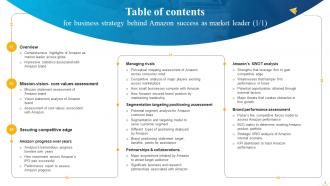
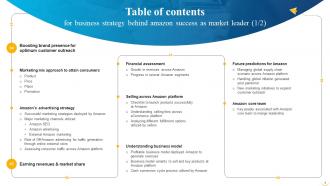
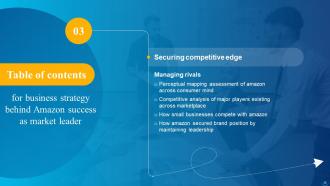
Slide 3: This slide presents the Table of contents.
Slide 4: This is yet another slide continuing the Table of contents.
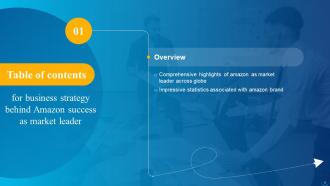
Slide 5: This slide highlights the Title for the Topics to be covered further.
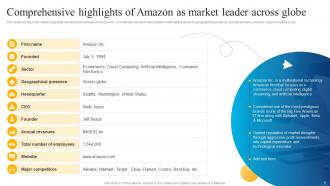
Slide 6: This slide provides information regarding overall brand overview of Amazon Inc. a multinational ecommerce platform.
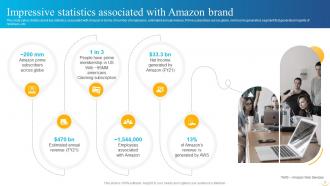
Slide 7: This slide caters details about key statistics associated with Amazon in terms of number of employees, estimated annual revenue, Prime subscribers across globe, etc.
Slide 8: This slide elucidates the Heading for the Components to be discussed next.
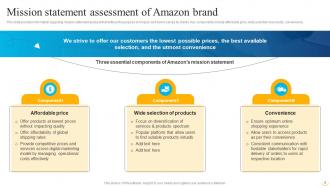
Slide 9: This slide provides incorporates the mission statement analysis, defining the purpose of Amazon and how it serves its clients.
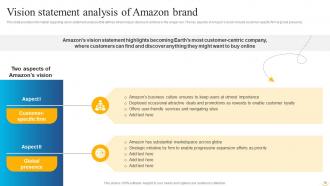
Slide 10: This slide exhibits the vision statement analysis that defines what Amazon desires to achieve in the longer-run.
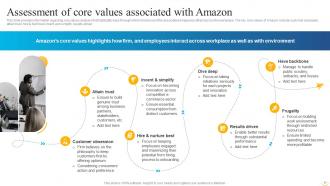
Slide 11: This slide provides information regarding core values analysis.
Slide 12: This slide lists the Title for the Ideas to be discussed next.
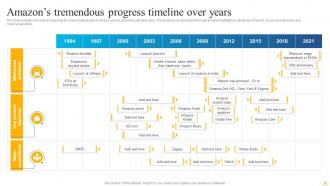
Slide 13: This slide gives a glimpse of the impeccable growth of Amazon across globe through past years.
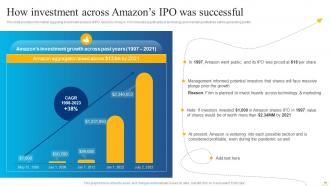
Slide 14: This slide showcases the investment analysis of IPO raised by Amazon.
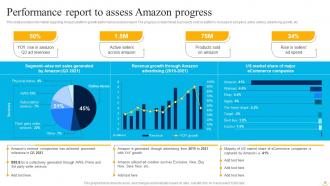
Slide 15: This slide elucidates Amazon growth performance analysis report.
Slide 16: This slide shows the Heading for the Idaes to be covered in the next slide.
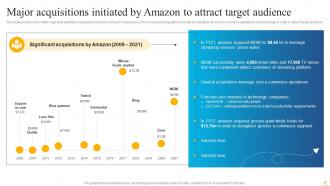
Slide 17: This slide provides information regarding potential businesses acquired by Amazon in past years.
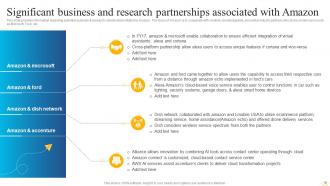
Slide 18: This slide contains the potential business & research collaboration initiated by Amazon.
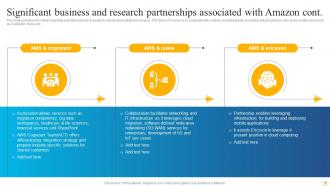
Slide 19: This is yet another slide continuing the business and research partnerships associated with Amazon.
Slide 20: This slide mentions the Title for the Components to be discussed further.
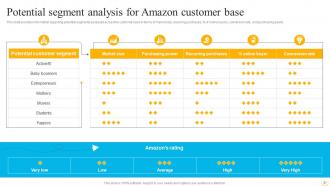
Slide 21: This slide indicates the Potential segment analysis for Amazon customer base.
Slide 22: This slide depicts the Segmentation and targeting model to serve customer segment.
Slide 23: This slide provides information regarding segregating consumers into groups based on specific characteristics.
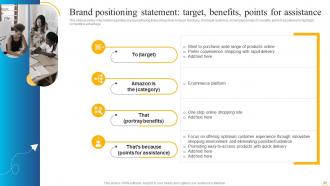
Slide 24: This slide portrays how Amazon functions, the target audience, etc., point of assistance to highlight competitive advantage.
Slide 25: This slide elucidates the Heading for the Topics to be covered in the forth-coming template.
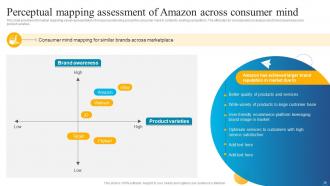
Slide 26: This slide deals with the Perceptual mapping assessment of Amazon across consumer mind.
Slide 27: This slide focuses on the Competitive analysis of major players existing across marketplace.
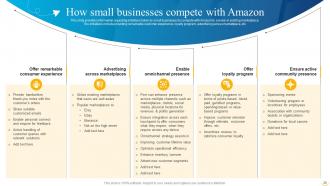
Slide 28: This slide provides information regarding initiatives taken by small businesses to compete with Amazon to survive in existing marketplace.
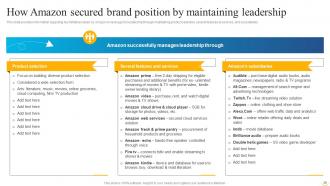
Slide 29: This slide exhibits How Amazon secured brand position by maintaining leadership.
Slide 30: This slide displays the Title for the Topics to be covered further.
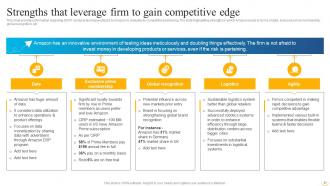
Slide 31: This slide focuses on the Strengths that leverage firm to gain competitive edge.
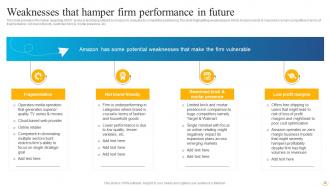
Slide 32: This slide talks about the Weaknesses that hamper firm performance in future.
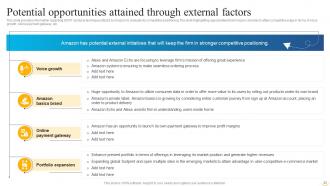
Slide 33: This slide states the Potential opportunities attained through external factors.
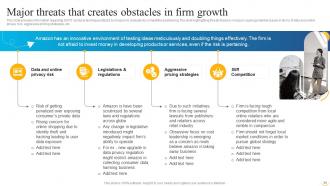
Slide 34: This slide provides information regarding SWOT analysis technique utilized by Amazon to evaluate its competitive positioning.
Slide 35: This slide represents the Heading for the Components to be covered further.
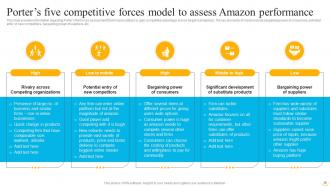
Slide 36: This slide provides information regarding Porter’s five forces assessment that Amazon utilizes to gain competitive advantage across target marketplace.
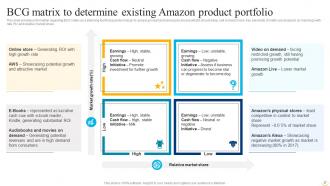
Slide 37: This slide illustrates the BCG matrix to determine existing Amazon product portfolio.
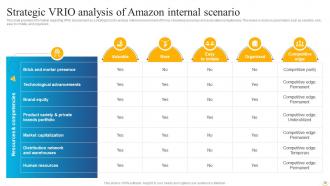
Slide 38: This slide reveals the Strategic VRIO analysis of Amazon internal scenario.
Slide 39: This slide provides information regarding dashboard to monitor Amazon performance.
Slide 40: This slide indicates the Title for the Contents to be discussed in the upcoming template.
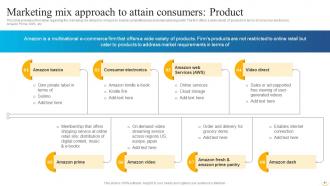
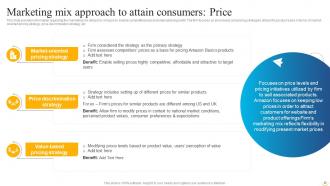
Slide 41: This slide elucidates the marketing mix utilized by Amazon to enable competitiveness and international growth.
Slide 42: This slide provides information regarding the marketing mix utilized by Amazon to enable competitiveness and international growth.
Slide 43: This slide showcases the marketing mix utilized by Amazon to enable competitiveness and international growth.
Slide 44: This slide outlines the marketing mix utilized by Amazon to enable competitiveness and international growth.
Slide 45: This slide states the Heading for the Topics to be covered next.
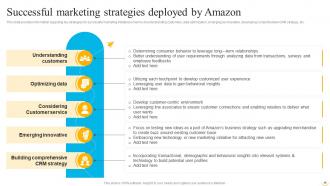
Slide 46: This slide focuses on the Successful marketing strategies deployed by Amazon.
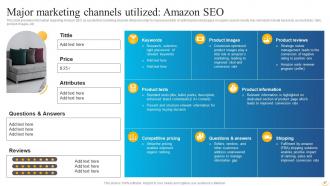
Slide 47: This slide elucidates the Major marketing channels utilized: Amazon SEO.
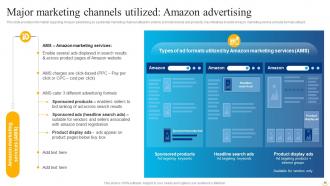
Slide 48: This slide provides information regarding Amazon advertising as a potential marketing channel utilized to promote brands and products.
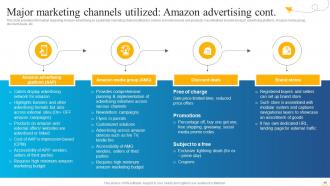
Slide 49: This slide discusses Amazon advertising as a potential marketing channel utilized in order to promote brands and products.
Slide 50: This slide provides information regarding external advertising as a potential marketing channel by using promo channels that are not directly offered by platform.
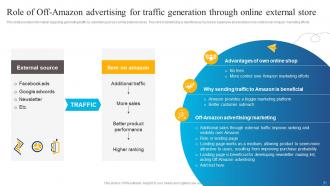
Slide 51: This slide depicts the Role of Off-Amazon advertising for traffic generation through online external store.
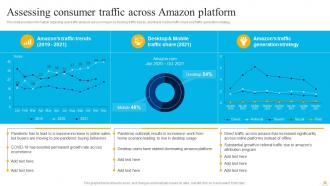
Slide 52: This slide focuses on Assessing consumer traffic across Amazon platform.
Slide 53: This slide mentions the Title for the Topics to be discussed next.
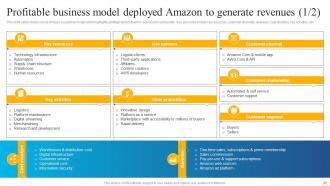
Slide 54: This slide caters details about Amazon’s business model which highlights strategic factors that firm deployed to earn profits.
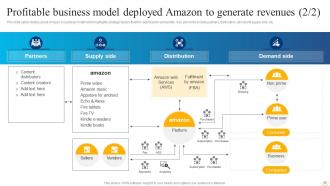
Slide 55: This slide continues the Amazon’s business model.
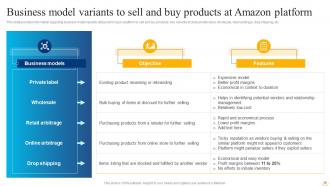
Slide 56: This slide represents the Business model variants to sell and buy products at Amazon platform.
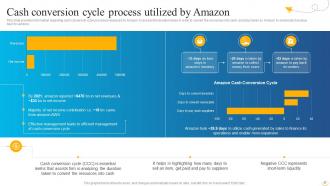
Slide 57: This slide provides information regarding cash conversion cycle procedure deployed by Amazon.
Slide 58: This slide highlights the Heading for the Contents to be covered in the forth-coming template.
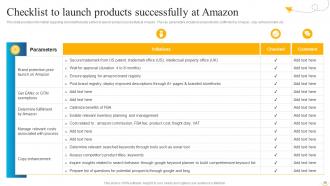
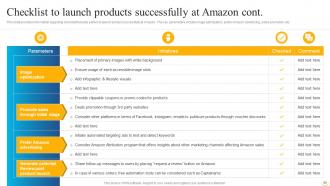
Slide 59: This slide deals with the Checklist to launch products successfully at Amazon.
Slide 60: This slide continues the Checklist.
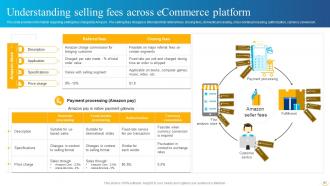
Slide 61: This slide provides information regarding selling fees charged by Amazon.
Slide 62: This slide focuses on Analyzing different fulfillment options utilized by sellers.
Slide 63: This slide reveals the Title for the Ideas to be covered further.
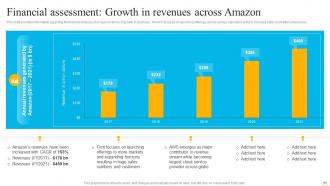
Slide 64: This slide provides information regarding the financial analysis of Amazon in terms of growth in revenues.
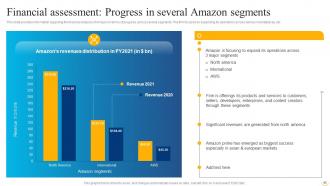
Slide 65: This slide exhibits the financial analysis of Amazon in terms of progress across several segments.
Slide 66: This slide depicts the Heading for the Ideas to be discussed in the forth-coming template.
Slide 67: This slide provides information regarding future predictions for Amazon platform by managing global supply chain scenario.
Slide 68: This slide focuses on Handling global inflation generated post pandemic.
Slide 69: This sldie deals with New marketing initiatives to expand customer outreach.
Slide 70: This slide presents the Title for the
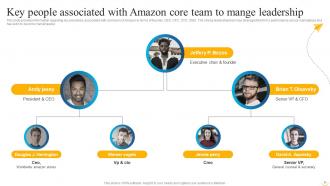
Slide 71: This slide talks about the key executives associated with core team of Amazon in terms of founder, CEO, CFO, CTO, CMO.
Slide 72: This is the Icons slide containing all the Icons used in the plan.
Slide 73: The purpose of this slide is to elucidate Additional information.
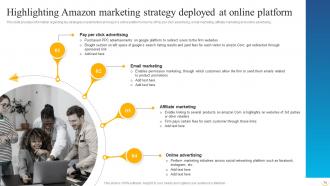
Slide 74: This slide provides information regarding key strategies implemented at Amazon’s online platform.
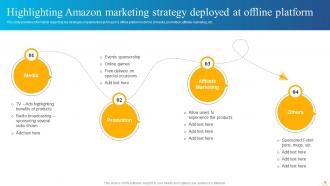
Slide 75: This slide Highlights the Amazon marketing strategy deployed at offline platform.
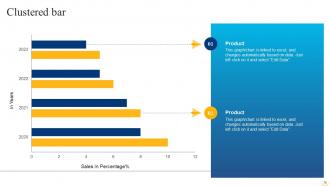
Slide 76: This slide reveals the Clustered bar.
Slide 77: This slide mentions the 30 60 90 days plan for efficient planning.
Slide 78: This slide incorporates the Organization's mission, vision, and goals.
Slide 79: This is the Idea Generation slide for encouraging fresh ideas.
Slide 80: This slide portrays the Company Timeline.
Slide 81: This slide displays the Roadmap of the organization.
Slide 82: This is the Puzzle slide with related imagery.
Slide 83: This slide showcases information related to the Financial topic.
Slide 84: This is the Thank You slide for acknowledgement.
Business Strategy Behind Amazon Success As Market Leader Strategy CD with all 89 slides:
Use our Business Strategy Behind Amazon Success As Market Leader Strategy CD to effectively help you save your valuable time. They are readymade to fit into any presentation structure.






























FAQs for Business Strategy Behind Amazon Success As Market
Honestly, Amazon nailed three things that most companies mess up. First, they cared way more about customers than quarterly earnings - which sounds obvious but is actually pretty rare. Second, they dumped insane amounts of money into infrastructure and AWS while everyone else was focused on quick wins. Their "Day 1" thing where they act like a startup even now? That's legit smart. Oh, and letting third-party sellers on their platform while also competing against them is kind of ruthless but genius. For your situation, I'd ask: are you thinking about next quarter or the next ten years? Most people optimize for the wrong timeframe.
Dude, Amazon literally puts customers before profits in every single call they make. They start by asking "what would actually make this better for customers?" then figure out the business stuff after. That's why they'll do insane things like one-day shipping even though it destroys their margins initially. Building loyalty matters more to them than quick wins. Their whole obsession with customer pain points means they're innovating instead of just copying what everyone else does. Honestly works pretty well for them. When you're planning stuff, try flipping it - start with what your customers actually want first.
Dude, Amazon's data game is honestly insane. They're literally predicting what you'll order before you even think about it, then moving stuff to warehouses near you. Their robots optimize everything - delivery routes, warehouse operations, even pricing that changes by the hour based on demand. The seasonal forecasting months ahead still blows my mind. Oh, and they use it to fix equipment before it breaks, which is pretty smart when you think about it. For your situation, I'd start simple - figure out where you're getting stuck operationally and see what data you've already got sitting around those problem areas.
Dude, Prime is such a brilliant trap! Amazon hooks you with that $139 annual fee, then you feel obligated to buy everything through them to justify the cost. The "free" shipping isn't really free - you already paid for it. They pile on Netflix-style streaming, music, all these extras that make canceling feel wasteful. It's genius honestly. Prime members end up spending like twice as much per year compared to regular customers. The switching costs get so high because you'd lose all those bundled perks. If you're ever building a subscription business, Amazon's playbook is worth studying.
Dude, Amazon's whole thing is basically powered by tech. Their AI predicts what people want before they even search for it - kinda creepy but smart. Warehouses are full of robots working with humans to get stuff packed super fast. They've got algorithms constantly figuring out the best delivery routes and coordinating everything from suppliers to your door. Honestly, their scale is just insane. If you're looking to improve supply chains, start with data analytics first. That's where they built their foundation and it shows.
Yeah so Amazon's basically playing both sides - they're your platform but also your competitor. They watch what sells well in their marketplace, then boom, suddenly there's an Amazon Basics version. Pretty shady if you ask me, but smart business I guess. Plus they give their own stuff better search placement and Buy Box priority. If you're selling there, don't compete on price alone - you'll lose every time. Focus on building actual brand loyalty instead. Make products that are unique enough they can't just copy them easily. It's tough but doable.
So Amazon's basically built this insane logistics network with warehouses everywhere, plus they'll slash prices since they can buy in massive bulk. They've also branched out into cloud stuff, ads, media - way beyond just selling books online (remember when that's all they did?). Prime membership was genius too. What's crazy is how they ran on razor-thin profits for years just to grab market share. Most companies would've panicked. Now whenever competitors figure out one thing Amazon's doing, they're already three steps ahead building something else. It's honestly pretty ruthless but effective.
Amazon basically started as a bookstore and now they're everywhere, right? They're smart about it though - they don't just dump their US playbook on other countries. In India they focus way more on delivery logistics, but in America it's all about pushing Alexa and voice stuff. Makes sense since different places want different things. Honestly, it's kinda genius how they spread their costs across all these regions while still dominating each market. They actually study what people need instead of assuming everyone wants the same experience.
Dude, Amazon's acquisition game is wild. They bought Whole Foods, Ring, MGM, Twitch - but here's the thing, they're not just collecting companies. Each purchase gives them new ways to grab customer data and create more touchpoints. Ring gets them into your doorstep, Whole Foods into your groceries, etc. It all feeds back into their main platform and creates this crazy web where everything connects. Honestly kind of scary how well it works. If you're trying to compete with them anywhere, you can't just focus on your one product - you need to think about building your own connected experience that keeps people coming back.
Honestly, Amazon's AI game is pretty insane when you think about it. Their recommendation system already knows what you want before you do, and those warehouses basically run themselves with robots doing most of the work. Alexa's everywhere now too. AWS makes them crazy money by selling AI tools to other companies - smart move tbh. The Go stores are wild, just grab stuff and walk out. They're using all our shopping data to make everything smarter. For your company, I'd look at how they made AI part of everything instead of just slapping it on top.
Amazon's doing the sustainability thing mostly for brand reasons, honestly. Helps them look better after all that criticism about their carbon footprint. You see those electric vans everywhere now, plus they're always talking about their Climate Pledge stuff. The smart part? It actually saves them money too - less waste, better efficiency. And younger employees want to work somewhere that seems responsible. What's clever is how they sell it as innovation instead of just following rules. Makes them look like tech leaders rather than companies just checking boxes.
Yeah so Amazon's basically getting hammered from everywhere right now. Antitrust stuff in the US and EU is the biggest headache - regulators think they're crushing competitors through their marketplace and acquisitions. There's also GDPR privacy issues, tax fights in different countries, labor problems. Oh and their cloud dominance is raising eyebrows too, especially how they use third-party seller data. Honestly feels like something's gotta give soon. If you're watching their stock or whatever, I'd definitely keep tabs on whether they'll have to break up parts of the business.
Dude, Amazon's fulfillment thing is honestly genius. They've got warehouses everywhere, so your stuff is basically sitting down the street before you even click buy. The scale they're operating at means they can ship way cheaper than smaller companies - it's not even close. They keep throwing robots and automation at everything too, which makes it even more efficient. But here's what really gets me: once you build that kind of massive infrastructure, good luck to anyone trying to compete without spending billions upfront. That's a pretty solid moat if you ask me.
COVID didn't really change Amazon's game plan - it just hit the gas pedal. They went absolutely nuts hiring, like 400,000 people in one year which is insane. The whole remote work thing made AWS explode even more than it already was. Plus they jumped deeper into healthcare stuff with Amazon Pharmacy. Honestly, the pandemic just proved they'd been betting on the right horses all along - cloud services, automation, that whole logistics empire. Now they're trying to hold onto those crazy growth numbers while figuring out what's next. It's pretty smart when you think about it.
Bezos basically built Amazon around this "Day 1" thing where they act like they're still a scrappy startup. Teams can experiment without asking permission from a million committees. The whole "disagree and commit" culture means people actually argue about ideas instead of just nodding along - which honestly more companies should try. They hire and promote based on stuff like "invent and simplify" so it's not just motivational poster nonsense. What really works is letting people fail without getting fired and rewarding long-term bets over quarterly panic. Wall Street hates it but customers love it.
-
The best and engaging collection of PPTs I’ve seen so far. Great work!
-
Easy to edit slides with easy to understand instructions.