


Career Matrix With Individual Development Plan




Try Before you Buy Download Free Sample Product
 Impress Your
 Audience
 100%
100% Editable
 Save Hours
 of Time


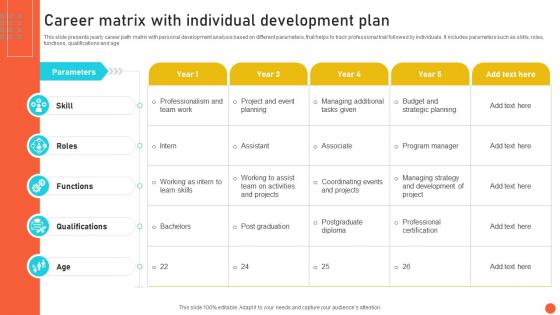
This slide presents yearly career path matrix with personal development analysis based on different parameters, that helps to track professional trail followed by individuals. It includes parameters such as skills, roles, functions, qualifications and age
People who downloaded this PowerPoint presentation also viewed the following :
Career Matrix With Individual Development Plan with all 6 slides:
Use our Career Matrix With Individual Development Plan to effectively help you save your valuable time. They are readymade to fit into any presentation structure.





FAQs for Career Matrix With
Honestly, the SMART goal thing actually works - specific, measurable, achievable, relevant, time-bound. I know it sounds corporate-y but hear me out. Those vague goals like "get promoted" are useless (learned that the hard way). Break big stuff into smaller pieces you can track. Figure out what skills you need first. Then write everything down and check quarterly - literally schedule calendar reminders or you'll forget. Oh, and definitely loop your manager in so they know what you're working toward. Way better than just crossing your fingers and hoping for the best.
Honestly, having a good mentor changes everything. They'll give you the real scoop on office politics and industry stuff your boss won't tell you. Plus their network opens doors you didn't even know existed. My mentor taught me more about thinking strategically over random coffee meetings than any corporate training ever did - which says something about those programs, doesn't it? They won't sugarcoat feedback like your manager might. Best part? They've already screwed up the things you're about to screw up. Just make sure you pick someone whose career you actually want, not whoever offers first.
Dude, continuous learning is literally how you stay ahead of the game. Everything moves so fast now - like, AI basically took over overnight and half the stuff I learned in college feels ancient. You've got to keep picking up new skills or you'll get left behind. Companies love hiring people who actually care about growing, you know? Oh, and here's the cool part - learning random stuff sometimes leads to opportunities you never saw coming. I'd start with just 30 minutes a week on whatever's hot in your field right now. Nothing crazy, but it adds up.
Honestly, networking is just about making real connections with people. You'll get the inside scoop on jobs and industry stuff way before it's posted anywhere public. People hire who they know - that's just how it works, even if it seems unfair sometimes. Don't be that person who only reaches out when they need something though. Actually help others first. Hit up industry meetups or online groups. Oh, and definitely follow up after meeting someone - most people forget this part. Try reaching out to one new person this week and see what they're working on. You might be surprised where it leads.
Data analysis and AI stuff are everywhere right now - seriously, check any job board. Cloud computing too. Cybersecurity's massive (feels like literally everyone got breached this year lol). Soft skills matter more with remote work being the norm - adaptability, emotional intelligence, that kind of thing. Project management and UX design stay pretty consistent across different industries. My advice? Pick one or two technical skills that actually fit what you want to do. Even basic level helps you stand out. Online courses work fine for getting started.
Honestly, building a personal brand is one of the smartest moves you can make career-wise. When you consistently put your expertise out there, the right people start noticing you. Hiring managers remember your name when roles open up. You become that person they think of for specific opportunities. Plus, you'll attract jobs that actually fit what you want to do instead of settling for whatever's available. I'd start by figuring out what you want to be known for - maybe it's data analysis or project management, whatever. Then just share insights about that stuff regularly on LinkedIn. It's basically like networking but without the awkward small talk at events.
Honestly, certs are worth it if you pick the right ones. They definitely make you more hireable and usually bump up your salary too. Companies love seeing that verified proof you actually know your stuff - way better than just claiming skills on a resume. My friend got promoted last year partly because she had the cert her boss required for the new role. The courses themselves are pricey, yeah, but you meet good people in your field. I'd say look up which ones actually matter in your industry first. Oh, and check if work will pay for it before you shell out your own cash.
Figure out what you genuinely want to do next, not what sounds impressive. Side projects or quick courses can help bridge the gap skill-wise. LinkedIn's actually decent for finding people in your target field - I know, I know, but it works. Have conversations now even if you're not ready to jump yet. Don't be a jerk to current coworkers on your way out. Those connections matter more than you think. Oh, and resist the urge to take the first offer that comes along. You'll thank yourself later for being picky about the right fit.
Think of feedback like a GPS for your career - shows you exactly where you stand versus where you want to go. You'll spot blind spots you didn't even know existed, plus see how others actually view your work. Honestly, most people are terrible at self-assessment anyway. When you ask for it, be super specific though. Don't just say "how am I doing?" Try something like "what's one thing I could change about how I run client meetings?" Way more useful. Managers also eat this stuff up because it shows you're not just coasting.
Honestly, most people think good work just gets noticed automatically - huge mistake. You've gotta actually tell your boss about your wins and where you want to go career-wise. Building better relationships with the right people matters way more than we'd like to admit. Figure out what skills you're missing and make a real plan to fix it. Could be training, side projects, whatever works. Oh and definitely have that awkward career chat with your manager soon. Get them to spell out what moving up actually looks like instead of guessing.
Honestly, workplace culture makes or breaks your career trajectory. Good environments with solid mentorship? You'll grow way faster and actually get noticed for promotions. But toxic places will suck the life out of you - learned that one the hard way. The people around you shape what skills you pick up and who ends up in your network. Plus there's the whole waking up thing - are you excited or already planning your escape route? When you're job hunting, watch how leadership actually treats employees and whether they invest in people's growth. Sometimes decent pay isn't worth the misery.
Dude, seriously consider doing some internships or volunteer work. You'll get actual hands-on experience instead of just theory from school. Plus networking is huge - I swear like half my job leads came from people I met while volunteering. It's also a great way to test out different fields before you're stuck somewhere you hate. Even unpaid stuff is worth it because it fills resume gaps and shows you're motivated. You might discover you love something totally unexpected or realize your "dream job" actually sucks. Just pick something that sounds interesting and go for it.
Dude, tech can totally transform your career game. Online courses on Coursera or LinkedIn Learning are clutch for picking up new skills. Job boards now match your profile with opportunities automatically, which is pretty sweet. LinkedIn's great for showing off what you know and keeping up with industry stuff - just don't fall down the rabbit hole for hours like I do sometimes. Virtual communities and webinars are solid too. Honestly, networking apps make connecting with industry people way less awkward than cold emails. Pick one skill you're missing and find a course for it this week.
Okay so first thing - be brutally honest about where you're at vs where you wanna be in like 2-3 years. Get specific about skills, roles, whatever. Then figure out your 3-5 biggest gaps. I used to go way overboard with mine and never actually did anything lol. Break each goal down into smaller chunks with actual deadlines. Mix hard skills (certs, training) with soft ones too. Oh and definitely set up quarterly check-ins with yourself - otherwise you'll totally forget about it. The whole thing only works if you keep it realistic and actually look at it regularly instead of shoving it in some random folder.
Honestly, I'd set some concrete goals every 6-12 months - salary bumps, new skills, bigger responsibilities, whatever matters to you. I keep this dorky "wins" doc that I update monthly (my friends tease me but it actually helps when review time comes around). Beyond the obvious stuff like titles and money, pay attention to whether people are reaching out with opportunities. Are you excited about work or just dragging yourself there? Your network growing? Learning new things or just going through the motions? Do a little self-check every few months. Sometimes the soft stuff - like actually enjoying what you do - matters more than the paycheck anyway.
-
Great product, helpful indeed!
-
Requested a complete pitch deck. Delivered immediately and with high quality well researched content.