


Case study for marketing mix powerpoint template




Try Before you Buy Download Free Sample Product
 Impress Your
 Audience
 100%
100% Editable
 Save Hours
 of Time


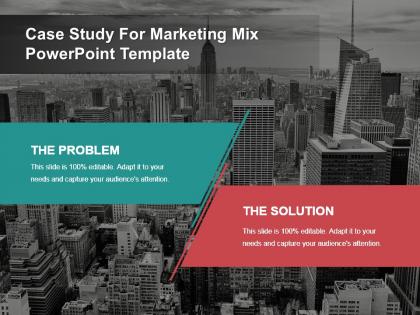
The case study for marketing mix PowerPoint template is professionally created for your business marketing presentation. These real scenario cases can provide a learning path for the new generation of employees. It can be utilized by marketers to describe market segmentation, targeting and positioning as a means of deciding the best marketing strategy for your organization. This marketing mix analysis PPT design covers many topics such as 4P marketing, 7P marketing, company promotion, promotional strategy, advertisement strategy, sales promotion, product life cycle, promotional strategies, public relations, 7C compass model, communication, and co-marketing. This slide contains visually-appealing professional background along with the text. You can modify the shape, size and color of all the elements to create a top-quality marketing presentation. Download case study for marketing mix presentation diagram to create a perfect business report.Our Case Study For Marketing Mix Powerpoint Template are a crucial component. They can bridge every gap.
People who downloaded this PowerPoint presentation also viewed the following :
Case study for marketing mix powerpoint template with all 6 slides:
Get into higher gear with our Case Study For Marketing Mix Powerpoint Template. Derive greater effort from your colleagues.
FAQs for Case study for marketing
Ok so you've got the 4 Ps to think about - product, price, place, promotion. Your product has to actually solve something people care about. Price it so it makes sense for what you're offering and where you sit in the market. Distribution is huge - like, how are people actually gonna find and buy this thing? Everyone gets obsessed with the flashy marketing stuff, but that's honestly pointless if your product sucks or it's priced wrong. Oh, and timing matters way more than people realize. Launching right before Christmas vs. February? Totally different game. Just map each of these out based on who you're targeting and what you can actually afford to spend.
Look, digital marketing just makes everything you're already doing way better. You can actually see what's working instead of throwing money into the void - which is honestly game-changing. Product feedback happens in real-time now, pricing gets way more flexible with A/B testing, and your reach explodes through e-commerce and social platforms. The promotion side is where things get really fun though - targeted ads, influencer partnerships, content that actually converts. My advice? Don't overthink it. Pick one piece of your current strategy and just add some digital to it. Test it out and see what happens.
Look, your customers' behavior is literally everything when it comes to your marketing mix. Their preferences change? Your product features, pricing, distribution, and messaging need to change too. Say your audience starts shopping online instead of hitting stores - you'd better shift your distribution strategy quick. I learned this the hard way at my last job, honestly. Track their buying patterns and price sensitivity regularly. Also watch how they consume media and what they think about your brand. Those metrics will tell you when to adjust your 4Ps. The key is spotting shifts before your competition does and adapting fast.
You literally can't just copy your marketing strategy everywhere - cultures are way too different. McDonald's had to make rice burgers in Asia, which honestly makes sense when you think about it. Pricing gets tricky because what people can afford varies massively, plus some cultures expect to haggle while others don't. Your ads that work great here might completely miss the mark somewhere else. Distribution's another headache - good luck using US retail strategies in rural India where local markets rule. Do your homework on local habits, religious stuff, and how people actually communicate before you change anything.
Okay so pricing is basically everything in your marketing mix. It shapes how people see your product's value AND affects your profits. I've watched companies absolutely nail their product and distribution but then price themselves right out of their target market - such a waste. Your pricing has to match your positioning too. Premium prices work with luxury messaging, competitive prices support that value angle. Also your promotion strategy needs to sync up with whatever price point you choose. My advice? Test different prices early and see how customers react across all your other marketing stuff.
Okay so tracking marketing mix stuff - start with your sales data, customer acquisition costs, and ROI by channel. Don't try to measure everything at once though, you'll go crazy. Conversion rates and customer lifetime value are solid metrics too. Oh and brand awareness surveys if you're doing those. When you tweak pricing or change up your promotions, just watch how those numbers move. The trick is testing one thing at a time so you actually know what's working. Honestly I'd just pick 2-3 metrics that matter most and stick with tracking those consistently.
Dude, don't treat social media like it's separate from everything else you're doing. It should connect all your other marketing stuff - amplify PR campaigns, push people to your content, boost your ads. The messaging needs to stay consistent but tweak the format for each platform obviously. Way too many teams just slap social on as an afterthought and wonder why it's not working. Honestly it's kinda wild how disconnected some campaigns get. Start by figuring out how social can actually support what you're already running.
Honestly, when trends shift you've gotta tweak pretty much everything in your marketing approach. Your product features, pricing, where you sell stuff, how you promote it - all of it needs adjusting or you'll fall behind fast. Look at streaming services flipping entertainment marketing upside down. Or how everyone's obsessed with sustainability now, affecting packaging and pricing decisions. Netflix really nailed this transition while Blockbuster... well, we know how that went. The trick is catching trends early and testing small changes before you're scrambling to catch up later.
Look, it really depends on what fire you're trying to put out. New product launch? You're gonna be throwing money at promotion because people can't buy stuff they've never heard of. Budget customers or competitors slashing prices? Then price becomes your whole world. When you're innovating or dealing with quality disasters, product is everything. Distribution gets the spotlight if you're expanding somewhere new - or honestly, when your supply chain is completely screwed. You just gotta match your focus to whatever's your biggest problem right now.
Honestly, just write down your brand rules for everything - how you talk about products, show pricing, your whole vibe in ads, whatever. Then actually make your teams use it! I swear, half the brands I see have Instagram that sounds nothing like their emails. Super confusing. Do check-ins maybe every few months where you look at all your stuff side by side - website, social, physical stores if you have them. Does it all feel like the same company? Keep one master doc that everyone can access and don't let people just wing it. Oh and definitely review quarterly because things drift fast.
Honestly, it comes down to resources. Big companies can dump money into everything at once - fancy product development, huge ad campaigns, getting their stuff everywhere. You don't have that luxury. Pick maybe 1-2 things from the marketing mix and nail those instead of spreading yourself thin. Maybe you're killer at customer service or you can beat everyone on price. I learned this the hard way trying to do everything at first - total mistake. Focus on what actually gives you an edge in your specific market and ignore the rest for now.
Honestly, case studies are gold because you see exactly how real companies balanced their product, pricing, distribution and promo strategies - not just textbook theory. The cool thing is you learn from their wins AND epic fails without blowing your own money. I'd start with your industry but also peek at totally different sectors. Sometimes a random B2B software case will spark ideas for your retail thing, you know? Maybe try analyzing 2-3 recent ones this week. Way more useful than just reading marketing books.
Honestly? Most companies just focus on one piece instead of seeing how everything connects. Like they'll create this amazing product but price it completely wrong for who they're targeting. Or maybe their marketing is on point but good luck actually finding the product anywhere - drives me crazy when I see that happen. The other big mistake is getting stuck in their ways. Markets shift, you enter new areas, but companies keep doing the same old mix. Everything needs to work together and change together, you know? I'd say check regularly how all four elements actually support each other, not just looking at them solo.
So here's the deal - your competitors will constantly mess with your marketing strategy. They drop prices? You've got two choices: match them or double down on why your stuff's actually worth more. Social media's another headache. If they're crushing it on Instagram, you better step up your game or find somewhere else they're not paying attention to. Distribution gets annoying too when they snag the best shelf space or lock down exclusive deals. Honestly, the trick isn't copying everything they do (that's just lazy). Instead, watch their moves closely and figure out what they're missing. Those gaps? That's where you swoop in.
Honestly, AI integration is huge right now - my team's been testing voice commerce and it's wild how fast it's growing. People want brands to actually care about the environment, not just greenwash everything. Personalization is where it's at too, but like real personalization, not just slapping someone's name in an email. Social selling is exploding (probably because everyone's glued to their phones). Subscription models are totally changing how distribution works. Oh, and direct-to-consumer is becoming the norm rather than the exception. Here's what I'd do: audit where you're at now, pick one trend that fits your budget, and test it out. Stay flexible though - things change crazy fast these days.
-
Excellent Designs.
-
I discovered this website through a google search, the services matched my needs perfectly and the pricing was very reasonable. I was thrilled with the product and the customer service. I will definitely use their slides again for my presentations and recommend them to other colleagues.