

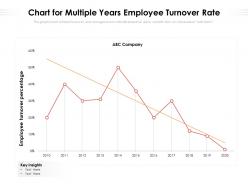
Chart for multiple years employee turnover rate





Try Before you Buy Download Free Sample Product
 Impress Your
 Audience
 100%
100% Editable
 Save Hours
 of Time


Our Chart For Multiple Years Employee Turnover Rate are topically designed to provide an attractive backdrop to any subject. Use them to look like a presentation pro.
People who downloaded this PowerPoint presentation also viewed the following :
Chart for multiple years employee turnover rate with all 2 slides:
Use our Chart For Multiple Years Employee Turnover Rate to effectively help you save your valuable time. They are readymade to fit into any presentation structure.
FAQs for Chart for multiple years
Honestly? Pay, work-life balance, and career growth are the big ones. But it totally varies by industry. Tech companies are bleeding talent because everyone's fighting over the same people - if your comp sucks, they're gone. Healthcare burns people out with insane hours. Retail and hospitality workers bail because of crappy wages and schedules that change every week. Manufacturing gets boring fast with no real path up. Oh, and people jump ship way more when the economy's good - they feel safer taking risks. I'd look at what your industry normally sees, then figure out what your people actually gripe about most.
So basically divide departures by your average headcount each month and quarter, then multiply by 100. Don't just look at company-wide numbers though - they're pretty useless tbh. Break it down by department and role level since that's where you'll actually see what's going wrong. I use a simple spreadsheet to track trends over time. The real trick is figuring out WHY people are leaving - like voluntary vs getting fired, or leaving for promotions vs just being fed up. Sounds obvious but most places skip this part. Once you see the patterns, you can fix the actual problems instead of just hemorrhaging talent.
Dude, culture is HUGE for keeping people around. Toxic workplaces? People flee - like 30-40% turnover rates, it's insane. But flip that script with a positive vibe where folks feel valued and trusted? Turnover drops by half, easy. I've literally watched people turn down higher pay just to stay somewhere they're happy. Wild, right? Your move is surveying the team about what's bugging them culture-wise. Then - and this is key - actually do something about their feedback instead of letting it sit there.
Honestly, good onboarding is huge - it can slash your first-year turnover by like 25-40%. I've literally seen people bail after two weeks because no one bothered explaining the basics to them. Pretty ridiculous when you think about it. New hires who get proper training and actually feel connected to their team? They're way more likely to stick around. The numbers back this up too - structured onboarding makes people 58% more likely to stay past three years. Focus on your 90-day retention specifically, that's where you'll see the biggest difference.
Look at your overall turnover rate first, but honestly the voluntary vs involuntary split is way more useful. Break it down by department and how long people stayed - losing someone after 3 months hits different than after 2 years, you know? Performance level matters too since your top people leaving is obviously worse than dead weight walking out. One thing that helped us was tracking "regrettable" vs "non-regrettable" departures because sometimes turnover is actually doing you a favor. Once you segment the data like this, patterns jump out pretty fast.
Exit interviews are honestly your best shot at figuring out the turnover thing. People tell you the real deal when they're walking out - bad managers, no promotions, crappy pay, whatever. They don't have to sugarcoat anything anymore. Track what everyone's saying and you'll see patterns emerge pretty fast. Multiple people complaining about the same stuff? That's your red flag right there. The hard part isn't collecting the feedback though - it's actually doing something about what you hear. But at least you'll know exactly what's broken instead of just guessing.
Oof, yeah turnover is expensive as hell. You're basically paying 50-200% of someone's salary just to replace them - recruitment, training, all that stuff. But honestly? The worst part is how productivity tanks while new people figure things out. Your remaining team ends up doing double duty and burning out fast. Also you lose all that knowledge when experienced people walk out the door. If your numbers are climbing, start tracking exactly what it's costing you. Makes it way easier to convince leadership that retention programs are worth the investment.
Yeah, those engagement surveys totally work for predicting turnover. Honestly, it's kinda scary how well they predict it - engagement drops, then 3-6 months later people start bailing. Watch job satisfaction, how people feel about their managers, and career development stuff. Those three tank and boom, everyone's suddenly active on LinkedIn again. We run ours quarterly (maybe overkill but whatever). When scores dip below normal, you gotta jump on it fast. Way cheaper than hiring constantly. Oh and the manager relationship thing? That's usually the biggest red flag in my experience.
Honestly, most remote teams crash because nobody talks enough. Schedule those one-on-ones - not just group calls where half the people stay muted anyway. You can't randomly check in anymore, so be super clear about what you expect and give feedback constantly. Good collaboration tools are worth the money, but actually teach people how to use them properly. Tech problems kill productivity fast. Oh, and don't skip the virtual coffee chats or whatever - isolation hits harder than you'd think. I'd start tracking how often you're connecting with each person and see if that lines up with who's leaving.
So here's the thing - people don't quit jobs, they quit bad managers. Leadership training fixes that by teaching your supervisors how to actually communicate and give decent feedback. Plus it covers conflict resolution and helping people grow in their careers, which honestly makes a huge difference. Teams with trained managers see turnover drop by 20-30%, which is pretty solid. I'd start with basic people skills training for your frontline folks first. Then track your retention numbers before and after so you can actually see if it's working. Makes sense to measure this stuff, right?
Dude, the remote work thing is still causing major drama - companies forcing people back to office are losing talent like crazy. Mid-level engineers and PMs especially are bouncing left and right. There's also this weird quiet quitting phase where people mentally check out first, then actually leave a few months later. Startups are poaching everyone with equity deals too. Oh and the talent shortage means people have way more options now, so they're pickier. You should probably check your retention numbers monthly instead of quarterly - things are moving too fast to wait three months for data.
So from what I've seen, your youngest workers (under 30) are gonna bail way more often - like 2-3x higher rates than people over 45. The first 90 days? Total make-or-break territory for new hires regardless of age. But here's the thing - once someone hits that 3-7 year experience range, they usually settle in and quit jumping ship as much. Mid-career people have mortgages and kids, you know? They need stability. I'd honestly break down your turnover numbers by age groups and tenure so you're not throwing random retention stuff at everyone hoping something sticks.
Start with pay - even tiny raises matter more than you'd expect. Flexible schedules are huge too. Regular one-on-ones where you actually listen? Game changer. Don't overthink recognition either. A genuine "thanks, that was awesome" hits different than some corporate pizza party nonsense. Training opportunities keep people from feeling trapped. But here's the real move - those exit interviews everyone ignores? Read them. Look for patterns and fix one thing at a time instead of trying to overhaul everything. Most retention issues aren't rocket science, just basic respect stuff.
Yeah, they definitely work - studies show 15-30% drops in turnover when you do it right. But here's the thing: it can't be that cheesy "employee of the month" garbage everyone rolls their eyes at. Make it genuine and tie it to specific stuff you actually want people doing more of. Train your managers to give real feedback regularly instead of waiting for yearly reviews. Oh and honestly? Just ask your team what would motivate them first - might save you from picking something totally off-base. The biggest mistake is launching it then forgetting about it though.
Dude, work-life balance is huge for keeping people around. I've watched whole teams walk out when they can't unplug or get any flexibility - it's wild how fast it happens. Burnout hits different these days. Companies with decent PTO, remote work, or flexible hours? Way better retention rates across the board. If your turnover numbers are climbing, just ask your team about workload stuff. Honestly feels obvious but so many managers skip that step. Small tweaks there will save you a fortune on hiring new people later.
-
Informative presentations that are easily editable.