


Communication Channels And Strategies For Shareholder Engagement Powerpoint Presentation Slides




Try Before you Buy Download Free Sample Product
 Impress Your
 Audience
 100%
100% Editable
 Save Hours
 of Time


A shareholder engagement strategy can help an organization develop and strengthen its relationship with investors. Grab our Communication Channels and Strategies for Shareholder Engagement template that helps to communicate about the latest updates and strategies implemented by the company to shareholders for building trust. It starts by highlighting benefits, concerns, and topics for shareholder engagement. Our Investor relations deck also shows the different types of companies for investor engagement through various communication techniques. Additionally, it highlights planning techniques like formulating a governance committee and communication calendar. Further, our Investor engagement PPT communication channels like website, email, and social media for shareholder engagement. It also showcases various shareholder strategies for websites like sharing annual reports, posting SEC filings, proxy statements, governance roadshows, and podcasts. Our Corporate strategy module exhibits an email channel to communicate critical updates and techniques to shareholders. Lastly, it shows various social media channels, like Facebook, YouTube, etc., for communicating with shareholders and covers other strategies like meetings, sharing ESG practices, and conducting investors survey for shareholder engagement. Get instant access.
People who downloaded this PowerPoint presentation also viewed the following :
Content of this Powerpoint Presentation
Slide 1: This slide introduces Communication Channels and Strategies for Shareholder Engagement. Commence by stating Your Company Name.
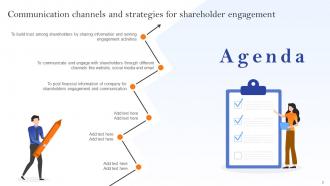
Slide 2: This slide depicts the Agenda of the presentation.
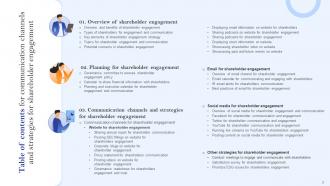
Slide 3: This slide incorporates the Table of contents.
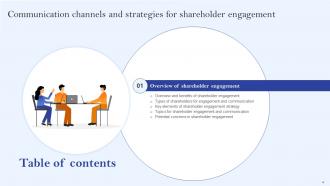
Slide 4: This slide highlights the Title for the Topics to be covered in the following template.
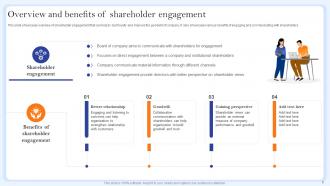
Slide 5: This slide showcases overview of shareholder engagement that can help to built loyalty and improve the goodwill of company.
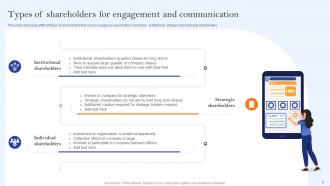
Slide 6: This slide states the Types of shareholders for engagement and communication.
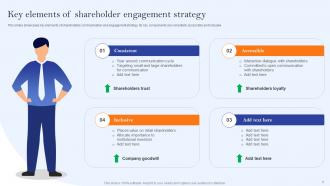
Slide 7: This slide displays the Key elements of shareholder engagement strategy.
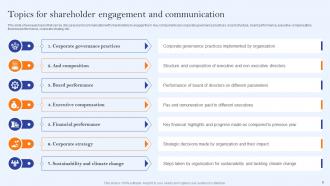
Slide 8: This slide reveals the Topics for shareholder engagement and communication.
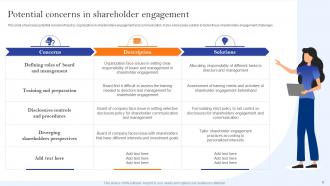
Slide 9: This slide indicates the Potential concerns in shareholder engagement.
Slide 10: This slide elucidates the Heading for the Contents to be discussed next.
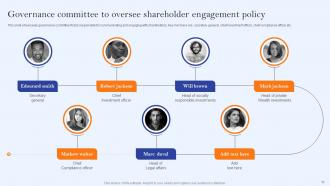
Slide 11: This slide represents the Governance committee to oversee shareholder engagement policy.
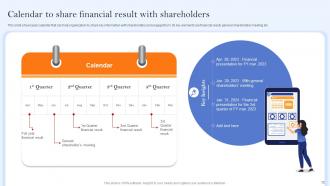
Slide 12: This slide portrays the Calendar to share financial result with shareholders.
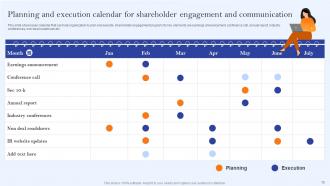
Slide 13: This slide focuses on the Planning and execution calendar for shareholder engagement and communication.
Slide 14: This slide depicts the Title for the Ideas to be covered in the following template.
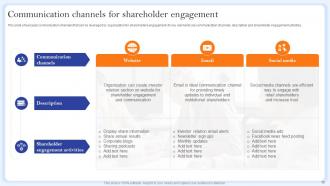
Slide 15: This slide showcases communication channels that can be leveraged by organization for shareholders engagement.
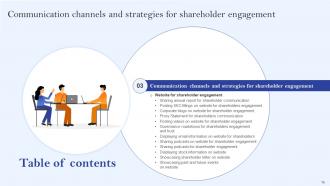
Slide 16: This slide highlights the Heading for the Ideas to be discussed next.
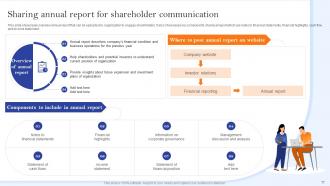
Slide 17: This slide focuses on Sharing annual report for shareholder communication.
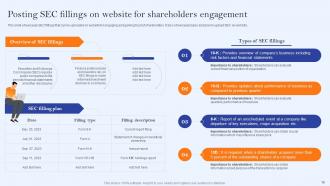
Slide 18: This slide portrays SEC fillings that can be uploaded on website for engaging and gaining trust of shareholders.
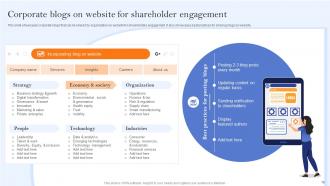
Slide 19: This slide displays the Corporate blogs on website for shareholder engagement.`
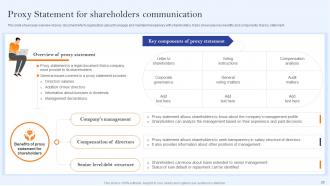
Slide 20: This slide indicates the Proxy Statement for shareholders communication.
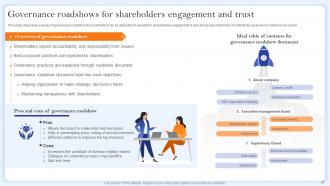
Slide 21: This slide mentions about the Governance roadshows for shareholders engagement and trust.
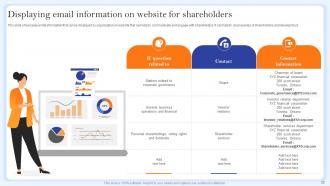
Slide 22: This slide deals with Displaying email information on website for shareholders.
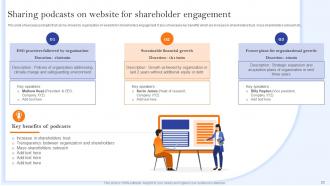
Slide 23: This slide focuses on Sharing podcasts on website for shareholder engagement.
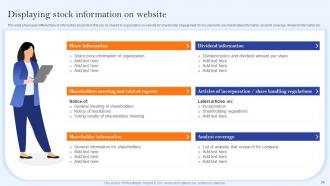
Slide 24: This slide showcases information about stock that can be shared by organization on website for shareholder engagement.
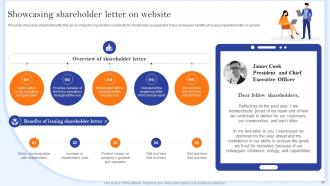
Slide 25: This slide reveals shareholder letter that can be shared by organization on website for shareholders engagement.
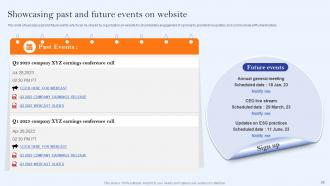
Slide 26: This slide emphasizes on Showcasing past and future events on website.
Slide 27: This slide includes the Title for the Contents to be covered further.
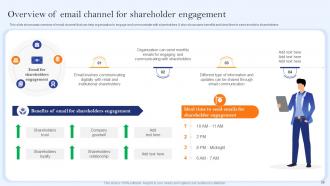
Slide 28: This slide showcases the overview of email channel that can help organization to engage and communicate with shareholders.
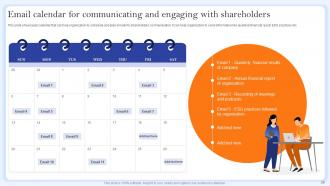
Slide 29: This slide presents the Email calendar for communicating and engaging with shareholders.
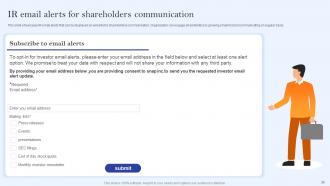
Slide 30: This slide mentions about the IR email alerts for shareholders communication.
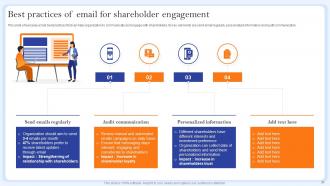
Slide 31: This slide exhibits the Best practices of email for shareholder engagement.
Slide 32: This slide includes the Heading for the Topics to be discussed in the forth-coming template.
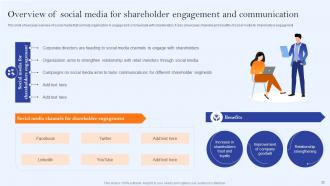
Slide 33: This slide reveals the overview of social media that can help organization to engage and communicate with shareholders.
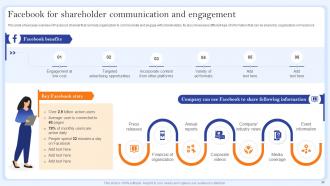
Slide 34: This slide highlights Facebook for shareholder communication and engagement.
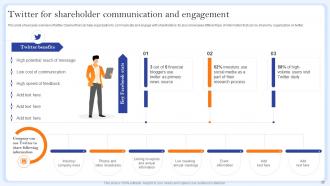
Slide 35: This slide talks about Twitter for shareholder communication and engagement.
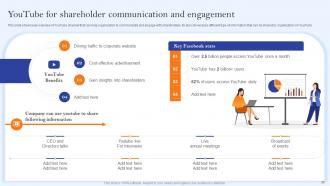
Slide 36: This slide provides information on YouTube for shareholder communication and engagement.
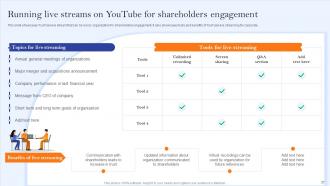
Slide 37: This slide deals with Running live streams on YouTube for shareholders engagement.
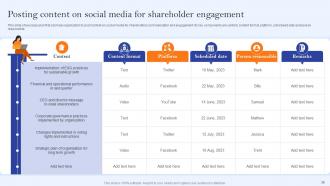
Slide 38: This slide focuses on Posting content on social media for shareholder engagement.
Slide 39: This slide incorporates the Title for the Topics to be covered next.
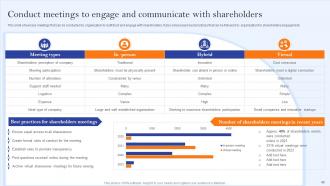
Slide 40: This slide showcase meetings that can be conducted by organization to built trust and engage with shareholders.
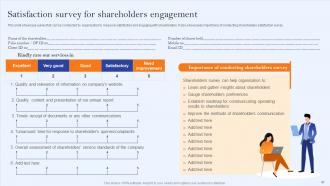
Slide 41: This slide reveals the Satisfaction survey for shareholders engagement.
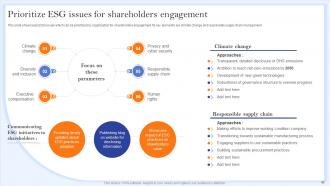
Slide 42: This slide highlights ESG issues which can be prioritized by organization for shareholders engagement.
Slide 43: This is the Icons slide containing all the Icons used in the plan.
Slide 44: This slide is used for depicting some Additional information.
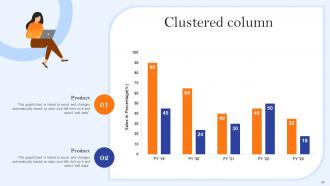
Slide 45: This slide reveals the Clustered column.
Slide 46: This is About our company slide. State your organization-related information here.
Slide 47: This slide includes the firm's Our vision, mission, and goal.
Slide 48: This is Our awesome team slide. State your team-related information here.
Slide 49: This slide contains the Post it notes for reminders and deadlines.
Slide 50: This slide elucidates the Company Roadmap.
Slide 51: This is the Quotes slide for motivation.
Slide 52: This is the 30 60 90 Days plan slide for effective planning.
Slide 53: This slide showcases information related to the Financial topic.
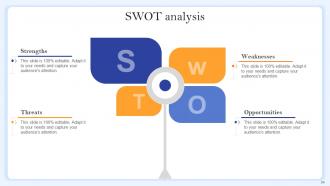
Slide 54: This slide reveals the SWOT analysis.
Slide 55: This is the Idea generation slide for encouraging fresh ideas.
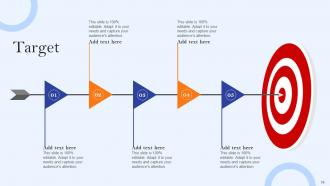
Slide 56: This is the Target slide. State your firm's targets here.
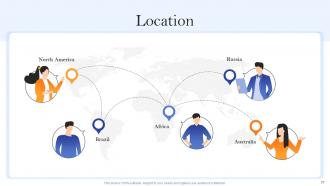
Slide 57: This slide highlights the Location of the company across the globe.
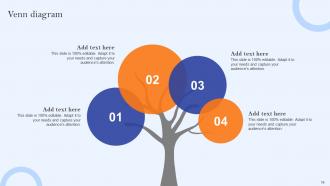
Slide 58: This slide displays the Venn diagram.
Slide 59: This slide shows the Timeline of the organization.
Slide 60: This is the Puzzle diagram with related imagery.
Slide 61: This is the Thank You slide for acknowledgement.
Communication Channels And Strategies For Shareholder Engagement Powerpoint Presentation Slides with all 66 slides:
Use our Communication Channels And Strategies For Shareholder Engagement Powerpoint Presentation Slides to effectively help you save your valuable time. They are readymade to fit into any presentation structure.














FAQs for Communication Channels And Strategies For Shareholder Engagement
Look, it's really about building trust and keeping everyone on the same page. You want shareholders to actually feel heard, not just managed. Communicate your strategy upfront and tackle their concerns before they blow up into bigger problems. Honestly, treating it like any relationship works - regular check-ins beat emergency damage control every time. Get their feedback too, since they might have insights you hadn't considered. I'd start by figuring out who your key people are, then set up consistent touchpoints throughout the year. Don't just wait for earnings calls - that's when everyone's already stressed anyway.
So basically, when shareholders get involved and start asking hard questions, companies can't just hide behind vague PR speak anymore. They have to actually explain their decisions. Board meetings become way more interesting - well, as interesting as corporate stuff gets lol. You'll notice better risk management, more diverse leadership, clearer exec pay rules. The tricky part? Some companies just pretend to listen while others genuinely change how they operate. Watch for whether they're actually using shareholder input or just checking boxes to shut people up.
Honestly, tech has completely changed how companies deal with shareholders these days. Virtual AGMs are huge now, plus you can send all that proxy stuff digitally instead of printing mountains of paper. There are these investor portals where people can ask questions in real-time - way better than the old stuffy meetings. The analytics side is where it gets interesting though. You can actually see voting patterns and track what shareholders are thinking instead of flying blind. Oh, and mobile apps make it so much easier for regular retail investors to jump in. Used to be such a pain getting them involved. If you're still doing things the old way, definitely worth upgrading your whole setup.
Track the obvious stuff first - meeting attendance, survey responses, voting rates. Those numbers matter. But honestly? The real insights come from actually talking to people. Post-meeting surveys are gold, and one-on-ones tell you what shareholders really think (not just what they'll say publicly). Response time to investor questions is huge too - shows you actually care. I'd probably set up some basic tracking system and check it every quarter or so. The qualitative feedback usually ends up being way more useful than just counting heads.
So here's what actually works - start with regular communication through newsletters or shareholder portals, but don't just blast generic updates. Create real feedback channels where minority shareholders can actually speak up. Most companies totally blow this off, which is dumb because the engaged ones see way better results. Try hosting smaller meetings beyond your big annual circus. Oh, and be upfront about major decisions before you make them - nobody likes surprises. The whole thing has to feel genuine though, not like you're just checking boxes.
Oh totally - you've gotta adapt big time depending where your shareholders are. Americans want straight numbers and constant updates, no fluff. Europeans are way more formal and think long-term. Asia's tricky though, relationship stuff matters huge and you can't embarrass anyone publicly (learned that one the hard way). Some places expect you to debate management openly, others think that's super rude. Meeting styles are completely different too. I'd definitely dig into who exactly you're dealing with first. Then match how you communicate - timing, formality, the whole thing.
Dude, first thing - get back to them within 48 hours max, even if it's just "got your message, need more time to dig into this properly." Radio silence will absolutely kill you here. When you do have your full response ready, be straight with them about what you think. Skip the corporate BS and just tell them your actual concerns. If their proposal won't work, explain why and throw out some alternatives if you can think of any. Oh and definitely keep records of everything - I learned that one the hard way. Following up after board meetings shows you're not just going through the motions.
Honestly, just be super upfront about your long-term plan and show how today's moves fit the bigger picture. Yeah, some shareholders will always want quick wins - that's just reality. But educate them on why spending on R&D or expansion might ding this quarter while building real value later. Keep giving regular updates so they're not left guessing. Most institutional investors actually prefer companies with clear vision over ones just chasing quarterly numbers. Set expectations early, stick to your timeline, and document everything. That way you can prove how current decisions connect to future results. Communication really makes or breaks this whole thing.
Dude, ignoring your shareholders is a recipe for disaster. Your stock price tanks when investors lose confidence. Future fundraising becomes way harder and more expensive. Shareholders will start fighting you on decisions - proxy battles are absolute nightmares, by the way. You'll miss out on solid feedback that could actually help your business. Honestly, institutional investors now judge companies partly on how well they communicate with shareholders. My advice? Set up regular calls with investors and don't wait for problems to pop up before reaching out.
Just be straight with your investors, honestly. Skip the corporate BS - write updates like you're talking to real people. Regular earnings calls are crucial, and keep your investor page actually updated (shocking concept, right?). When shareholders email you, get back to them fast. The worst thing? Going quiet when stuff gets rough. I've watched companies tank their credibility doing exactly that. Good news, bad news - share it all on a schedule they can count on. Maybe send a quick calendar so everyone knows what to expect and when. Consistency beats perfection every time.
So basically, institutional investors run the whole game when it comes to shareholder stuff. They've got the voting power and money to actually change things - ESG policies, CEO pay, board makeup, all that. Individual shareholders? Pretty much powerless by comparison. These big institutions coordinate campaigns and do serious research across tons of companies. Honestly, proxy season is just them flexing their influence. If you're planning any engagement strategy, you better figure out what your major institutional shareholders want first. They're gonna dictate what gets attention and what dies on the vine. It's just how the system works.
Honestly, skip the boring quarterly reports and just talk to your shareholders on social media. Twitter's perfect for quick updates and addressing concerns fast. LinkedIn works too. Instagram's actually great for showing behind-the-scenes stuff - makes you seem more human, you know? Don't overthink it though. Being real beats being polished every time. Just pick one platform first and get comfortable with it. Oh, and definitely have someone watching for questions and set some basic guidelines so you don't accidentally say something dumb. Those formal press releases are basically dead anyway.
Track your shareholder meeting attendance and how many people actually speak up during Q&As. Response rates to surveys matter too. Your investor relations page gets way more attention than most companies realize - monitor those downloads and traffic numbers. How often do investors reach out directly? What's their vibe when they do? Response time to inquiries is huge, btw. Are you actually answering what they're asking about in your comms? Oh, and track whether you're hitting their main concerns. These basics will give you a decent starting point to build from.
Look, investors today actually care about long-term stuff, not just fast cash grabs. Get them talking about ESG early - way before they start demanding answers about your carbon footprint or whatever. The shift has been crazy to watch honestly. These big institutional players are totally obsessed with climate risk now. Yeah, sustainable practices cost more upfront, but that's where the buy-in matters. You're building trust while catching problems before they blow up your budget. Don't be reactive about it. Start those conversations yourself and you'll stay ahead of the game.
Dude, this stuff gets messy fast depending where you are. The US has SEC disclosure rules and proxy requirements you can't ignore. UK's got totally different beneficial ownership reporting under their Companies Act. Then the EU throws in their Shareholder Rights Directive - honestly feels like they just love making things complicated. Delaware law might kick in too if you're dealing with US companies. My advice? Get a local lawyer involved early, especially if you're crossing international lines or might hit those ownership thresholds that trigger reporting requirements. Trust me on this one.
-
Very unique, user-friendly presentation interface.
-
Love the template collection they have! I have prepared for my meetings much faster without worrying about designing a whole presentation from scratch.