


Communication Plan For Multiple Stakeholder Management




Try Before you Buy Download Free Sample Product
 Impress Your
 Audience
 100%
100% Editable
 Save Hours
 of Time


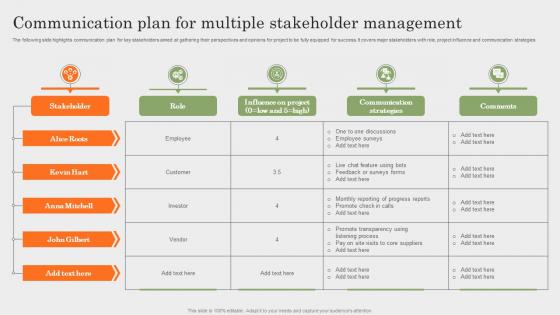
The following slide highlights communication plan for key stakeholders aimed at gathering their perspectives and opinions for project to be fully equipped for success. It covers major stakeholders with role, project influence and communication strategies
People who downloaded this PowerPoint presentation also viewed the following :
Communication Plan For Multiple Stakeholder Management with all 6 slides:
Use our Communication Plan For Multiple Stakeholder Management to effectively help you save your valuable time. They are readymade to fit into any presentation structure.





FAQs for Communication Plan For
Honestly, most people overthink this stuff. Start by figuring out who actually matters for your project - like your top 5 people - and what they genuinely care about. Super basic but everyone skips it somehow. Then work backwards: what do you need from each person? Once you know that, you can craft messages that'll actually land with them instead of generic updates nobody reads. Pick whatever communication method works for them - some people hate email, others live in Slack. Oh, and build in ways for them to give you feedback. That's basically it. The stakeholder mapping thing sounds fancy but it's just making a list.
So first, brainstorm literally everyone touched by your project - bosses, teammates, customers, vendors, even Karen from compliance who somehow always has something to say. Make a simple matrix based on influence vs interest. High/high people need constant detailed updates. Low/low just get the occasional heads up. Everyone else falls somewhere in between. Honestly, I just throw it all in a spreadsheet - names, how much pull they have, whether they prefer email or Slack, how often to bug them. Saves me from accidentally spamming some people while totally ghosting others. Way less stressful than winging it.
So stakeholder analysis is like figuring out who needs to know what and how they want to hear it. Map out everyone's influence and interest level first. Your CEO? Quick email summaries work best. The project team wants detailed stuff in meetings or Slack. Focus your energy on the high-influence people - honestly, they're the ones who can make or break things anyway. Without this roadmap, you're just sending the same boring updates to everyone and scratching your head when nobody cares. Oh, and start simple - just list people and rate their influence on like a 1-5 scale.
First, figure out what each group actually cares about. Executives want the bottom line and ROI stuff, but your tech people need the nitty-gritty details. I made this mistake once - sent everyone the same massive update and half of them just ignored it completely. Different groups want different formats too. Some love quick bullet points over email, others need those in-person meetings with slides and everything. Here's what works: just ask them upfront how they prefer getting updates. Saves you so much hassle later, trust me.
Honestly, just pick a schedule and stick to it - weekly for the busy stuff, monthly for everything else. I made this embarrassing mistake once where I sent crazy technical details to our CEO who literally just wanted "green, yellow, or red" status updates. Match your detail level to who you're talking to! Send different types of updates too - some people love email, others want a quick call, some just check dashboards. Mix it up. The biggest thing though? Don't wait for them to bug you first. Be the person who reaches out before anyone has to ask.
Set up regular touchpoints for collecting input - quarterly surveys, check-ins after big updates, that kind of thing. Make it two-way from day one instead of just pushing info out. Coffee chats work great if your audience is internal, feedback forms for external stuff. Honestly, I've watched so many communication plans tank because people forgot this part and then acted shocked when everyone seemed checked out. The real magic happens when you circle back and show what actually changed based on their input. Start with just one feedback method though - don't go crazy trying to do everything at once.
Honestly, just pick what your people actually use. For big updates, Mailchimp's pretty solid - way better than trying to wrangle a million individual emails. Slack's clutch for your internal team since everyone's already on it anyway. Oh, and don't sleep on project management stuff like Asana where you can literally see who opened what (game changer). Video calls still win for anything complicated though. I swear some conversations just need actual faces. Here's the thing - whatever you choose, stick with it. People get annoyed bouncing between apps constantly.
Okay so cultural stuff is huge here - way bigger than just time zones. Germans want straight facts and data. Japanese stakeholders? They need the relationship piece first, plus way more context. Decision-making is totally different too - some cultures want one person calling the shots, others need everyone to agree first. Even colors mean different things! What crushes it with your engineering team might bomb completely in Asia. Honestly, I'd map out each major group and figure out their communication style. Formal vs casual, direct vs indirect - that kind of thing. It's honestly a pain but beats sending the same generic message to everyone and wondering why half your stakeholders seem checked out.
Track both engagement stuff and actual outcomes - response rates, meeting attendance, how fast people act on your requests. Sentiment's tricky to measure but honestly tells you everything. Are people getting more positive about the project? Behavioral signs matter too. Like, are stakeholders reaching out with questions instead of just staying quiet? That's usually a good sign. Oh and feedback quality - not just "looks good" but actual useful input. Do a quick monthly check on this stuff and tweak your approach based on what you're seeing.
Basically you want to bake risk management right into your communication plan from day one. Think about what could go wrong for each group you're talking to - execs worry about budget blowouts, project teams stress about missing deadlines, that kind of thing. Then draft your messaging ahead of time for those scenarios. Most people skip this part which is honestly pretty dumb when you think about it. Also figure out who needs to know what when stuff hits the fan - like a proper chain of command situation. Having those message templates sitting in your back pocket beats the hell out of trying to craft something coherent while everything's on fire.
Ugh, stakeholder drama is the worst. First thing - actually listen to what's bugging them, not just the surface complaints. People usually just want to feel heard, honestly. Address their real concerns head-on and show how your plan helps them or at least doesn't screw them over. If things get heated, maybe bring in someone neutral to mediate. Document everything (trust me on this one). Most pushback comes from change anxiety or feeling excluded. Try making them part of the solution instead of fighting against them. Sometimes involving resisters in the fix actually works better than you'd expect.
Honestly, it's all about matching the vibe to what's happening. Weekly check-ins work great when things are moving fast, but you can dial it back to bi-weekly when stuff's cruising along. Execs? They want the big picture maybe once a month - don't spam them with details. Your actual team though needs way more frequent updates or they'll start panicking about what's going on. I've totally botched this before by overwhelming senior people with too much info. Daily updates are only for when everything's on fire or you're hitting major deadlines. Just pick a rhythm and stick with it - people hate surprises way more than they hate regular meetings.
Honestly, visuals are a game-changer for getting stakeholders on board. Nobody wants to read through dense paragraphs when you could just show them a Gantt chart instead. I've found that infographics and dashboards help people understand stuff way faster - plus they actually remember it later. The language barrier thing is huge too, especially if you're working with international teams or whatever. Process maps work great for this. My go-to move is looking at the most confusing parts of what I'm trying to explain and figuring out how to turn that into something visual instead.
Honestly, tech is a game-changer for stakeholder stuff. I'd start by figuring out who needs what info first - that's key. Tools like Asana automatically push updates to different groups, which saves you from playing messenger all the time. Slack's solid for quick updates. Dashboards are perfect for executives who want the big picture without bugging you for reports every five minutes (trust me on this one). Oh, and email automation lets you segment people so you're not sending boring generic updates to everyone. Pick tools that handle your specific pain points and you'll actually have time for other things.
So you'll want to hit three key things: being transparent, keeping stuff confidential, and following any rules. Honestly, stakeholders would rather hear bad news upfront than get blindsided later - trust me on that one. Only share what people are actually supposed to know, and double-check if your industry has specific disclosure requirements. The whole ethics thing basically comes down to being fair and giving people enough info to make smart choices. Oh, and maybe make yourself a quick checklist to run through before hitting send on important stuff? Saves you from those "oh crap" moments later.
-
Awesomely designed templates, Easy to understand.
-
SlideTeam is a great place for PPT templates. They have many templates on a single topic. It has made my life a lot easier.